Discover how shockwave therapy for bunions can relieve pain without surgery. Evidence-based, non-invasive treatment with expert care at Unpain Clinic.
Key takeaways
- A bunion is a bony change at the base of the big toe, and shockwave therapy cannot straighten it. Only surgery corrects the bone.
- Much of a bunion's pain comes from the soft tissues, an inflamed sac over the bump, irritated tissue, and strain from altered foot mechanics.
- Shockwave may help reduce that soft-tissue pain and inflammation, which is where its potential role lies, as part of a non-surgical plan.
- Direct research on shockwave for bunions specifically is limited, so it is used based on its effects in related foot conditions and clinical experience.
- The best non-surgical relief usually combines footwear changes, orthotics, foot exercises, and pain-focused treatments, with surgery reserved for the bone itself.
In this article
- What is a bunion, and why does it hurt?
- Can shockwave therapy treat a bunion?
- How might shockwave help with bunion pain?
- What actually helps reduce bunion pain?
- How does Unpain Clinic approach bunion pain?
- What can you do at home?
- When should you consider surgery?
- Frequently asked questions
If a bunion is causing you pain and you would rather not have surgery, you may have heard that shockwave therapy can help. It is worth understanding exactly what it can and cannot do. Shockwave will not straighten your toe, but for the pain and inflammation around a bunion, it may have a role as part of a non-surgical plan. This guide gives you an honest picture of shockwave for bunions, and of what actually reduces bunion pain. For more on the condition itself, see our guide to bunion pain.
This is general information, not a substitute for a professional assessment or medical advice.

What is a bunion, and why does it hurt?
A bunion, known medically as hallux valgus, is a bony change at the base of the big toe, where the toe gradually drifts toward the others and a bump forms on the inner side of the foot. It develops over time and is influenced by foot structure, genetics, and sometimes footwear. The visible bump is the joint itself shifting, not simply an overgrowth.
The pain, though, often comes from the soft tissues rather than the bone alone. Pressure and rubbing over the bump can inflame the small fluid-filled sac that cushions the joint, causing a painful bursitis. The skin over the bump can become sore, and the altered mechanics of the foot can strain other structures, leading to pain elsewhere, such as the ball of the foot or the arch. Many people with a bunion also have a related condition like plantar fasciitis from the way their foot loads.
This distinction matters for treatment. Because a good part of the pain is soft-tissue and inflammatory, some of it can be eased without changing the bone. That is exactly where non-surgical options, including shockwave, aim to help.

Can shockwave therapy treat a bunion?
Here is the honest answer: shockwave therapy cannot correct a bunion. It does not move the bone or straighten the toe, and no non-surgical treatment can undo the bony deformity itself. If the goal is to change the position of the bone, that requires surgery.
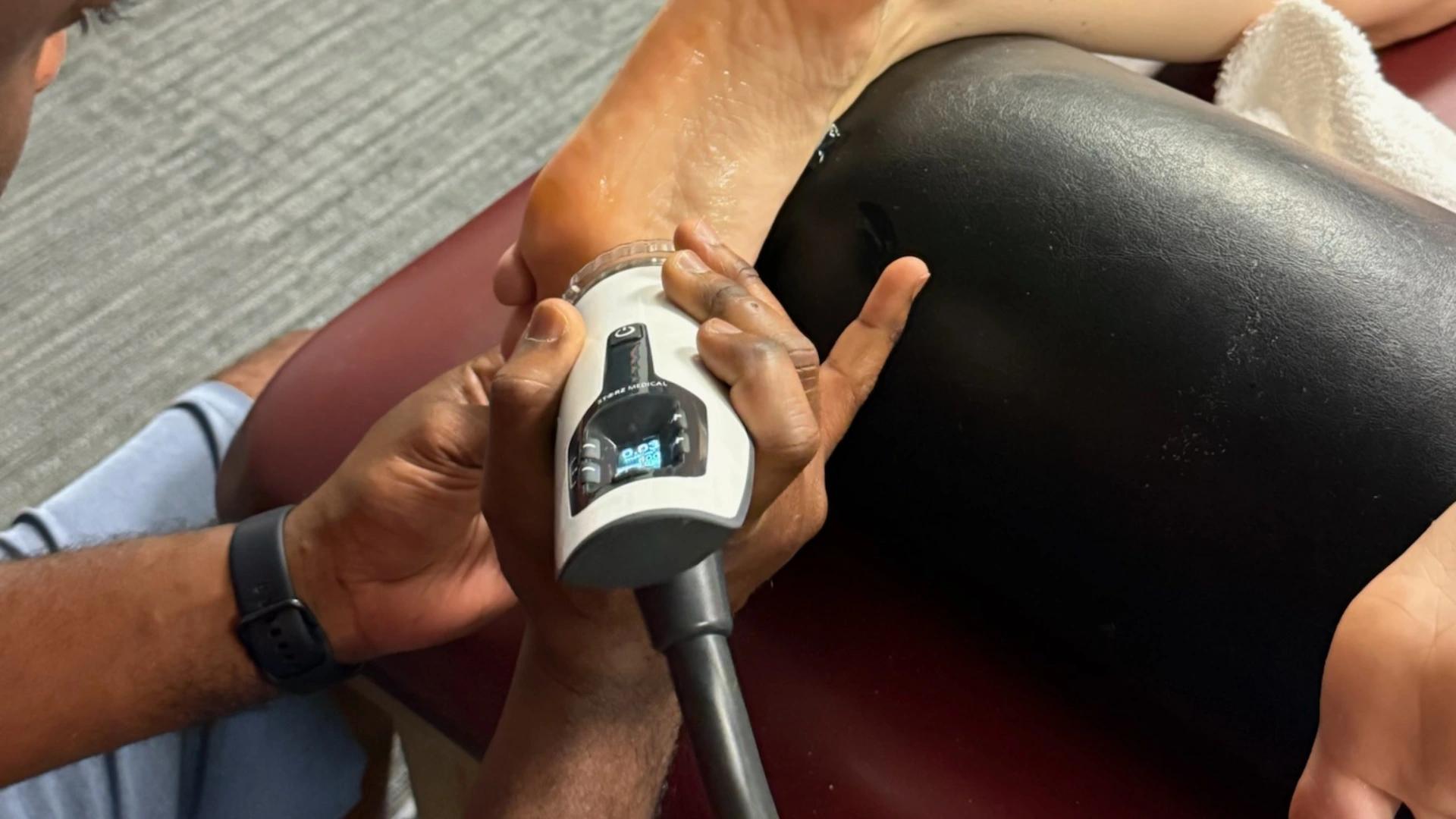
What shockwave may do is help with the pain and inflammation in the soft tissues around the bunion. By targeting an inflamed bursa, irritated tissue, or a related condition like plantar fasciitis, it aims to reduce pain rather than fix the deformity. So it is best understood as a tool for symptom relief within a broader plan, not a way to reverse the bunion.
It is also important to be clear about the evidence. Direct, high-quality research on shockwave specifically for bunion pain is very limited. Its use here is based on its established effects in related soft-tissue foot conditions and on clinical experience, rather than on large bunion-specific trials. We think that honesty helps you make a good decision, and we will always tell you when something is a reasonable option versus a proven one.
How might shockwave help with bunion pain?
Where shockwave has a plausible role, it works by calming inflammation and stimulating repair in irritated soft tissue, rather than by acting on the bone. As we explain in our explainer on how shockwave therapy works, the acoustic pulses increase blood flow, prompt cell repair, and appear to reduce pain by calming overactive pain nerves, which is why it is used for stubborn soft-tissue problems.
The evidence for shockwave is strongest in foot conditions that often sit alongside a bunion. For plantar fasciitis, a common source of foot pain, a meta-analysis found shockwave outperformed ultrasound therapy for pain and satisfaction [1]. Across tendon problems, a 2024 review of 45 trials found shockwave reduced pain [2]. A candid review of tendinopathies adds useful balance, concluding shockwave is effective for lower-limb and calcific tendon problems but not clearly better than other options for every condition [3], and its underlying repair effects are described in a review of its use in bone and soft tissue [4].
So the case for shockwave in bunion pain is indirect but reasonable. If your bunion pain is being driven largely by soft-tissue inflammation or a related foot condition, shockwave may help reduce it. If your pain is coming mainly from the bone and joint itself, shockwave is unlikely to be the answer, and other options matter more.

What actually helps reduce bunion pain?
The most effective relief usually comes from combining several non-surgical measures, with surgery reserved for correcting the bone. It helps to know what each option realistically does.
Footwear is the foundation. Wide, roomy shoes with a soft upper and a low heel take pressure off the bump and are often the single biggest source of relief. Orthotics, toe spacers, bunion pads, and splints can also help. In a randomized trial comparing surgery, orthoses, and watchful waiting for painful bunions, orthoses provided short-term symptomatic relief, while surgical correction was the most effective treatment overall [5]. It is worth being realistic here: toe spacers and splints can ease symptoms and slow aggravation, but they do not permanently straighten the toe.
Beyond footwear and supports, foot and toe strengthening exercises can improve how your foot functions and may reduce strain, activity modification helps you avoid the movements and shoes that flare the pain, and pain-focused treatments, including shockwave for the soft-tissue component, ice, and short courses of anti-inflammatory medication, can calm a painful flare. Managing these factors together tends to work far better than any single fix, and for many people it controls the pain well enough to avoid or delay surgery.
How does Unpain Clinic approach bunion pain?
We approach bunion pain by first working out where your pain is actually coming from, then treating the parts we can help and being honest about the parts we cannot. It starts with a thorough 60 minute, one-on-one assessment of your foot, its mechanics, and your footwear, so we can separate soft-tissue and inflammatory pain, which responds to conservative care, from pain driven by the bony deformity, which may need a surgical opinion.

From there, a plan may include several of the following:
- Footwear and orthotic guidance. We advise on shoes, orthotics, toe spacers, and padding that offload the bump and improve how your foot loads, which is often the biggest source of relief.
- Foot and lower-limb exercise. We coach foot, toe, and lower-limb strengthening to improve mechanics and reduce strain on the area.
- Shockwave and related therapies for soft-tissue pain. Where inflammation of the bursa or a related condition like plantar fasciitis is driving your pain, focused shockwave therapy and EMTT may help calm it, and NESA neuromodulation can help where pain has become sensitized.
- Manual therapy. Our physiotherapy, chiropractic care, and massage therapy ease tight tissues and improve mobility in the foot and toes.
- Honest guidance on surgery. If your assessment shows the deformity itself is the main problem, we will say so and coordinate a surgical opinion, rather than offering treatments that will not address it.
We are honest that no non-surgical treatment straightens a bunion, and that results vary, but for many people the pain can be managed well without surgery. We will always tell you when we do not think a treatment is the right fit.
What can you do at home?
Several simple steps can ease bunion pain day to day. Keep them consistent, and stop anything that sharply increases your pain.

- Wear roomy, supportive shoes. Choose a wide toe box, soft upper, and low heel, and avoid tight, pointed, or high-heeled shoes that press on the bump.
- Try spacers and pads. A toe spacer between the first and second toes, or a bunion pad over the bump, can reduce pressure and rubbing during the day.
- Ice a painful flare. Ice the area for 10 to 15 minutes when it is sore or inflamed, wrapped in a thin cloth.
- Do gentle foot exercises. Toe stretches, toe spreading, and short-foot and arch strengthening can improve how your foot works. Keep them within a comfortable range.
- Modify aggravating activities. Ease off long periods in stiff or narrow shoes and activities that flare the pain, and build up gradually.
For staying active and resilient overall, our guide to injury prevention has more.
When should you consider surgery?
Surgery is worth considering when the bunion is significantly painful or limiting your life despite good non-surgical care, or when the deformity itself is clearly the main problem. Because only surgery corrects the position of the bone, it is the most effective option for a painful bunion when conservative measures are no longer enough.
Timing and type of surgery are individual decisions with a foot and ankle surgeon. Conservative care is usually tried first, and it manages symptoms well for many people, but there is no need to suffer indefinitely if the pain is severe and not responding. If you are unsure, an assessment can clarify whether your pain is likely to respond to non-surgical treatment or whether a surgical opinion makes sense, so you can decide with a clear picture.
Frequently asked questions
Can shockwave therapy get rid of a bunion?
No. Shockwave therapy cannot straighten the toe or correct the bony deformity of a bunion, since only surgery can change the position of the bone. What it may do is help reduce the soft-tissue pain and inflammation around the bunion, such as an inflamed bursa or a related foot condition. It is a possible tool for pain relief, not a way to reverse the bunion.
Does shockwave help bunion pain?
It may help the part of the pain that comes from soft-tissue inflammation or a related condition like plantar fasciitis, rather than pain coming from the bone itself. Direct research on shockwave for bunions specifically is limited, so it is used based on its effects in related foot conditions and clinical experience. Whether it fits your case depends on where your pain is coming from, which an assessment can determine.
What actually reduces bunion pain without surgery?
The most reliable relief usually comes from wide, supportive footwear, plus orthotics, toe spacers, or pads that offload the bump. Foot exercises, activity modification, and pain-focused treatments like shockwave for the soft-tissue component, ice, and anti-inflammatories can also help. Research shows orthoses give short-term symptom relief, and combining these measures manages the pain well for many people.
Do bunion correctors and toe spacers work?
They can ease symptoms and reduce pressure, but they do not permanently straighten the toe. A toe spacer or splint may make the foot more comfortable and slow aggravation, and some people find them very helpful for day-to-day pain. Just set realistic expectations: they manage symptoms rather than correct the underlying bony change.
Can a bunion be reversed without surgery?
No, the bony deformity of a bunion cannot be reversed without surgery, since the change is structural. Non-surgical care focuses on reducing pain, slowing aggravation, and improving how the foot works, which controls symptoms well for many people. If the goal is to correct the deformity itself, that requires a surgical procedure.
When do you need bunion surgery?
Surgery is considered when the bunion is significantly painful or limiting despite good non-surgical treatment, or when the deformity itself is the main driver of the problem. It is the most effective option for correcting the bone, but it is usually reserved for after conservative measures have been tried. A foot and ankle surgeon can advise on the right timing and procedure for you.
“I have had many treatments with Uran for at least 10 years. I have had a lot of sports injuries and he has treated them all! Shockwave has helped me recover. He is so knowledgeable and I trust him always. Wouldn’t go anywhere else! Staff are amazing too. Thank-you!”- Kim Murrell
About the author
Written by Uran Berisha, Founder of Unpain Clinic and Medical Shockwave Institute. Uran has a Bachelor of Science in Physiotherapy and is an International Educator in Shockwave Therapy.
Medically reviewed by Uran Berisha.
Ready to find out what will actually help your bunion?
If a bunion is causing you pain, the next step is a one-on-one assessment where we work out where your pain is coming from and tell you honestly what will help, and what will not. Your first visit is 60 minutes, assessment only, and includes:
- A full history and a look at your footwear and goals
- A thorough assessment of your foot, its mechanics, and the source of your pain
- A plain-language explanation of what is driving your pain
- A personalized plan, and an honest view on whether a surgical opinion makes sense
No referral needed. No pressure, no contracts. If we do not think this approach is a good fit for you, we will tell you honestly. Book your initial assessment and let's get you a clear answer.
References
- Al-Siyabi Z, Karam M, Al-Hajri E, Alsaif A, Alazemi M, Aldubaikhi AA. Extracorporeal shockwave therapy versus ultrasound therapy for plantar fasciitis: a systematic review and meta-analysis. Cureus. 2022;14(1):e20871. https://doi.org/10.7759/cureus.20871
- Majidi L, Khateri S, Nikbakht N, Moradi Y, Nikoo MR. The effect of extracorporeal shock-wave therapy on pain in patients with various tendinopathies: a systematic review and meta-analysis of randomized control trials. BMC Sports Science, Medicine and Rehabilitation. 2024;16(1):93. https://doi.org/10.1186/s13102-024-00884-8
- Elgendy MH, Khalil SE, ElMeligie MM, Elazab DR. Effectiveness of extracorporeal shockwave therapy in treatment of upper and lower limb tendinopathies: a systematic review and meta-analysis. Physiotherapy Research International. 2024;29(1):e2042. https://doi.org/10.1002/pri.2042
- Furia JP, Rompe JD, Cacchio A, Maffulli N. Shock wave therapy as a treatment of nonunions, avascular necrosis, and delayed healing of stress fractures. Foot and Ankle Clinics. 2010;15(4):651-662. https://doi.org/10.1016/j.fcl.2010.07.002
- Torkki M, Malmivaara A, Seitsalo S, Hoikka V, Laippala P, Paavolainen P. Surgery vs orthosis vs watchful waiting for hallux valgus: a randomized controlled trial. JAMA. 2001;285(19):2474-2480. https://doi.org/10.1001/jama.285.19.2474
Related Topics