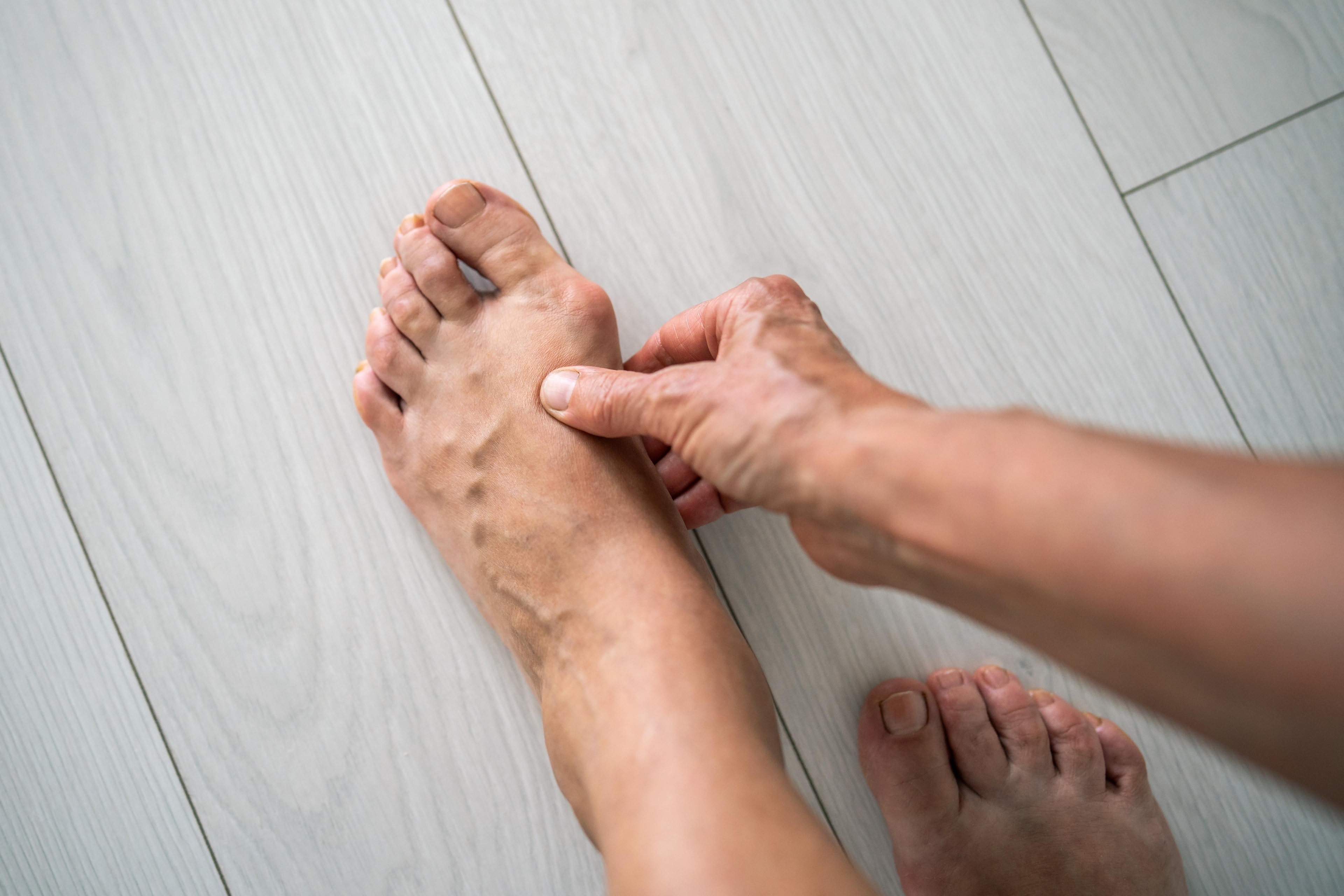
Struggling with bunions pain in your foot? Learn what causes bunions, how to relieve pain, and the best evidence-based treatments offered at Unpain Clinic Edmonton — including shockwave therapy, EMTT, and holistic care to help you move pain-free again.
Key takeaways
- Bunion pain usually comes from irritated soft tissue and uneven load across the joint, not just from the size of the bump.
- Bunions are common. Research estimates that around 23 percent of adults, and about 36 percent of people over 65, have one, and they are more common in women.
- Non-surgical care can meaningfully reduce bunion pain and improve function. It is much better at easing pain than at straightening the toe.
- Surgery is a reasonable option when pain and difficulty persist despite good conservative care, and modern keyhole techniques give broadly similar results to open surgery.
- You do not have to accept bunion pain as inevitable. A tailored plan often helps, even if the bunion itself stays.
In this article
- What is a bunion, and why does it hurt?
- What causes bunions and makes the pain worse?
- Can I fix a bunion without surgery?
- What does the research say about bunion surgery?
- How does Unpain Clinic treat bunion pain?
- What can I do for bunion pain at home?
- Frequently asked questions
If you feel a throbbing ache or a sharp pain at the base or side of your big toe, especially when you walk, stand, or squeeze into shoes, you are not imagining it and you are far from alone. Bunion pain is common, and the good news is that it often responds well to non-surgical care aimed at the irritation and the load, not just the bump. If you want to hear how we think about foot pain in general, our podcast on fixing chronic foot pain is a good place to start.

What is a bunion, and why does it hurt?
A bunion is the everyday name for hallux valgus, where the big toe drifts toward the smaller toes and the joint at its base pushes outward into a visible bump. That bony prominence can rub against shoes and irritate the tissues around it, which is where a lot of the pain comes from.
The size of the bump is not the whole story. The deformity itself is structural, but the pain is usually driven by dynamic stress, inflammation, and overload rather than by the bone alone. That is why two people with similar-looking bunions can have very different amounts of pain.
Most bunion pain traces back to a few sources: soft tissue irritation like an inflamed bursa, a callus, or sore skin over the bump, extra stress across the joint at the base of the big toe, and compensations in how you walk that can spread strain into the forefoot and ball of the foot or beyond. Understanding which of these is driving your pain is what makes a plan effective.
What causes bunions and makes the pain worse?
Bunions develop for several reasons at once, which is why no single fix works for everyone. The strongest thread is inherited foot structure. Many people with bunions have a family history, which points to a genetic tendency in how the foot is built.
Foot mechanics matter too. Flat feet, loose ligaments, rolling inward when you walk, and muscle imbalances can all add stress to the joint at the base of the big toe over time.
Footwear is an aggravator more than a root cause. Narrow toe boxes, high heels, and tight shoes tend to irritate an existing bunion and speed up the discomfort, though they are not usually the reason the bunion formed in the first place. As the toe drifts further, the joint can take on more micro-stress and inflammation, and the pain can build. The encouraging part is that most of these load-related factors can be influenced with the right care.
Can I fix a bunion without surgery?
Non-surgical care can reduce bunion pain and improve how your foot works, but it is realistic about the deformity: it eases pain far more reliably than it straightens the toe. That distinction is the key to setting sensible goals.
A 2022 systematic review of 18 studies found that options such as foot orthoses, night splints, manual therapy, and taping added to foot exercises can reduce bunion pain, while noting the evidence is low certainty and that pain relief is more likely than any change in the angle of the toe. In plain terms, these tools help you hurt less and move better, but they will not snap the bunion back into place.
A 2023 pilot trial that combined footwear, orthoses, foot exercises, advice, and self-management confirmed the approach is safe and can help, but found that the real challenge is sticking with the program over time. That matches what we see in the clinic: the plan works when it is doable and when someone helps you adjust it as you go.
It also helps to know how common this is. A large prevalence review estimated that around 23 percent of adults, and about 36 percent of people over 65, have a bunion, with women affected more often than men. Bunions are a normal part of many feet, and having one does not mean you are headed for surgery.

What does the research say about bunion surgery?
Surgery is an effective option for bunion pain when conservative care is not enough, and it is worth understanding clearly rather than fearing. In a randomized trial of just over 200 people, surgery reduced pain during walking more than orthoses or watchful waiting, and at one year about 83 percent of the surgery group felt improved, compared with roughly 46 percent for orthoses and 24 percent for those who waited.
Newer keyhole techniques have not proven to be a shortcut to better results. A 2023 review comparing minimally invasive and open bunion surgery found broadly similar pain, function, and correction between the two, and cautioned that the choice depends on the surgeon's experience rather than one method clearly outperforming the other.
The takeaway is about sequence, not either-or. Surgery corrects structure, but recovery and residual symptoms still depend on rehabilitation and how your foot loads afterward. Trying good conservative care first is reasonable for most people, and if surgery becomes the right call, strengthening and movement work before and after it can support your recovery.
How does Unpain Clinic treat bunion pain?
We treat bunion pain by finding what is irritating and overloading the joint, then reducing that stress while helping the surrounding tissue settle. That starts with a 60 minute, one-on-one assessment that includes a look at how you walk and load the foot, not just the bump itself. From there we build a personalized plan that usually layers a few of the tools below.
Our focused shockwave therapy is one tool we may use on the irritated soft tissue around the joint, such as an inflamed bursa or fascia. Shockwave has a solid track record for foot and tendon pain: a review of 11 trials in chronic plantar fasciitis found it improved pain and foot function with no reported side effects. Direct trials of shockwave for bunions specifically are limited, so we use it as one part of a wider plan, alongside biomechanical work, rather than as a standalone fix for the bump.
For joints that are sensitive or slow to settle, we may add EMTT, which uses magnetic pulses to support tissue repair, and NESA neuromodulation, a gentle approach that helps calm an overactive pain response. Both are non-invasive and comfortable.
Hands-on care is a core part of the plan. Our physiotherapy and chiropractic care can mobilize the big toe joint to keep it moving, ease stiffness in the midfoot and ankle, and release tight tissue in the calf and small muscles of the foot. These are the same manual and taping approaches that showed pain benefit in the research above.
Here is what a typical bunion plan looks like in practice:
- Assess how you load the foot. We watch your gait and check the big toe joint, midfoot, ankle, and calf to find the overload pattern behind your pain.
- Calm the irritated tissue. We may use shockwave, EMTT, or neuromodulation on the sore soft tissue, combined with offloading so the area is not being aggravated between visits.
- Restore movement. Hands-on mobilization and soft tissue work help the big toe joint and neighbouring areas move more freely.
- Rebuild strength and control. Targeted exercises for the small muscles of the foot and big toe help share load more evenly. They will not straighten the toe, but they can reduce stress and slow progression.
- Support the foot day to day. Orthoses, toe spacers when tolerated, taping in the early phase, and accommodative footwear all reduce friction and load while you heal.
- Reassess and adjust. We track your pain and function and progress the plan as your foot responds.
The honest goal of this whole approach is pain relief and better function, which are realistic for most people with mild to moderate bunions, rather than a straightened toe. You can read more in our deeper look at shockwave therapy for bunions.

What can I do for bunion pain at home?
Between visits, a few simple habits can protect the joint and support your progress. Keep everything within a comfortable range, and ease off anything that sharply hurts.

- Choose kinder footwear. Pick shoes with a wide, deep toe box and a low heel, and avoid narrow or pointed styles that pinch the bump. Gel pads, toe spacers, or silicone sleeves can reduce friction over the bunion.
- Mobilize the big toe. Gently guide the big toe away from the second toe and into a small stretch, holding about 30 seconds for a few repetitions, to help maintain movement.
- Strengthen the small foot muscles. Spreading the toes against a light band, and picking up a towel with your toes, both build the intrinsic muscles that help share load across the foot.
- Stretch the calf. Lean into a wall with the back leg straight and heel down, holding about 30 seconds on each side, since calf tightness can add pressure to the forefoot.
- Manage your load. Build up walking gradually, break up long periods of standing, and use ice over the bump for 10 to 15 minutes after long walks if it feels inflamed.
If an exercise consistently makes your pain worse, that is a signal to stop and check in with your clinician, since done incorrectly or too aggressively, foot exercises can aggravate the joint. This is exactly why a guided, gradual program tends to work better than pushing on your own.
Frequently asked questions
What causes bunion pain?
Bunion pain usually comes from soft tissue irritation around the bump, like an inflamed bursa or sore skin, along with uneven load across the joint at the base of the big toe and compensations in how you walk. The structural deformity contributes, but the pain often reflects dynamic stress and inflammation rather than the size of the bump itself. This is why treating the load and the irritation can help even when the bunion stays.
How can I reduce bunion pain quickly?
Short-term relief often comes from switching to wider, lower shoes, using a metatarsal pad or toe spacer, taping to offload the joint, icing after activity, and easing back on walking volume for a few days. These steps reduce the stress and friction on the joint, which calms the pain. They do not change the structure, so pairing them with a longer-term plan tends to work best.
Can bunion pain go away on its own?
A mild bunion's pain can come and go, and it sometimes settles with better footwear and load management. The structural change rarely reverses on its own, so ongoing strategies are usually needed to keep the pain down over time. Individual results vary, which is why a personalized assessment helps.
Will a bunion always hurt?
Not always. Many people have bunions with little or no pain. Pain tends to appear when overload, irritation, or joint changes increase, and it can often be reduced again with the right footwear, offloading, and care.
When should I see a clinician about a bunion?
It is worth getting assessed if bunion pain limits your walking, your shoe choices, or your daily life, or if it keeps getting worse despite trying more comfortable footwear. Earlier care gives you more non-surgical options and helps you avoid compensations that can strain the rest of the foot and leg.
Do I need surgery for a bunion?
Surgery is usually considered when good conservative care has not controlled the pain and the bunion is limiting your life. It is effective for pain in the right candidates, but it carries recovery time and does not guarantee the deformity will never return. For most people, trying conservative care first is a reasonable and lower-risk starting point.
Can foot exercises make my bunion worse?
They can if they are done too aggressively or with poor technique, which is why a guided, gradual program matters. Done well, targeted exercises help the foot share load more evenly and tend to reduce pain rather than increase it. If a specific exercise consistently flares your pain, stop it and check with your clinician.

“I have had many treatments with Uran for at least 10 years. I have had a lot of sports injuries and he has treated them all! Shockwave has helped me recover. He is so knowledgeable and I trust him always. Wouldn’t go anywhere else! Staff are amazing too. Thank-you!”- Kim Murrell
About the author
Written by Uran Berisha, Founder of Unpain Clinic and Medical Shockwave Institute. Uran has a Bachelor of Science in Physiotherapy and is an International Educator in Shockwave Therapy.
Medically reviewed by Uran Berisha.
Ready to understand your bunion pain?
If you are tired of guessing why your foot hurts, the next step is a one-on-one assessment where we find what is driving your bunion pain and build you a clear plan. Your first visit is 60 minutes, assessment only, and includes:
- A full history and a look at your goals
- Head-to-toe orthopedic and movement testing, including how you load your foot
- A plain-language explanation of what is driving your pain
- A personalized treatment roadmap and guidance on next steps
No referral needed. No pressure, no contracts. If we do not think this approach is a good fit for you, we will tell you honestly. Book your initial assessment and let's find out what your foot is really telling you.
References
- Nix S, Smith M, Vicenzino B. Prevalence of hallux valgus in the general population: a systematic review and meta-analysis. Journal of Foot and Ankle Research. 2010;3:21. https://doi.org/10.1186/1757-1146-3-21
- Hurn SE, Matthews BG, Munteanu SE, Menz HB. Effectiveness of nonsurgical interventions for hallux valgus: a systematic review and meta-analysis. Arthritis Care & Research. 2022;74(10):1676-1688. https://doi.org/10.1002/acr.24603
- Menz HB, Lim PQX, Hurn SE, et al. Nonsurgical management of hallux valgus: findings of a randomised pilot and feasibility trial. Journal of Foot and Ankle Research. 2023;16(1):78. https://doi.org/10.1186/s13047-023-00677-1
- Torkki M, Malmivaara A, Seitsalo S, Hoikka V, Laippala P, Paavolainen P. Surgery vs orthosis vs watchful waiting for hallux valgus: a randomized controlled trial. JAMA. 2001;285(19):2474-2480. https://doi.org/10.1001/jama.285.19.2474
- Alimy AR, Polzer H, Ocokoljic A, et al. Does minimally invasive surgery provide better clinical or radiographic outcomes than open surgery in the treatment of hallux valgus deformity? A systematic review and meta-analysis. Clinical Orthopaedics and Related Research. 2023;481(6):1143-1155. https://doi.org/10.1097/CORR.0000000000002471
- Melese H, Alamer A, Getie K, Nigussie F, Ayhualem S. Extracorporeal shock wave therapy on pain and foot functions in subjects with chronic plantar fasciitis: systematic review of randomized controlled trials. Disability and Rehabilitation. 2022;44(18):5007-5014. https://doi.org/10.1080/09638288.2021.1928775
Related Topics