Discover how shockwave therapy for heel spur may reduce pain, improve healing, and help avoid surgery. Evidence-backed care from Unpain Clinic.
Key takeaways
- A heel spur is a small bony growth on the heel bone, but it is usually not the real source of your pain. The pain almost always comes from the irritated soft tissue nearby, most often the plantar fascia.
- That is why removing or shrinking the spur is rarely the answer. Healing the overloaded tissue is.
- Shockwave therapy is non-surgical and works by jump-starting healing in tissue that has stalled. It boosts blood flow, eases scar tissue, and calms pain.
- The research is strong: shockwave beats placebo for chronic heel pain, and studies show most people get meaningful relief even though the spur itself usually stays the same on X-ray.
- At Unpain Clinic in Edmonton, shockwave is the cornerstone of a whole-body plan that treats the calf, Achilles, and even the hip when they are driving the load onto your heel.
In this article: what a heel spur really is, why the pain lingers, why standard treatments fall short, what the research shows about shockwave, how we treat it, what you can do at home, and common questions.
That sharp heel pain when you first step out of bed, the one that feels like standing on a tack, can set a rotten tone for the whole day. If you have already tried rest, ice, anti-inflammatories, inserts, night splints, and stretches, only for the pain to keep coming back, you are not out of options. Shockwave therapy is an evidence-backed, non-surgical way to reduce chronic heel spur pain and stimulate real healing in the damaged tissue.
This article explains what a heel spur actually is, why it can hurt for months, what the research says, and how we treat it at Unpain Clinic with shockwave as the main tool. For a companion read, see our guide to shockwave therapy for heel spurs and plantar fasciitis in Edmonton.
This is general information, not a substitute for a professional assessment or medical advice. Results vary from person to person.

What is a heel spur, and is it really causing my pain?
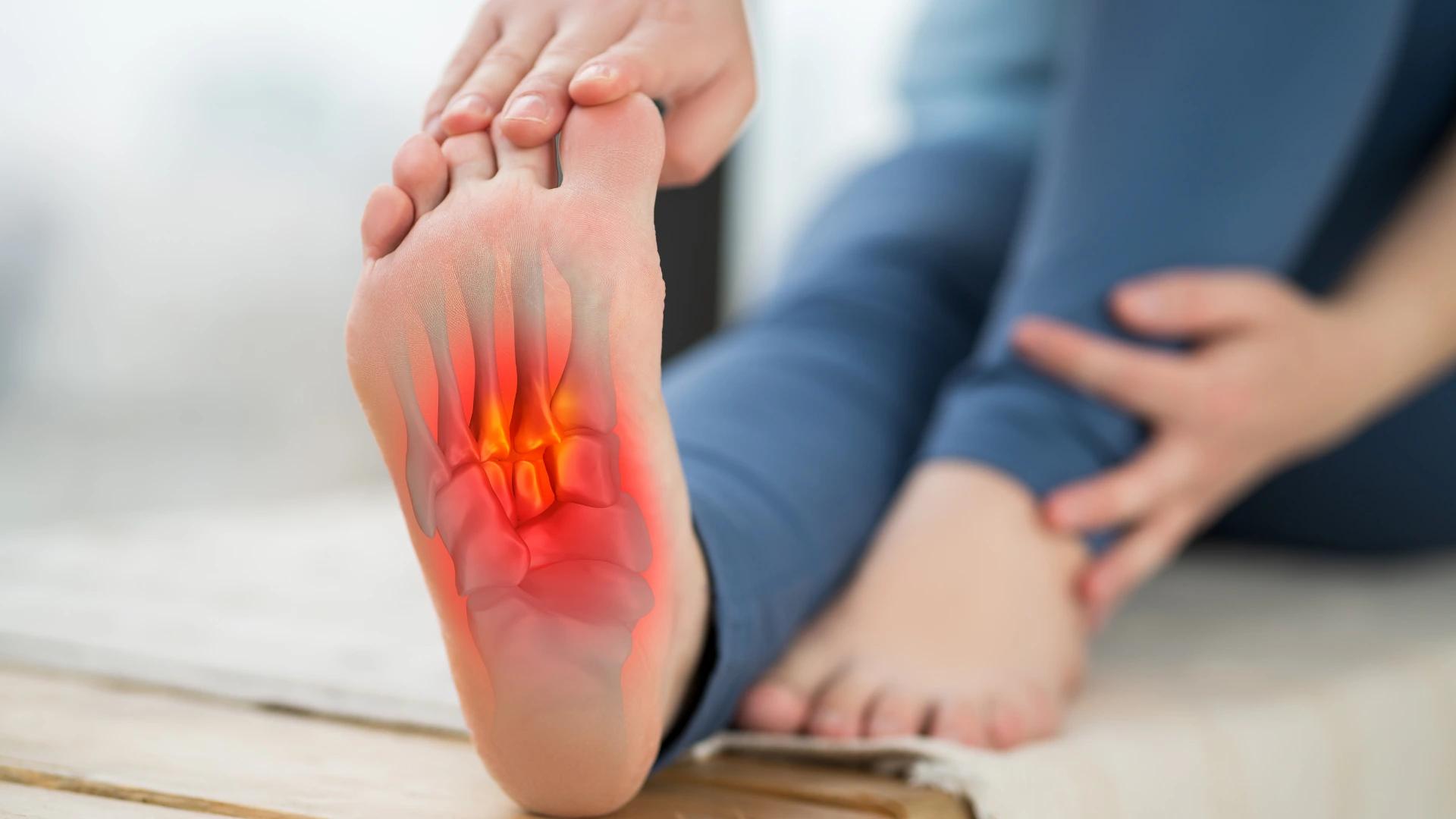
A heel spur, technically a calcaneal spur, is a small bony growth on the heel bone, but here is the surprise: it is usually not the real cause of your pain. It forms over time where the plantar fascia, the thick band on the bottom of your foot, pulls on the heel, prompting the body to lay down extra calcium. On an X-ray it looks like a little hook off the heel bone.
The reason the spur is rarely the culprit is simple. Many people have heel spurs on X-ray and feel no pain at all. The real source of that stabbing heel pain is almost always irritation or degeneration of the soft tissue, most often the plantar fascia, a condition called plantar fasciitis, or sometimes the nearby Achilles tendon. Think of the spur as a sign of long-term tissue overload, not the thing generating the pain.
So what does it feel like? The pain is usually sharp or stabbing under the heel with your first steps in the morning or after sitting, easing into a dull ache as you stay on your feet, often with tightness along the arch. If the problem is at the back of the heel where the Achilles attaches, the pain sits there and flares on stairs or tiptoes. When it lasts beyond three to six months, it is considered chronic heel pain. Our overview of heel pain and heel spurs goes further.

Why does heel pain last so long?
Heel pain drags on because the underlying tissue is a stubborn, slow-healing injury, not a quick strain. The plantar fascia often has tiny tears and collagen breakdown from overuse, a state better described as fasciosis than simple inflammation. This tissue has a poor blood supply, so it heals slowly, and every step can re-strain it, keeping the cycle of injury going.
There is often a bigger picture too. Tight calves, abnormal foot posture, or problems further up the chain in the knees and hips can keep overloading the heel until those root causes are addressed. That is why heel pain so often outlasts treatment that only targets the foot.
Why do standard treatments often fall short?
Standard treatments often fall short because they manage the symptom without fixing the overloaded, poorly healing tissue underneath. Rest, ice, anti-inflammatory medication, cortisone injections, orthotics, and stretching can all help, and about 9 in 10 plantar fasciitis cases eventually improve with conservative care, but the relief is often temporary when the true cause is untouched.
There are real limits to each. Stretching a degenerative tissue may not heal it, and aggressive stretching can even aggravate the micro-tears. Orthotics can offload the pain but may let the foot muscles weaken over time. Cortisone can quiet things for a few weeks, then the pain returns, and repeated steroid can weaken tissue. When everything fails, surgery to remove the spur or release the fascia is considered, but it is invasive, needs a long recovery, is not guaranteed, and since the spur usually is not the cause, removing it does not necessarily fix the problem. Surgery is a genuine last resort.
This is where shockwave therapy fits. It offers a way to jump-start healing in the fascia itself, targeting the root problem without the risks of an operation. In fact, guidelines suggest that people with chronic heel pain lasting more than six months who have not responded to the basics should consider shockwave before contemplating surgery.

What does the research say about shockwave therapy for heel spurs?
The research is encouraging and consistent: shockwave therapy is a safe and often effective non-surgical treatment for chronic heel pain. Because heel spurs and plantar fasciitis so often occur together, most studies look at them as one picture.
It beats placebo. A 2013 meta-analysis of people with recalcitrant plantar fasciitis, cases stuck for six months or more, many with heel spurs, found that high-energy shockwave made people more than twice as likely to get significant pain relief compared with a sham treatment. By 12 weeks, the odds of improvement were about 2.25 times higher with shockwave, and the authors described the evidence as strong, recommending shockwave after conservative care fails and before surgery [1].
It reduces pain and improves function, and it is well tolerated. A 2024 systematic review of 11 randomized trials and over 650 people with chronic plantar fasciopathy found that shockwave consistently reduced heel pain and improved foot function, with better walking and daily activity scores than placebo or no treatment. Just as important, it was well tolerated, with a low dropout rate and few side effects [3].
It holds its own against other therapies. A 2025 randomized trial compared focused shockwave with high-intensity laser for painful heel spurs. Both helped, and shockwave had a slight edge. Over three months, morning first-step pain dropped from about 7.8 to 3.4 out of 10 with shockwave, versus 7.5 to 3.5 with laser, and shockwave cut Foot Function Index disability scores more, from about 59 to 20 versus 57 to 35 for laser, with no significant adverse events in either group [2].
Most people respond, even though the spur usually stays. In a trial of 108 people with heel spurs, a course of five weekly shockwave sessions left 66.7 percent completely pain-free and another 15.7 percent with their pain cut at least in half [4]. When doctors re-checked the X-rays, the spurs usually looked the same. A larger study of 435 people found the same thing: outcomes were good whether or not a spur was present, and pain relief had no correlation with any change in the spur [5].
This is the key insight. Shockwave does not need to dissolve the spur to end the pain. It heals the tissue around it, so the spur stops being aggravated and stops hurting. People often fixate on removing the spur, but you can feel completely better with the spur still there. Imaging supports this too: studies using ultrasound have shown the thickened, inflamed plantar fascia getting measurably thinner after a course of shockwave, direct evidence that it reverses some of the chronic damage rather than just masking pain.
How does shockwave therapy work? It sends high-energy sound waves into the tissue, creating tiny, controlled micro-stresses that wake up a healing response that had stalled. It breaks up disorganized scar tissue and calcium deposits, triggers the release of growth factors and the body's repair cells, boosts blood flow by prompting new blood vessels, and stimulates the cells that build fresh collagen. In effect, it resets a chronic injury back into an active healing phase, and it calms pain by overstimulating nerve endings. Our explainer on how shockwave therapy works goes deeper.
Does the type of shockwave matter? Both focused and radial shockwave work for plantar fasciitis. Focused shockwave penetrates deeper with concentrated energy, while radial spreads out nearer the surface, and a 2025 trial found the two produced similar improvements in pain and function by three months [6]. What matters most is that therapeutic energy reaches the right area.

How does Unpain Clinic treat heel spurs with shockwave?
At Unpain Clinic in Edmonton, shockwave therapy is the cornerstone of heel spur care, delivered inside a whole-body plan that asks not just where it hurts, but why. We use advanced focused shockwave, our True Shockwave approach, because we find it the most effective tool for chronic musculoskeletal pain, and we apply it as part of a root-cause plan rather than in isolation.

A whole-body assessment. On your first visit we do a head-to-toe evaluation, not just a look at your heel. For heel pain that means checking your foot biomechanics, calf flexibility, and gait, and looking up the chain at your knees, hips, core, and posture. The origin of chronic foot pain is often not in the foot. If your glutes are not doing their job when you walk, the load can travel down through the hamstrings and calves and finally overload the plantar fascia. We have traced heel pain back to an old hip problem, and once the hip was treated, the heel settled.
Shockwave as the main treatment. We target the plantar fascia at the heel and, importantly, the related tissue that is feeding the problem. Tight calves and the Achilles tendon are almost always part of the picture, since they pull on the fascia, so we treat them too, and if the assessment finds restrictions in the hamstrings, glutes, or lower back, we treat those as well. This is the difference in our approach: we do not shockwave the foot alone, we reduce the abnormal forces reaching the heel. As founder Uran Berisha puts it, we do not chase symptoms, we fix the cause. Our podcast episode Understand and Fix Your Chronic Foot Pain walks through exactly this.
What a session looks like. You are positioned comfortably, a gel is applied, and the clinician delivers pulses starting at a lower intensity, which we adjust to your comfort. You will hear clicking and feel a thumping, and it can be tender over the sorest spots, but most people find it very tolerable, and the area often desensitizes as it starts to heal. A session usually runs about 1,500 to 3,000 pulses per area and 5 to 10 minutes per area, so treating the foot plus the calf might take 20 to 30 minutes. Where useful, we add hands-on release or a couple of home exercises afterward to build on the loosened tissue. We do not use cortisone injections, because our focus is regenerative, not a short-term band-aid.
How many sessions. Most heel spur cases are booked for weekly sessions, usually about three to five in total, and shockwave's effects are cumulative. Many people notice less morning pain or longer standing tolerance by the second or third session, and a large share report major improvement by session five. Very long-standing cases, pain that has lasted years, may need a couple more or occasional booster sessions, and we track your progress and adjust if you are not responding as expected.
Exercise and education, at the right time. Alongside shockwave, we coach the right exercises when your foot is ready. Early on, if the fascia is very irritated, we avoid aggressive stretching and start with gentle calf and foot mobility work plus glute activation to address the weaknesses higher up. As pain settles, we progress to strengthening like towel curls, calf raises, and hip work, and we guide footwear, easing you off overly rigid orthotics in the long run so your foot does not become dependent. Available tools like radial shockwave therapy, EMTT, and hands-on physiotherapy, chiropractic care, and massage therapy support the process, but focused shockwave stays front and centre because it is the modality actively stimulating repair.
As a representative example, a client with 18 months of heel pain that rest, a night splint, and a cortisone shot had not fixed came in expecting a foot treatment. The assessment found a tight calf, a stiff hip, and weak glutes on the same side, all loading the fascia. We treated the calf and Achilles, the plantar fascia, and the tight hip with shockwave, and after a course of sessions the morning pain was gone and long walks were comfortable again. Results vary, but it shows why we look beyond the heel.
How do the common heel spur treatments compare?
The common approaches differ mainly in whether they calm the symptom or heal the cause, and in how long the relief holds. Rest, ice, and anti-inflammatory medication can settle a flare, but the relief is short-lived if the fascia keeps getting overloaded. Orthotics and heel cups can offload the pain and are useful in the short term, though they do not heal the tissue and can let the foot weaken if leaned on forever. A cortisone injection can quiet pain for a few weeks, but it does not repair the fascia and repeated shots can weaken it. Stretching and strengthening are valuable once the tissue can tolerate them, and they build long-term resilience, though aggressive stretching too early can aggravate a degenerative fascia. Shockwave therapy sits apart because it prompts the tissue itself to heal: it works gradually over a few sessions, and in studies it reduced pain and improved function where other treatments had failed, without dissolving the spur. Surgery to remove the spur or release the fascia is a true last resort, invasive and not guaranteed, and since the spur is rarely the cause, it does not reliably fix the problem. The most durable results come from healing the tissue with shockwave, correcting the whole-body mechanics driving the load, and using supports and medication only as short-term help.

What can you do at home for heel spur relief?
What you do between visits genuinely speeds recovery. These tips are general and meant to complement professional care, not replace it. Keep everything comfortable, and if something sharply increases your heel pain, ease off.

- Modify activity, but keep moving. Cut back on running, jumping, and long spells standing on hard floors, which aggravate the heel, but do not stop moving. Low-impact options like cycling, swimming, or an elliptical keep blood flowing and support healing without pounding your heels.
- Support your feet. Wear shoes with good heel cushioning and arch support, avoid barefoot walking on hard floors, and consider over-the-counter heel gel cups. A night splint or sock that keeps the foot gently stretched can ease that first-step morning pain. Treat these as temporary aids while you build strength, not permanent crutches.
- Stretch gently and often. Keeping the calves and Achilles flexible reduces the pull on the heel. Do a wall calf stretch with the knee straight and again slightly bent, holding about 20 seconds, a few times per leg, twice a day. You can also stretch the fascia by pulling your toes back toward your shin before getting up. Gentle and frequent helps, aggressive stretching can irritate the fascia.
- Strengthen your feet and hips. As pain allows, add towel curls, marble pickups, and calf raises for the foot, plus clamshells, bridges, and leg lifts for the hips, since stronger hips reduce the load on your feet. Aim for two to three times a week, and skip anything that sparks heel pain.
- Use ice and self-massage for sore days. After heavier activity or a shockwave session, roll a frozen water bottle under the arch for 10 minutes or ice the heel, 15 minutes on and off. Gently massage the calf and arch, staying off the sorest spot directly.
- Pace yourself and support healing. Recovery is not linear, so expect good and bad days, note what helps, and build activity back gradually rather than jumping from rest to a long run. Good nutrition, enough protein, hydration, and sleep all help tissue repair.
Stop and seek advice if a home treatment causes sharp pain or your heel pain clearly worsens.
Frequently asked questions about shockwave therapy and heel spurs
Is shockwave therapy safe for heel spurs?
Yes, shockwave therapy is considered very safe for heel spurs and plantar fasciitis. It is non-invasive, with no incision, injection, or anesthesia needed in most cases, and clinical studies report no significant adverse events for heel treatment. The most common effects are minor and short-lived, like redness, mild bruising, or soreness for a day or two. It is avoided over an active infection, wound, or tumour, and over the pelvis in pregnancy, and used with caution with bleeding disorders, so your provider will screen you first.
How many shockwave sessions will I need for a heel spur?
Most people need a series rather than a single session, typically about three to five, spaced one week apart. Long-standing cases, or when both the plantar fascia and Achilles need treating, may run to six or eight. Many notice less pain after the second or third session, with the benefit building over the following weeks, since each treatment adds to the last. Healing can continue for weeks after the final session.
Does shockwave therapy hurt?
There can be some discomfort during treatment, but it is brief and tolerable for most people. You feel the pulses as rapid tapping, which can sting over very tender spots, but the clinician starts low and adjusts, and the area often desensitizes as you go. Each pulse is over in a fraction of a second, and any treatment discomfort stops the moment the session ends, sometimes leaving mild soreness like a bruise for a day.
Can shockwave therapy help if I have had heel pain for years?
Yes, and long-standing cases are often exactly where it helps most. Shockwave's job is to restart healing in tissue that has been stuck in a degenerative state, and the longer the pain has lasted, the more stalled that tissue tends to be. Research on chronic, recalcitrant heel pain shows strong results even after other treatments failed. Very chronic cases may simply need a little more patience and a few more sessions.
What are the side effects of shockwave therapy?
Side effects are generally minor and short-lived: some redness, tenderness, or a small bruise on the heel for a few days, and occasionally brief tingling from nerve stimulation. Applied correctly, shockwave does not damage tissue, there is no risk of burns or cuts, and because it uses no medication, there are none of the systemic side effects of pills or injections. Rarely, pain can bump up after the first session before improving.
Is shockwave therapy covered by insurance?
It depends on your plan. Public health plans in Canada generally do not cover shockwave, but because it is delivered by licensed physiotherapists or chiropractors, many extended health plans cover the visit under physiotherapy or chiropractic. Some insurers recognize shockwave specifically, others treat it as an add-on or do not reimburse it. Check with your provider, ask the clinic about codes, receipts, and package pricing, and note that many people pay out of pocket because it can help them avoid costlier options.
“I had a very positive experience at this clinic. I saw Dr. Lacina for shockwave treatment. She’s highly professional and an amazing practitioner! She was able to pinpoint the root causes of my pain and taught me so much about my body. I highly recommend this place!”-Nidhi
About the author
Written by Uran Berisha, Founder of Unpain Clinic and Medical Shockwave Institute. Uran has a Bachelor of Science in Physiotherapy and is an International Educator in Shockwave Therapy. Medically reviewed by Uran Berisha.
Book your initial assessment
You do not have to live with chronic heel pain, and you do not have to jump to surgery. The most durable results come from healing the overloaded tissue and fixing why it was overloaded in the first place, with shockwave prompting real repair while hands-on care and targeted exercise support the process. If you have been frustrated by more than three months of heel pain, or you keep saying you have tried everything, our assessment is designed for you. We ask not just where it hurts, but why. Your first visit is 60 minutes, assessment only, and includes a full history and goal setting, head-to-toe orthopedic and muscle testing, motion analysis, imaging decisions if needed, pain-pattern mapping, and a personalized treatment roadmap.
You will see a licensed physiotherapist or chiropractor, and if we are a good fit, we schedule your first treatment and start your plan. No referral needed, no pressure, and no long-term upsells, just honest, effective care. We will tell you honestly if this approach is not right for you. Book your initial assessment at Unpain Clinic.
References
- Zhiyun, L., Tao, J., and Zengwu, S. (2013). Meta-analysis of high-energy extracorporeal shock wave therapy in recalcitrant plantar fasciitis. Swiss Medical Weekly, 143, w13825. https://pubmed.ncbi.nlm.nih.gov/23832373/
- Karakuzu Güngör, Z. (2025). Comparison of extracorporeal shock wave therapy and high-intensity laser therapy in the treatment of calcaneal spur-related symptoms: clinical outcomes and functional improvement. Journal of Orthopaedic Surgery and Research, 20(1), 393. https://link.springer.com/article/10.1186/s13018-025-05812-1
- Lippi, L., Folli, A., Moalli, S., et al. (2024). Efficacy and tolerability of extracorporeal shock wave therapy in patients with plantar fasciopathy: a systematic review with meta-analysis and meta-regression. European Journal of Physical and Rehabilitation Medicine, 60(5), 832 to 846. https://pubmed.ncbi.nlm.nih.gov/39257331/
- Yalcin, E., et al. (2012). Effects of extracorporeal shock wave therapy on symptomatic heel spurs: a correlation between clinical outcome and radiologic changes. Rheumatology International, 32(2), 343 to 347. https://link.springer.com/article/10.1007/s00296-010-1581-5
- Ogden, J.A., et al. (2004). Effect of extracorporeal shock waves on calcaneal bone spurs. Clinical Orthopaedics and Related Research. https://pubmed.ncbi.nlm.nih.gov/14733349/
- Tezén, O., et al. (2025). Radial versus focused shock-wave therapy in plantar fasciitis: a randomized trial. Journal of Foot and Ankle Surgery, 64(1), 36 to 41. https://pubmed.ncbi.nlm.nih.gov/38678912/
- Unpain Clinic Podcast. (2021). Understand and Fix Your Chronic Foot Pain. https://www.unpainclinic.com/en/podcast/understand-and-fix-your-chronic-foot-pain
- Unpain Clinic. Shockwave Therapy for Heel Spurs and Plantar Fasciitis in Edmonton. https://www.unpainclinic.com/en/articles/shockwave-therapy-for-heel-spurs-and-plantar-fasciitis-edmonton
Related Topics