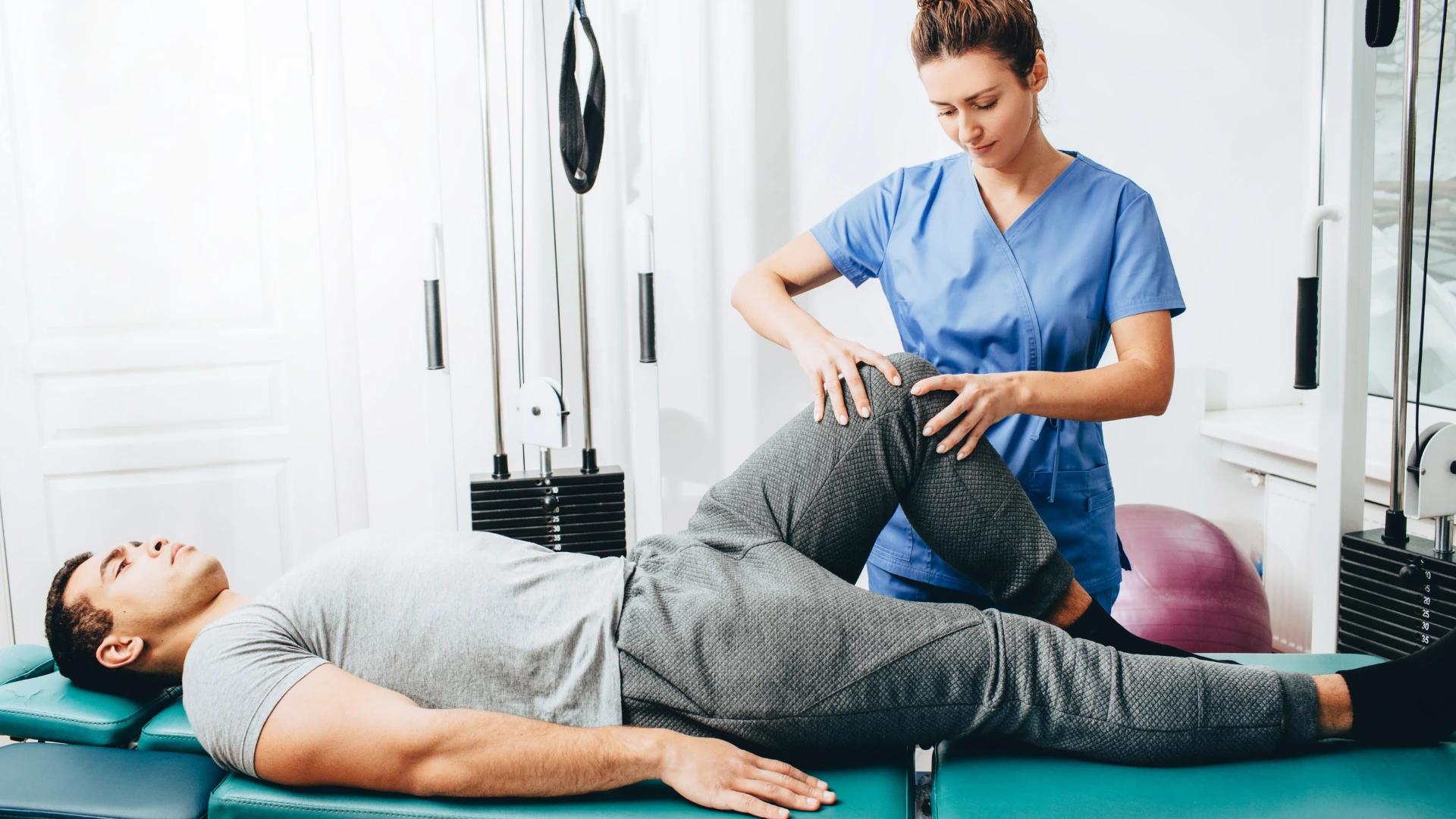
Learn how to treat knee bursitis with proven, evidence-based methods. Discover symptoms, causes, exercises, and advanced treatments like shockwave therapy at Unpain Clinic. Find relief and get back to moving pain-free.
Key takeaways
- Knee bursitis is inflammation of one of the small fluid-filled cushions in the knee, and it is very treatable.
- Common types include prepatellar bursitis at the front of the kneecap and pes anserine bursitis on the inner knee.
- Simple measures like rest, ice, and activity changes settle many cases, while cortisone gives fast but often temporary relief.
- Shockwave therapy is a promising non-surgical option, though in head-to-head research a steroid injection gave faster short-term relief.
- Lasting relief usually means addressing the root cause, since bursitis often flares from problems in the hips, ankles, or movement.
In this article
- What is knee bursitis?
- What are the symptoms of knee bursitis?
- What causes knee bursitis?
- Why does knee bursitis keep coming back?
- What does the research say about treating knee bursitis?
- How does Unpain Clinic treat knee bursitis?
- What exercises and self-care help knee bursitis at home?
- Frequently asked questions
If you are dealing with the ache and swelling of knee bursitis, you are not alone, and you are not stuck with the pain forever. Knee bursitis can turn simple movements like kneeling or climbing stairs into a challenge, and it can be discouraging when the pain keeps coming back despite rest or even cortisone shots. The good news is that with the right approach, it is very treatable. This guide walks you through what knee bursitis is, why it hurts, the treatments and exercises that help, and how to get lasting relief rather than a temporary patch. For the bigger picture on knee pain, our guide to what causes knee pain is a helpful companion.
This is general information, not a substitute for a professional assessment or medical advice.
What is knee bursitis?
Knee bursitis is a condition where one or more of the bursae in your knee become inflamed. Bursae are small fluid-filled sacs that act as cushions between bones, tendons, and skin, reducing friction as the joint moves. When repetitive stress or irritation makes a bursa produce too much fluid and swell, the result is bursitis, which literally means inflammation of a bursa. The knee has several bursae, and any of them can become irritated.
There are a few common types worth knowing, because where the bursitis sits shapes how it feels and how it is treated:
Prepatellar bursitis is inflammation of the bursa in front of the kneecap. Often called housemaid's knee, it usually comes from constant kneeling or a direct blow, and you may notice a tender, squishy swelling right over the kneecap. Pes anserine bursitis is inflammation of the bursa on the inner side of the knee, a couple of inches below the joint, where the bursa sits between the shinbone and the hamstring tendons. It often affects runners and people with knee osteoarthritis, and it is more common in women and older adults. Infrapatellar bursitis, sometimes called clergyman's knee, involves the bursae just below the kneecap and can be irritated by jumping or prolonged kneeling. Suprapatellar bursitis is swelling of the bursa above the kneecap, often related to fluid in the joint or arthritis.
Knowing the type helps target treatment. A prepatellar bursitis from kneeling is managed differently from a pes anserine bursitis driven by knee mechanics, which is why an accurate assessment matters.

What are the symptoms of knee bursitis?
The hallmark symptoms of knee bursitis are localized pain and swelling over the affected bursa. You might see a visible bump over the kneecap or on the inner knee, and the area can be tender and warm to the touch. Pain usually worsens with activity or direct pressure, so kneeling on a prepatellar bursitis, for example, is often quite painful.
Unlike the deep, aching pain of arthritis inside the joint, bursitis pain tends to be more superficial and pinpoint, sitting right where the swollen bursa is. Many people first notice it when they kneel, squat, or press on the area.
One pattern needs urgent attention. If a bursa becomes infected, known as septic bursitis, the knee may become red, hot, and very swollen, and you might develop a fever or chills. That is a medical emergency of sorts and needs prompt care, since it may require antibiotics. Ordinary, non-infected bursitis does not cause fever, but if those infection signs appear, do not wait it out.
What causes knee bursitis?
Knee bursitis usually develops from either repetitive friction or direct pressure on a bursa. Prepatellar bursitis often comes from work or hobbies that involve frequent kneeling, which is why plumbers, carpet layers, and gardeners are at higher risk, and a sudden fall or impact on the knee can inflame the bursa too.
Pes anserine bursitis frequently arises from overuse, such as in runners, or from underlying knee osteoarthritis that alters knee mechanics, and carrying extra body weight can add to the stress on the inner knee. Bursitis can also be linked to inflammatory conditions like rheumatoid arthritis or gout, where crystals or systemic inflammation irritate the bursa. And in less common cases, an infection can enter a bursa through a cut or scrape on the knee, causing the septic bursitis described above.
The common thread is stress on the bursa. Whether it is pressure from kneeling, friction from altered mechanics, or inflammation from another condition, something is irritating the sac, and finding that something is the key to keeping the bursitis from returning.
Why does knee bursitis keep coming back?
Knee bursitis often keeps returning when the underlying cause is not addressed. Think of bursitis as your body signalling that something is rubbing or overloading the area. If you only treat the symptoms, by draining the fluid or taking pain medication, while continuing to aggravate the bursa, the swelling tends to come back. A cortisone injection, for instance, might relieve the pain quickly, but if you return to kneeling on hard surfaces without protection, the bursitis often flares again.
Sometimes the bursitis is really a symptom of a larger problem, a knee under extra strain because of issues elsewhere. The knee is a hinge between the hip and the ankle, so if those joints are not moving well or the muscles are imbalanced, the knee can absorb excess friction and stress. As Unpain Clinic founder Uran Berisha explains in our podcast on knee pain and shockwave, knee pain is often a symptom of dysfunction elsewhere, commonly the hips, ankles, or lower back, and until those imbalances are corrected, the bursa keeps getting irritated.
This is why resting or repeatedly draining a bursa may not solve the problem. If tight hamstrings or flat feet keep loading the knee, the bursitis returns. To break the cycle of feeling better and then flaring again, it is essential to identify why the bursa became inflamed in the first place, which our guide to what causes knee pain explores in more depth.

What does the research say about treating knee bursitis?
Research is reassuring here: knee bursitis is very treatable, and there is evidence behind the main options. It helps to look at each honestly.
Many cases settle with conservative care. The first line of treatment for non-infected knee bursitis is usually rest, ice, compression, and elevation, the classic approach, along with anti-inflammatory medication. Most acute cases improve within a few weeks with activity modification and this kind of care. Guidance from the American Academy of Orthopaedic Surgeons suggests avoiding activities that worsen symptoms and icing several times a day, and over-the-counter anti-inflammatories can ease pain. The evidence here is mostly clinical consensus, since these steps are low-risk and widely recommended.
Cortisone injections give fast but often temporary relief. For more stubborn bursitis, a corticosteroid injection into the bursa delivers a strong anti-inflammatory effect and often eases pain within days. A 2023 randomized study on pes anserine bursitis compared a steroid injection, platelet-rich plasma, and shockwave therapy in 180 patients, and found the steroid injection produced the greatest improvement in pain and function at both one and eight weeks, outperforming both platelet-rich plasma and shockwave in those early weeks. That fits what steroids do. The catch is that the relief may be temporary, and repeated steroid injections carry downsides, since they can weaken soft tissues over time and cannot be repeated indefinitely. A steroid shot is best used as a window of relief in which to work on rehabilitation, rather than a reason to return straight to the aggravating activity.
Shockwave therapy is a promising, non-invasive option. Extracorporeal shockwave therapy uses acoustic waves to stimulate healing, and while it has been studied mostly for tendon problems and plantar fasciitis, research is extending to bursitis. It appears to promote tissue repair, improve blood flow, and modulate inflammation, which our explainer on how shockwave therapy works describes in detail. In the 2023 comparison above, shockwave did help pes anserine bursitis, though the steroid group improved more in the early weeks. A separate study by Taha Khazraji and colleagues (2022) on pes anserine bursitis reported that both low-energy and middle-energy shockwave protocols reduced pain and improved walking ability, with the middle-energy protocol showing slightly faster pain reduction. The honest takeaway is that shockwave can be an effective non-surgical option, especially if you prefer to avoid injections or standard therapy has not helped. It may not act as quickly as a steroid, but rather than simply masking pain, it aims to encourage repair, without the tissue-weakening concern that repeated steroid injections can carry.
Other injectables are still being studied. Platelet-rich plasma, which uses concentrated platelets from your own blood, has mixed evidence, and in the 2023 study it was less effective than steroid or shockwave in the short term. Prolotherapy, using dextrose injections, has some interest for chronic bursitis, with one report suggesting dextrose injections gave outcomes similar to steroids over the longer term, but high-quality studies remain limited.
Exercise and physical therapy matter for the long term. Therapeutic exercise is one of the most important parts of managing knee bursitis, especially pes anserine bursitis, because strengthening the muscles around the knee and improving flexibility reduces the abnormal strain on the bursa. There are not large trials on exercise for bursitis specifically, but knee osteoarthritis research consistently shows that strengthening the quadriceps and hips relieves knee pain and improves function, and clinically, people who follow a consistent rehabilitation program tend to do better long-term than those who rely only on passive treatments. One study on chronic knee pain even found that adding shockwave to a rehabilitation exercise program produced greater pain reduction and mobility than exercise alone.
Bursitis is common alongside knee arthritis. An ultrasound study of symptomatic knee osteoarthritis patients found pes anserine bursitis in about one in five, more often in women and with older age. So if you have knee arthritis and a sore inner knee, a treatable bursitis may be part of the picture, which our guide to knee osteoarthritis relief addresses further. Taken together, the research points to combining approaches: calm the inflammation, stimulate healing, and correct the factors that caused the bursitis.

How does Unpain Clinic treat knee bursitis?
Our approach is to treat the root cause, not just the symptoms. Rather than only deflating the bursa and sending you off, we want to know why it became inflamed, so we start with a thorough whole-body assessment to find contributing factors, whether that is weak hip muscles, a stiff ankle, or scar tissue from an old injury altering how you move. By addressing those, we aim for lasting relief rather than a temporary fix.

Here are the main treatments we combine, and how they work together:
- Shockwave therapy. Focused shockwave therapy is one of our cornerstone treatments for knee bursitis and other chronic soft-tissue problems. Applied with a handheld device on the skin, it stimulates blood flow, helps break down thickened tissue, and encourages healthy new tissue, which can restart healing that has stalled in a long-standing bursitis. For pes anserine bursitis, we might target the irritated bursa and nearby tendons, and for prepatellar bursitis, the swollen sac and thickened tissue around it. Sessions take only about five to ten minutes of treatment time, usually once a week, and most people feel a tapping sensation that we keep within a comfortable level. It can also address related tendon or muscle problems, such as tightness in the thigh or iliotibial band.
- EMTT. To complement shockwave, we often add EMTT, a magnetic field therapy that emits gentle high-frequency pulses around the knee. You feel little or nothing, but it appears to reduce inflammation and calm pain signals over a broader area, which is especially useful for a very irritable or arthritic knee. Pairing shockwave and EMTT in one session addresses both local tissue healing and wider joint inflammation. EMTT is approved for musculoskeletal pain, and we avoid it in people with electronic implants like pacemakers because of the magnetic field.
- Neuromodulation. When pain has been present for months, the nervous system can become oversensitive, so ordinary movement triggers a pain alarm. NESA neuromodulation and related techniques aim to calm those overactive pain fibres, which many people find soothing, and which can create a window to exercise more comfortably. We may also add nerve gliding exercises and gradual, safe reintroduction of movement so the nervous system relearns that bending the knee does not have to hurt.
- Manual therapy and exercise. Our physiotherapy, chiropractic care, and massage therapy release tight quads or iliotibial band, mobilize the kneecap and joint to reduce friction on the bursa, and address a tilted pelvis or foot imbalance where present. Alongside this, we prescribe a tailored exercise program, stretching, strengthening of the quads, glutes, and core, and balance work, since exercise is the most effective route to lasting improvement in knee pain and function.
What sets our care apart is combining these in an integrated way. A typical session for chronic knee bursitis might involve some EMTT to calm the knee, targeted shockwave on the most affected tissue, manual therapy to improve mobility, and supervised exercise to reinforce better movement. By addressing the muscular, skeletal, and nervous-system factors together, we often help chronic cases that did not respond to standard treatment. We are honest that results vary, and if bursitis is linked with other issues like patellofemoral pain, our guide to patellofemoral pain and rehab tools is often relevant. Education is a big part of it too, so you understand what is going on and which habits to adjust while you heal.
What exercises and self-care help knee bursitis at home?
What you do at home plays a huge role in recovery. These steps are safe, simple, and backed by common medical advice and clinical experience. Keep everything within a comfortable range, and stop anything that causes sharp pain.

- Rest and protect the knee. In the acute phase, avoid the activities that aggravate it, such as prolonged kneeling, deep squatting, and high-impact exercise. You do not need to be inactive, just sensible. If you must kneel, use a thick foam pad, and modify tasks, for example doing wall push-ups instead of floor ones, or swapping running for gentle cycling for a while. Letting the bursa calm down can stop a minor flare from becoming chronic.
- Ice and compression. Apply an ice pack wrapped in a cloth to the tender area for about 15 to 20 minutes at a time, several times a day, to reduce swelling and numb pain. A soft compression sleeve can add comfort and mild support during the day, though it should not be too tight over a large swelling. When resting, elevate your leg on a pillow above heart level to help drain excess fluid.
- Topical and over-the-counter relief. Anti-inflammatory gels rubbed gently over the painful area a few times a day can help with minimal side effects, and oral anti-inflammatories like ibuprofen or naproxen can reduce pain and inflammation. Follow the dosing instructions, and check with a healthcare provider first if you have other medical conditions or take other medications.
- Gentle stretching. Keeping the surrounding muscles flexible reduces tension on the knee. For the hamstrings, sit with the affected leg extended and reach gently toward your toes, holding 20 to 30 seconds without bouncing, which can ease pes anserine bursitis by reducing pull on the inner knee. For the quadriceps, stand holding a support, bend the affected knee, and draw your heel toward your buttock, holding 20 to 30 seconds, which can relieve pressure on a prepatellar bursa. Aim for a mild stretch, not sharp pain, two to three times a day.
- Strengthening exercises. Once the initial pain eases, add light strengthening. Straight-leg raises strengthen the thigh without bending the knee, done for 10 to 15 repetitions over two to three sets. Bridges strengthen the glutes to improve alignment and offload the front of the knee. Side-lying leg lifts or clamshells with a resistance band strengthen the outer hip muscles that stabilize the knee. Aim for these about three times a week on non-consecutive days. Mild muscle effort is fine, but sharp pain in the bursa means back off or modify.
- Gradual return to activity. As symptoms improve, ease back in bit by bit, for example walking before returning to jogging, or limiting kneeling time when you return to gardening. Keep using protective gear like knee pads, and warm up for a few minutes before activity to get blood flowing to the knee. This gradual approach prevents a sudden overload on a healing bursa.
- Listen to your body and monitor progress. Watch for warning signs of a flare, such as increased swelling, redness, warmth, or worsening pain. A little soreness after exercise can be normal, but it should fade by the next day, and if swelling returns you may have done too much, so scale back and ice. Keeping a simple note of your activities and how the knee responds can reveal helpful patterns.
- Know when to seek help. If your bursitis does not improve after two to three weeks of consistent self-care, or it is getting worse, and especially if you suspect infection with a very red knee or a fever, see a healthcare provider. Sometimes draining the fluid or a guided injection is needed, and persistent or recurring bursitis may point to an underlying issue a professional can pinpoint. Seeking help is not a failure, it simply adds more tools to your recovery.
Combining these habits with any in-clinic treatment stacks the deck in your favour. Regular icing and home exercises can even make treatments like shockwave more effective by keeping swelling down and muscles responsive. Healing takes patience, but with the right care, knee bursitis can be overcome.
Frequently asked questions
What are the common symptoms of knee bursitis?
The typical symptoms are pain around the affected part of the knee, at the front for prepatellar bursitis or the inner side for pes anserine bursitis, along with noticeable swelling or a bulge and tenderness to touch. You may feel an ache when moving the knee and sharp pain when you press on the swollen bursa or kneel, and the skin over the area may feel warm. Unlike the deep pain of arthritis, bursitis pain is usually more localized and superficial. If the bursa is infected, redness, fever, or chills can occur and need prompt care.
How long does it take to recover from knee bursitis?
Recovery varies with the severity and cause. Acute bursitis after a one-time injury or short overuse often improves within a few weeks, with many people seeing significant improvement in two to four weeks of conservative care. Chronic bursitis or bursitis linked to arthritis can take longer, often six to eight weeks or more, because the contributing factors need addressing. A cortisone injection may relieve pain within days without fully healing the tissue, while shockwave protocols for chronic bursitis usually involve three to six sessions over a few weeks with steady improvement. Continuing gentle exercise and avoiding aggravation even after the pain settles helps the bursa heal fully.
Can I exercise with knee bursitis, or should I completely rest?
You can and should do gentle exercise, while being smart about it. Complete rest is rarely needed except in very acute cases or when advised by a doctor, since too much rest leads to weakness and stiffness. The trick is to avoid movements that directly aggravate the bursa, like deep knee bends, running, or kneeling on hard surfaces, while keeping the leg muscles active with low-impact options like stationary cycling or swimming, gentle range-of-motion work, and light strengthening. Mild discomfort during exercise is usually fine, but sharp pain, or a knee that is more swollen or painful the next day, means you overdid it and should scale back.
Do knee braces or compression sleeves help with bursitis?
A brace or sleeve can help manage knee bursitis, but it is not a fix on its own. For prepatellar bursitis, a cushioned pad or neoprene sleeve can protect the bursa from friction, and compression may limit swelling and add comfort. Many people find a simple sleeve makes the knee feel more supported during daily activities. The evidence for braces in bursitis specifically is limited, but based on arthritis and patellofemoral research, they tend to give short-term relief and confidence. Avoid anything too tight over the bursa, choose a soft sleeve or a kneecap cut-out if needed, and wean off it as the knee gets stronger so you do not become reliant on it.
Is knee bursitis the same as arthritis?
No. Bursitis is inflammation of a bursa, a soft-tissue, usually localized problem such as swelling in front of the kneecap or at the inner knee. Arthritis is a problem inside the joint itself, involving inflammation or wear of the cartilage and bone, with pain that is often deeper and more diffuse, along with stiffness or grinding. The two can occur together, though: knee osteoarthritis changes how people move and load the knee, which is why about one in five people with symptomatic knee arthritis also show pes anserine bursitis. Having bursitis does not automatically mean you have arthritis, or the reverse, and a proper evaluation can tell which is driving your pain, since knee pain assumed to be arthritis is sometimes a treatable bursitis or tendon issue.
When should I see a doctor or physiotherapist for knee bursitis?
Seek help if your pain and swelling followed a significant injury, if you notice signs of infection such as fever, intense redness, or a hot knee, if two weeks of rest and basic self-care have not helped, if the bursitis keeps returning, or if pain is significantly limiting your daily function. A doctor can drain a very swollen bursa or give an injection if appropriate, and a physiotherapist can assess your knee mechanics, identify muscle imbalances, tape or offload the bursa, and guide exercises that stop a minor bursitis from becoming chronic. Seeing someone early often means a quicker recovery, and a professional can also confirm whether it is bursitis or something else, like a meniscus or tendon problem.
How does Unpain Clinic approach knee bursitis differently?
We take a whole-body, root-cause approach rather than treating the inflamed bursa in isolation. We assess your gait, hip and ankle mobility, muscle strength, and old injuries to understand why the bursitis developed, then combine advanced therapies like focused shockwave therapy, EMTT, and NESA neuromodulation with hands-on care and corrective exercise. We often deliver several therapies in one session, and we explain our findings in plain language so you understand what is happening and how we plan to help. We focus on resolving the condition from all angles rather than chasing symptoms, and we do not push long treatment contracts or unnecessary interventions.
Does shockwave therapy hurt, and is it safe for knee bursitis?
Shockwave therapy is generally safe and well tolerated. It feels like rapid tapping on the skin, and most people find it mildly uncomfortable at most, with the intensity adjusted to your comfort and no anesthesia needed. Any discomfort is brief and stops when the pulses stop, and you may have minor soreness for a day or two afterward, which is part of the healing response. It involves no incisions or injections and has an excellent safety profile, with clinical studies reporting no serious adverse events for musculoskeletal use. We avoid treating over growth plates in children, over tumours, or over the low back in pregnancy, but for knee bursitis in an adult it is considered very safe, and unlike repeated steroid injections it does not carry a tissue-weakening risk.
“Highly recommend , i used more than one time about my injuries the shockwave therapy helped me so much ,so if you have back injury, knees or anything this is the place to go”- Extreme Detail
About the author
Written by Uran Berisha, Founder of Unpain Clinic and Medical Shockwave Institute. Uran has a Bachelor of Science in Physiotherapy and is an International Educator in Shockwave Therapy.
Medically reviewed by Uran Berisha.
Knee bursitis does not have to become a chronic hindrance. Quick fixes like injections can help in the short term, but lasting relief usually comes from addressing the root cause, strengthening weak muscles, improving how the joint moves, and using treatments like shockwave, EMTT, or neuromodulation to support healing. If you have been frustrated by the cycle of rest, flare-up, and repeat, our assessment is designed for you. We ask not just where it hurts, but why. Your first visit is 60 minutes, assessment only, and includes:
- A full history and goal setting
- Head-to-toe orthopedic and muscle testing, plus motion analysis
- Imaging decisions if needed, and pain-pattern mapping
- A personalized treatment roadmap
You will see a licensed physiotherapist or chiropractor, and if we are a good fit, we schedule your first treatment and start your plan. No referral needed, no pressure, and no long-term upsells, just honest, effective care. If we do not think this approach is right for you, we will tell you honestly. Book your initial assessment and let's find out what is really going on and how to fix it.
References
- Berisha U (Host). (2025). Eliminate the cause of your knee pain with True Shockwave therapy (Unpain Clinic Podcast, Episode #5). Unpain Clinic.
- Unpain Clinic. (2025, November 24). Knee Pain Causes: How to Understand What Your Knee Is Telling You. Unpain Clinic Blog.
- Unpain Clinic. (2025). Patellofemoral Syndrome Relief: Best Braces & Rehab Tools. Unpain Clinic Blog.
- Gouda W, et al. (2023). Comparing the Efficacy of Local Corticosteroid Injection, Platelet-Rich Plasma, and Extracorporeal Shockwave Therapy in the Treatment of Pes Anserine Bursitis: A Prospective, Randomized Study. Advances in Orthopedics, 2023, Article ID 5545520. https://doi.org/10.1155/2023/5545520
- Taha Khazraji RT, et al. (2022). Low-Energy Versus Middle-Energy Extracorporeal Shockwave Therapy for Treating Pes Anserine Bursitis. Journal of Modern Rehabilitation, 16(2), 93-100.
- Uysal F, et al. (2015). Prevalence of pes anserine bursitis in symptomatic osteoarthritis patients: an ultrasonographic prospective study. Clinical Rheumatology, 34(3), 529-533. https://doi.org/10.1007/s10067-014-2653-8
- American Academy of Orthopaedic Surgeons (AAOS). (2003). Prepatellar (Kneecap) Bursitis. OrthoInfo.
- American Academy of Orthopaedic Surgeons (AAOS). (2003). Pes Anserine (Knee Tendon) Bursitis. OrthoInfo.
Related Topics