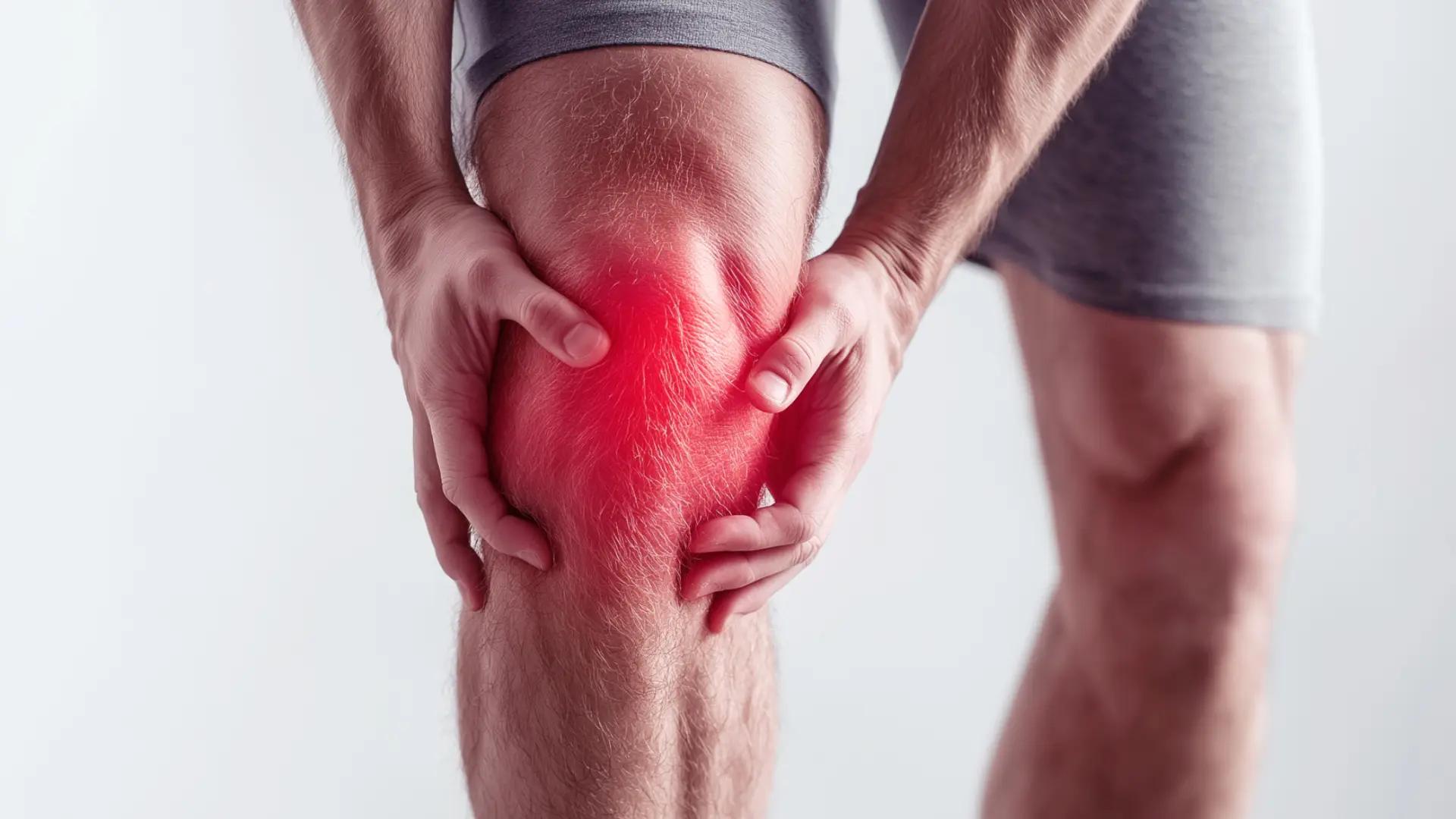
Struggling with jumper’s knee? Discover expert-backed treatments, KT taping tips, and exercises that help you recover faster—backed by science and results.
Key takeaways
- Jumper's knee, or patellar tendinopathy, is an overuse injury of the tendon just below the kneecap, common in people who jump and sprint.
- The pain is load-related: it flares when you stress the knee and eases when you stop, and chronic cases involve tendon degeneration more than inflammation.
- Exercise is the treatment that actually works, and a progressive loading program is the clear first-line, backed by the strongest evidence.
- Straps and taping can reduce pain during activity, but they are short-term aids, not a fix, and are best used to help you do your rehab.
- Shockwave and other adjuncts may be considered for stubborn cases, though the high-quality evidence for them in jumper's knee specifically is limited.
In this article
- What is jumper's knee?
- What are the symptoms, and why does the pain persist?
- What does the research say actually works?
- Do straps and taping help jumper's knee?
- How does Unpain Clinic treat jumper's knee?
- What exercises and self-care help at home?
- Frequently asked questions
If a sharp pain just below your kneecap is keeping you from the activities you love, you are not alone. Jumper's knee, the common name for patellar tendinopathy, affects many active people, especially athletes who jump or sprint. The encouraging news is that it usually heals with the right approach. This guide walks through the symptoms and root causes, whether straps and taping help, and the treatments that actually work, grounded in the research. For the bigger picture on knee pain, our guide to what causes knee pain is a useful companion.
This is general information, not a substitute for a professional assessment or medical advice.
What is jumper's knee?
Jumper's knee is an overuse injury of the patellar tendon, the thick cord connecting your kneecap to your shinbone. This tendon straightens the knee and absorbs force during jumping and running, and repetitive strain from countless jumps, sprints, or squats can cause tiny tears in it. Over time the tissue becomes degenerative rather than simply inflamed, which is why clinicians usually call it tendinopathy rather than tendinitis. In plain terms, the body is trying to heal the tendon but cannot keep up with the damage, leading to a cycle of ongoing pain and tendon change.
It commonly affects young athletes, and it is one of the most frequent tendon injuries in people aged 15 to 30 who play sports like basketball, volleyball, and soccer, with a notable share of elite jumping athletes affected at any given time. You do not have to be a pro, though. It also affects recreational exercisers and people in their 40s and 50s who ramp up activity quickly, such as taking up pickleball on weekends. Men are affected somewhat more than women. Risk factors include jumping on hard surfaces, tight leg muscles, and an inherent tendon weakness.
The key idea is that this is a load problem in a slow-healing tissue. That shapes everything about how it is best treated, because the solution is not simply to rest, but to rebuild the tendon's capacity to handle load.

What are the symptoms, and why does the pain persist?
The classic symptom of jumper's knee is pain at the bottom of the kneecap, right where the tendon attaches. Early on you might only feel a twinge after a hard practice or the morning after a game, but over time the pain can start during activity and grow more intense, limiting your performance. It is usually a sharp or aching pain that flares with jumping, sprinting, or going down stairs.
A defining feature is that the pain is load-related: it tends to hurt when you stress the knee, such as during a jump or squat, and eases when you stop. Unlike some other knee problems, true jumper's knee usually does not throb at night or cause dramatic swelling. You may feel tenderness when you press on the tendon, and in chronic cases some localized thickening. Occasionally there is stiffness after sitting a long time with the knee bent, though that "movie theatre" pattern is more typical of runner's knee.
Here is why the pain can persist. Tendons have a relatively poor blood supply, so they heal slowly, and if you keep up high-impact activity without giving the tendon time to repair, the tiny tears accumulate. In chronic cases the pain comes less from active inflammation and more from the tendon's collagen fibres becoming disorganized, with new nerve fibres growing into the damaged tissue. Clinicians describe a continuum from an early, more reversible reactive stage to a long-standing degenerative stage.
Often the real driver is not just "too much jumping." Tight quadriceps or hamstrings, weak glutes or core, or limited ankle mobility can each place extra strain on the patellar tendon with every movement. If those factors are not addressed, resting the knee alone may not solve the problem for good, which is why a whole-body assessment matters. On diagnosis, imaging like ultrasound or MRI can show tendon thickening or small tears, but it does not always match the pain, since some people have abnormal-looking tendons with no pain and the reverse, so the clinical exam remains most important.

What does the research say actually works?
The research is clear that exercise is the treatment that actually works, and a structured, progressive loading program is the first-line approach for jumper's knee. This is where the strongest evidence sits, and it is worth being honest about that, because it saves you time and effort chasing passive fixes.
Exercise is the cornerstone. A 2022 review of high-quality studies concluded that exercise therapy is the most effective treatment for patellar tendinopathy, with programs that progressively load the tendon giving the best results [1]. The traditional approach uses eccentric exercise, such as slow decline squats that emphasize the lowering phase, and newer work supports adding isometric exercises for pain relief. A systematic review and network meta-analysis of 37 trials found that isometric exercise was about as effective as isotonic exercise for immediate pain relief, and concluded that eccentric loading, with or without adjuncts, should remain the first-line treatment for everyone with patellar tendinopathy [2]. A combination of isometric, eccentric, and heavy slow resistance exercise can both reduce pain and, over time, rebuild the tendon's capacity.
Time and consistency matter. Tendons heal over months, not days, and exercise programs in studies often run 6 to 12 weeks or longer, with gradual increases in load. Early on, mild pain during exercise that settles within a day is generally acceptable, while sharp pain is a signal to ease off. Many people improve substantially after about 8 to 12 weeks of diligent rehabilitation, though severe cases can take longer.
Load management is part of it. Stepping back from high-impact activity for a while is usually necessary, but complete rest is not the goal, since a fully unloaded tendon deconditions. The idea is relative rest: pause the activities that flare it, keep fit with low-impact options like cycling or swimming, and use pain as your guide.
Where do other treatments fit? This is where honesty helps. For shockwave therapy, the high-quality evidence in jumper's knee specifically is limited and mixed. The network meta-analysis above found that shockwave was not clearly superior to a sham treatment for patellar tendinopathy when both groups also did eccentric exercise [2]. Some individual studies, such as an ultrasound-based evaluation of shockwave for patellar tendinopathy, have reported pain relief [5], but overall the research does not show that shockwave adds a clear benefit over a good exercise program for this condition. That is why we treat it as an optional adjunct for stubborn cases rather than a primary treatment, unlike its stronger role in some other conditions covered in our explainer on how shockwave therapy works. Passive modalities like ultrasound, laser, and TENS have limited evidence and do not address tendon load capacity. Platelet-rich plasma injections have mixed results and are more invasive. And repeated corticosteroid injections are generally avoided in tendinopathy, since they can weaken the tendon. Surgery is a last resort reserved for chronic cases that fail many months of proper conservative care.
Do straps and taping help jumper's knee?
Yes, straps and taping can help with pain during activity, but they are short-term aids rather than a fix, and they work best alongside your rehabilitation. They are worth understanding because they are cheap, low-risk, and can keep you moving.
An infrapatellar strap, the small band worn just below the kneecap, applies pressure to the tendon and can reduce pain during activity. A computational analysis found that infrapatellar straps decrease the localized strain at the site of the jumper's knee lesion, essentially by changing the tendon's angle and length so the tender spot is spared some load [3]. Many people get real relief wearing a strap while running or jumping.
Kinesio taping can also help, with a trade-off worth knowing. A randomized study found that taping the patellar tendon reduced pain during a maximal jump compared with no tape, but the taped athletes also had a slightly lower jump height, possibly because the tape adds support while restricting a little motion [4].
The honest bottom line is that straps and tape manage pain, they do not heal the tendon. Use them to get through a training session or game with less pain, which in turn lets you keep doing the strengthening that actually rebuilds the tendon. Relying on a brace without doing the rehabilitation tends to leave the underlying problem unchanged.

How does Unpain Clinic treat jumper's knee?
We treat jumper's knee by building the plan around the exercise that works, while finding and fixing the whole-body factors overloading your tendon, and adding hands-on care and optional adjuncts where they help. It starts with a thorough 60 minute, one-on-one assessment, not just of your knee, but of your hip mobility, ankle stability, and core and glute strength, since imbalances above or below the knee often overload the patellar tendon. Weak glutes that let the knee cave inward on landing, or a stiff ankle that makes the knee compensate, are common findings.

From there, a plan usually combines several of the following:
- A customized exercise program. Since exercise is the most effective treatment, this is the centrepiece. We coach isometric exercises early for pain relief, progress to eccentric decline squats to load the tendon in a controlled way, and add heavy slow resistance work as you improve, along with hip, glute, and core strengthening to fix the mechanics that overloaded the tendon. We do some of it with you in the clinic to get the form right, and give you a program to continue at home.
- Manual therapy. Our physiotherapy, chiropractic care, and massage therapy release tight quads and iliotibial band, mobilize the kneecap, and improve ankle mobility, so the tendon is under less strain and moves better.
- Shockwave as an optional adjunct. For stubborn cases that have not responded to a proper exercise program, we may add focused shockwave therapy. We are honest that the high-quality evidence for shockwave in jumper's knee specifically is limited, so we use it as a complement to the exercise that does the real work, not as a standalone fix.
- EMTT and neuromodulation. Where pain has become sensitized over many months, EMTT and NESA neuromodulation may help calm the area and the nervous system, which can make it easier to do your exercises. We use a similar approach in other stubborn knee problems, such as those in our guide to knee bursitis.
- Education and prevention. We coach landing and jumping technique, pacing, and a gradual return to sport, so the injury is less likely to return.
We are honest that recovery takes consistency and that results vary. Because exercise rebuilds the tendon while the other tools support the process, we treat them as partners, with the strengthening always at the core. If your pain turns out to be runner's knee rather than jumper's knee, our patellofemoral syndrome home self-check may fit better.

What exercises and self-care help at home?
What you do between visits is just as important as in-clinic care. These steps are based on common protocols and the evidence. Keep everything within a comfortable range, use pain as your guide, and check with your clinician if you are unsure.

- Relative rest and activity modification. Scale back the activities that flare your knee, swapping running and jumping for low-impact options like cycling, swimming, or the elliptical, and avoid deep knee bends and full-depth lunges for now. Aim to keep activity pain-free or only mildly uncomfortable, and stay gently active rather than fully resting.
- Ice for pain. Ice will not heal the tendon, but it can ease pain and calm a flare. Apply an ice pack wrapped in a cloth over the tendon for 15 to 20 minutes after activity or when it is sore, and some people find icing before bed reduces next-morning soreness.
- Use a strap or tape. An infrapatellar strap worn about a finger's width below the kneecap, snug but not too tight, can offload the tendon during activity, and Kinesio tape applied with the right technique can do similar. These are helpers to keep you active, not replacements for rehabilitation.
- Start with isometric quad sets. Sit with your leg straight and a rolled towel under the knee, tighten your thigh to press the back of the knee down, hold 5 to 10 seconds, and repeat for 2 to 3 sets of 10. If that is pain-free, progress to wall sits held at a comfortable angle. Isometrics can reduce pain and begin building tolerance, and are especially useful if the knee hurts even at rest.
- Progress to eccentric decline squats. Once your baseline pain has eased, stand on a decline of about 25 degrees on the affected leg, slowly lower into a squat of roughly 45 to 60 degrees over about 3 seconds, then use the other leg or a rail to help back up, so the affected knee only does the lowering. Aim for 3 sets of 10 to 15 reps every other day, expecting a moderate thigh effort and at most mild tendon discomfort. As it eases, add light resistance.
- Stretch and mobilize. Gentle quad, hamstring, and calf stretches, plus ankle mobility and hip flexor work, reduce the tension that pulls on the tendon. Hold each stretch about 30 seconds, keep it gentle, and skip anything that aggravates the knee. Foam rolling the quads and iliotibial band can help too.
- Return to sport gradually. As pain eases and strength returns, reintroduce impact slowly, starting with small hops and low-intensity drills, and building sensibly. Warm up thoroughly before high-impact activity, and keep doing your strength work even once you feel better, since that is what prevents relapse.
- Listen to your body. Healing is not always linear. If pain spikes, treat it as feedback, take an extra rest day or ease the load, rather than pushing through. When you feel good, still ramp up gradually, increasing training load in small increments rather than all at once.
Consistency and patience are your allies here. Tendons heal slowly, but they do heal, and small wins like a pain-free squat add up. If something does not feel right, check in with your physiotherapist for adjustments.
Frequently asked questions
What is the difference between jumper's knee and runner's knee?
They are different conditions, though both cause knee pain. Jumper's knee is patellar tendinopathy, pinpoint pain in the tendon just below the kneecap, brought on by jumping and explosive movement, and you feel it when loading the knee. Runner's knee usually means patellofemoral pain syndrome, a more diffuse ache around or behind the kneecap linked to how the kneecap tracks, often flaring with running, downhill walking, or prolonged sitting. A quick clue: if pressing just below the kneecap is very tender and reproduces your pain, it leans toward jumper's knee. A clinician can confirm which you have.
Do patellar tendon straps and knee braces really help jumper's knee?
They can help manage symptoms, but they are not a standalone fix. An infrapatellar strap applies pressure that reduces strain on the injured part of the tendon, and many people feel less pain during activity with one on, while Kinesio taping can also unload the tendon in the short term. The key is to use them to help you stay active and do your rehabilitation, not to replace strengthening. Over-relying on a brace without rehab can leave the tendon weak, so use them as temporary aids and make sure any brace fits snugly without cutting off circulation.
How long does it take to recover from jumper's knee?
It depends on severity and how consistent you are. Mild cases of a few weeks can improve in about 4 to 6 weeks with consistent treatment and activity changes, moderate cases of a few months often take around 3 to 4 months, and chronic severe cases with tendon degeneration can take 6 to 12 months or longer. Pain relief usually comes before full tendon healing, so continuing a maintenance exercise program even after you feel better helps protect against recurrence. Tendons heal more slowly than muscle, so patience matters, but most people recover with the right approach.
Should I completely stop sports and running if I have jumper's knee?
Usually not, unless your pain is severe. The better approach is to modify rather than eliminate: pause the sport that flares it while you rehabilitate, but keep fit with low-impact cross-training like swimming or cycling, and keep the tendon working with your controlled rehab exercises. Going from full rest straight back to intense activity tends to cause re-injury, so reintroduce your sport gradually, for example starting at a fraction of your usual volume and building by small increments each week, easing back if pain returns.
Is shockwave therapy safe, and does it hurt?
Shockwave is considered a safe, non-invasive treatment, used in sports medicine for years. Because it uses sound waves rather than an electric current, it carries no serious systemic risks, though it is used with extra care in people with bleeding disorders, on blood thinners, or who are pregnant. Side effects are usually minor, like temporary soreness, redness, or mild bruising. During the session you feel a rapid tapping that can be briefly sharp over tender spots, but the intensity is adjusted to stay tolerable, no anesthesia is needed, and any discomfort stops when the pulses stop. For jumper's knee specifically, it is worth knowing the evidence for shockwave is limited, so it is used as an optional adjunct rather than a primary treatment.
Do I need a doctor's referral to be treated for jumper's knee?
No referral is needed to see a physiotherapist or chiropractor in Alberta, so you can book an assessment directly. If you have seen a doctor and have imaging or reports, those are welcome but not required. Most extended health plans cover physiotherapy or chiropractic without a referral, though a few may ask for one for reimbursement, so it is worth checking your specific plan. The goal is to make it easy to start care, and we can coordinate with your family doctor or sports physician as needed.
“I was referred to Unpain Clinic by my chiropractor. Have been having sciatic problems for years. Recently knee problems. Have seen Uran the therapist for treatments. Have had great results with pain relief and mobility. I have just had treatment but the results are already there. When you research this therapy you will find that it takes a few months for this treatment to really take affect. Just the relief I have had already is well worth the treatment. I would recommend this treatment as very useful. Also this clinic has very capable people.”-Kurt W
About the author
Written by Uran Berisha, Founder of Unpain Clinic and Medical Shockwave Institute. Uran has a Bachelor of Science in Physiotherapy and is an International Educator in Shockwave Therapy.
Medically reviewed by Uran Berisha.
Book your initial assessment
Jumper's knee can be stubborn, but with the right plan it usually heals. The treatment that actually works is a progressive exercise program, supported where helpful by hands-on care, symptom aids like straps, and optional adjuncts for tough cases, all built around why your tendon became overloaded in the first place. If you have been frustrated by the cycle of rest, return, and re-injury, our assessment is designed for you. We ask not just where it hurts, but why. Your first visit is 60 minutes, assessment only, and includes:
- A full history and goal setting
- Head-to-toe orthopedic and muscle testing, plus motion analysis
- Imaging decisions if needed, and pain-pattern mapping
- A personalized treatment roadmap
You will see a licensed physiotherapist or chiropractor, and if we are a good fit, we schedule your first treatment and start your plan. No referral needed, no pressure, and no long-term upsells, just honest, effective care. If we do not think this approach is right for you, we will tell you honestly. Book your initial assessment and let's get you back to pain-free movement.
References
- Čobec J, Kozinc Ž. Conservative treatments for patellar tendinopathy: a review of recent high-quality evidence. BioMed. 2022;2(4):359-375. https://www.mdpi.com/2673-8511/2/4/28
- Challoumas D, Pedret C, Biddle M, Ng NYB, Kirwan P, Cooper B, Nicholas P, Wilson S, Clifford C, Millar NL. Management of patellar tendinopathy: a systematic review and network meta-analysis of randomised studies. BMJ Open Sport & Exercise Medicine. 2021;7(4):e001110. https://doi.org/10.1136/bmjsem-2021-001110
- Lavagnino M, Arnoczky SP, Dodds J, Elvin N. Infrapatellar straps decrease patellar tendon strain at the site of the jumper's knee lesion: a computational analysis based on radiographic measurements. Sports Health. 2011;3(3):296-302. https://doi.org/10.1177/1941738111403108
- Tamura K, Resnick PB, Hamelin BP, Oba Y, Hetzler RK, Stickley CD. The effect of Kinesio-tape on pain and vertical jump performance in active individuals with patellar tendinopathy. Journal of Bodywork and Movement Therapies. 2020;24(3):9-14. https://doi.org/10.1016/j.jbmt.2020.02.005
- Maemichi T, et al. Pain relief after extracorporeal shock wave therapy for patellar tendinopathy: an ultrasound evaluation. Applied Sciences. 2021;11(18):8748. https://www.mdpi.com/2076-3417/11/18/8748
- Unpain Clinic. Shockwave Therapy Edmonton: Focal vs Radial for Heel Pain. Blog article, 2025.
- Unpain Clinic. Knee Bursitis Treatment. Blog article (example of integrated treatment approach).
- Unpain Clinic. Knee Pain Relief Page (patellar tendinopathy description).
- Unpain Clinic. FAQ: Is shockwave therapy covered under private health benefits plans? (Insurance coverage information).
Related Topics