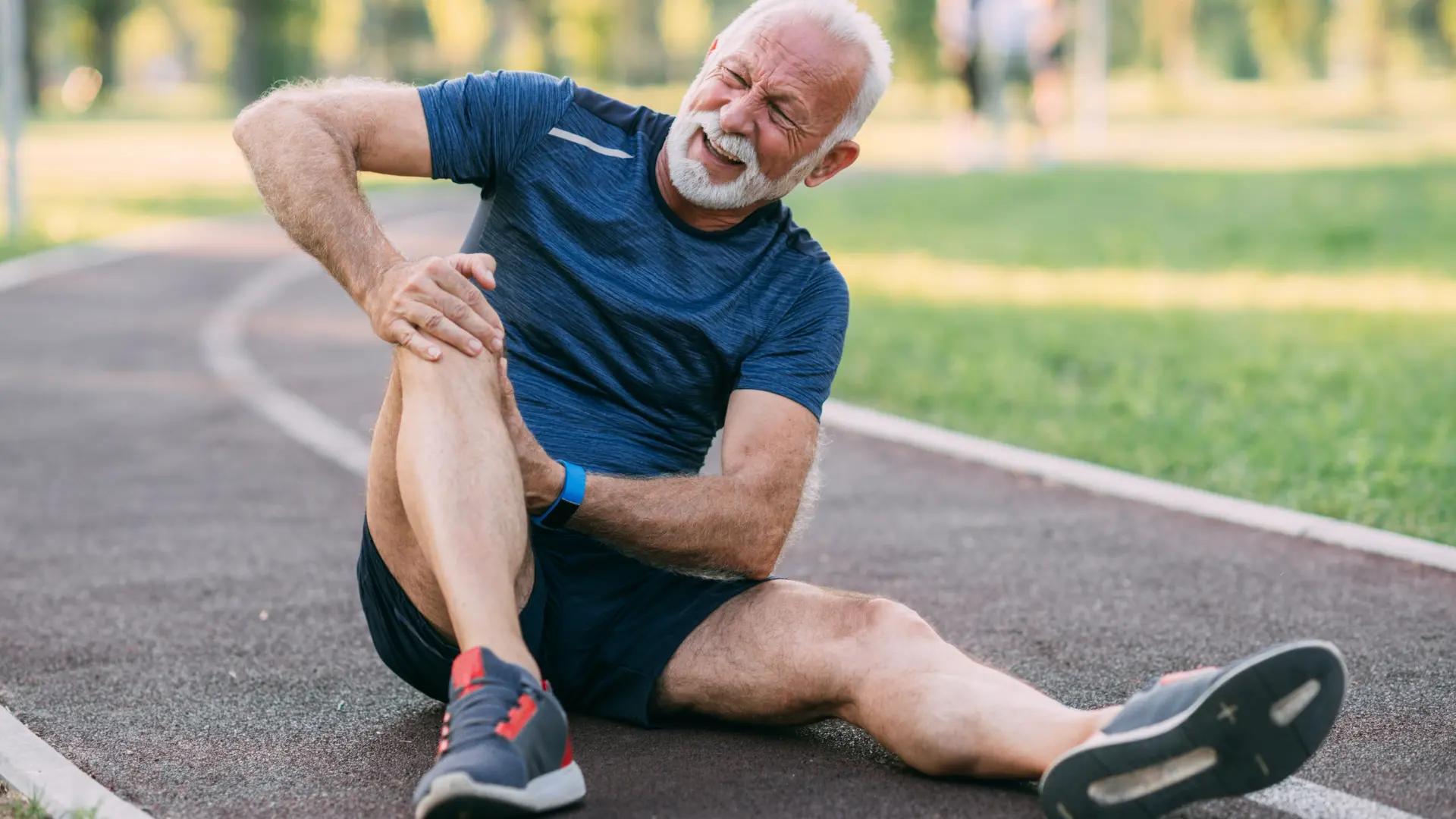
Discover effective chondromalacia patellae treatment. Learn symptoms, causes, and expert care options for runner’s knee at Unpain Clinic.
Key takeaways
- Chondromalacia patellae, commonly called runner's knee, is pain around or behind the kneecap from irritation of the cartilage on its underside, usually from overuse or the kneecap not tracking well.
- It rarely comes from a single injury. It builds up gradually, and the real drivers are often weak hips or quads, tight muscles, and alignment issues from the foot to the hip.
- Exercise is the treatment that actually works, and combining hip and knee strengthening with education gives the best results.
- Braces, sleeves, orthotics, and taping can ease pain in the short term, but they manage symptoms rather than fix the cause.
- Chondromalacia patellae is very treatable and rarely needs surgery. At Unpain Clinic in Edmonton, we build the plan around exercise and add shockwave, EMTT, and hands-on care for stubborn cases.
In this article
- What runner's knee is
- What causes it
- Why the pain persists
- What the research says works
- How we treat it at Unpain Clinic
- What exercises and self-care help at home
- Common questions
If persistent pain around your kneecap flares every time you climb stairs, squat, or sit through a long movie, you are dealing with a frustrating but very treatable problem. Chondromalacia patellae, better known as runner's knee, is usually caused by overuse and a kneecap that is not tracking smoothly, and it responds well to the right plan without surgery. This guide walks through the causes, what the research shows, and how to manage it safely. For the bigger picture, our guide to what causes knee pain is a useful companion.
This is general information, not a substitute for a professional assessment or medical advice. Every knee is different, and results vary from person to person.
What is chondromalacia patellae, and is it the same as runner's knee?
Chondromalacia patellae is pain at the front of the knee caused by irritation or softening of the cartilage on the underside of the kneecap, and yes, it is what most people mean by runner's knee. The term literally describes a softening of the cartilage that cushions the kneecap, or patella. It is a common cause of knee pain in teens and active adults.
Normally the kneecap glides smoothly in a groove at the end of the thigh bone as you bend the knee. In chondromalacia, that cartilage becomes irritated or worn, so the kneecap does not track perfectly and rubs against the femur. The result is an achy or sometimes sharp pain at the front of the knee, especially during activities that load the joint behind the kneecap, known as the patellofemoral joint. You can read more in our overview of patellofemoral pain syndrome.
Unlike an acute injury, there is usually no single moment that caused it. It develops gradually from overuse or alignment issues, tends to improve with rest, and then returns when activity resumes. Without proper rehabilitation, that stop-start pattern can become a chronic cycle. The reassuring part is that, unlike cartilage damage from advanced arthritis, the changes in runner's knee are often reversible with the right care.

What are the symptoms of chondromalacia patellae?
The hallmark symptom is a dull ache around or behind the kneecap that worsens with knee-bending activities, and it often feels spread out and hard to pinpoint. Many people also feel or hear a grinding or grating sensation, called crepitus, when they straighten the knee.
The pain tends to flare in a few predictable situations. Stairs and hills are common triggers, and going down is usually worse than going up because of the load on the kneecap. Deep squats and kneeling compress the joint and can produce a sharp pain. After sitting a long time with the knees bent, many people notice the front of the knee aches and feels stiff when they stand, the so-called theatre sign. Running, jumping, and repetitive impact from hiking, aerobics, or court sports can all set it off, which is how it earned the runner's knee nickname.
A few other clues are worth knowing. Pressing along the edges of the kneecap may be tender, often on the inner side. Significant swelling is uncommon, though the knee can feel slightly puffy after heavy use. The pain can affect one or both knees, and it can start on one side and appear on the other later if the same imbalances exist. If your onset was gradual and these patterns sound familiar, chondromalacia patellae is a likely culprit, though it is still wise to have it assessed to rule out other causes like patellar tendon pain or a meniscus problem.
What causes chondromalacia patellae?
Chondromalacia patellae is usually multifactorial, meaning several factors combine to irritate the cartilage under the kneecap rather than one single cause. Understanding those factors is what makes the problem fixable, because most of them can be changed.
Muscle weakness or imbalance. Weak quadriceps, especially the inner quad known as the VMO, or weak hip stabilizers in the glutes, can let the kneecap drift out of its groove during movement. Patellofemoral pain is often linked to quad and hip weakness. If certain muscles are not doing their job, extra stress lands on the joint behind the kneecap.
Alignment issues along the chain. Poor alignment from the hips down to the feet changes the forces on your knee. Flat feet or excessive foot pronation can rotate the knee inward, while a tight IT band, tight calves, or a kneecap that tilts from soft-tissue tightness can pull the patella off track. Even a leg-length difference or a rotated pelvis can subtly change how the kneecap moves. This is why the knee is often the victim of a problem elsewhere.
Overuse and repetitive strain. A classic scenario is a sudden jump in activity, like ramping up running mileage or starting a lot of squats or stairs. The repetitive load irritates the cartilage, and the damage builds up gradually rather than from one trauma. Jobs and hobbies with heavy kneeling, stair climbing, or crouching can contribute too.
Age, sex, and prior injury. Runner's knee most often affects young, active people, and adolescent females report it at higher rates, likely from a mix of anatomy and ligament factors, though anyone can develop it. A past kneecap injury, such as a dislocation, can alter how the patella moves and raise the risk later.
Tightness and nervous-system sensitivity. Tight quads, IT band, hamstrings, or calves can tug the kneecap out of line and load the joint. In longstanding cases, the nervous system can become sensitized, turning up the volume on pain so that normal pressure feels like too much. Fear of movement and guarding can then feed the cycle, which is why calming the nervous system is sometimes part of the solution.
Why does the pain persist?
The pain persists because rest alone does not fix the underlying weakness, tightness, or alignment that caused it. People rest, feel a bit better, then return to running or squatting, and the irritation resumes the moment the knee is overloaded again. That stop-start pattern can drag on for months or years, and pushing through the pain often makes it worse.
The way to break the cycle is to address the root causes, strength, flexibility, and alignment, rather than repeatedly waiting for the pain to settle. The good news is that chondromalacia patellae is not a permanent-damage situation. Unlike advanced arthritis, the cartilage changes in runner's knee can often heal or significantly improve once you offload the stress and strengthen the knee properly. With the right approach, many people see major improvement in a matter of weeks to months, and it does not inevitably progress to arthritis.

What does the research say about chondromalacia patellae treatment?
The research points to a clear conclusion: there is no single cure, and the best results come from an active, multi-pronged plan built around exercise. Here is what the evidence shows.
Exercise is the cornerstone. Strengthening and stretching are considered the gold standard for patellofemoral pain, and combining hip and knee exercises works better than knee exercises alone. Programs that build the quads, especially the VMO, along with the hip abductors and external rotators, improve how the kneecap tracks and reduce pain. Studies suggest doing targeted rehabilitation at least three times a week for six to eight weeks to see meaningful improvement.
Education plus a physical treatment works best. A large living review of patellofemoral pain treatments found that education combined with a physical treatment, such as exercise, orthoses, or patellar taping, is most likely to be effective at three months [1]. In other words, people do best when they understand their condition and follow an active plan, rather than relying on one passive treatment. International consensus guidelines echo this, recommending exercise combined with options like taping, bracing, and foot orthotics [4].
Braces and orthotics help, with limits. Certain aids give useful short-term relief. Patellofemoral braces have been shown to reduce pain and improve function, and one study of an elastomeric knee brace reported meaningful short-term benefit in patellofemoral pain [2]. Foot orthotics can help when foot mechanics are part of the problem, and one trial found that a program focused on the feet, using foot orthoses and exercises, was more effective than knee exercises alone for some people with patellofemoral pain [3]. These tools do not cure the condition, but they can manage symptoms and address contributing factors while you build strength.
Shockwave shows promise for tougher cases. A 2024 randomized trial found that adding shockwave therapy to a rehabilitation program produced greater pain reduction and better joint mobility than the rehabilitation program alone, in a group of 64 people with patellofemoral pain [5]. This supports shockwave as a complement to physiotherapy that can help when standard care has stalled, rather than a replacement for the exercise that does the underlying work.
Recovery takes patience. Most people start feeling improvement after a few weeks of consistent rehabilitation, with mild cases often improving in four to six weeks and more persistent cases taking three to six months. Research programs commonly show notable pain reduction and better function by three months, and by twelve months the majority of people have minimal to no pain, especially those who keep up their exercises.
How does Unpain Clinic treat chondromalacia patellae?
At Unpain Clinic in Edmonton, we build the plan around the exercise that works, then find and fix the whole-body factors overloading the kneecap, adding advanced therapies where they help. We do not just hand you a brace and a generic sheet of exercises. We start with a thorough 60-minute, one-on-one assessment that looks at your hips, quads, foot mechanics, ankle mobility, and alignment, because the kneecap is usually paying for a problem somewhere else in the chain.

Once the root causes are clear, your plan usually combines several of the following.
A customized exercise program. Since exercise is the most effective treatment, this is the centrepiece. We coach quad strengthening for the VMO, hip and glute strengthening to stop the knee caving inward, and flexibility work for tight quads, IT band, hamstrings, and calves. We get the form right with you in the clinic and give you a program to continue at home.
Focused and radial shockwave therapy. For stubborn cases, focused shockwave therapy delivers acoustic waves that stimulate blood flow, ease microscopic scar tissue, and calm pain by desensitizing nerve endings and prompting repair. We use focused shockwave on specific tender points, for example the quad tendon insertion or the border of the kneecap, and radial pressure waves over broader tight areas like the IT band and quad muscle. This treats both the sore spot and the tissue driving it. Sessions run about five to ten minutes per knee, usually about a week apart, with a typical course of three to five sessions. Many people notice some change after one or two sessions, with the fuller effect building over the following weeks. You can read more in our explainer on how shockwave therapy works.
EMTT. EMTT, or extracorporeal magnetotransduction therapy, uses high-frequency pulsed electromagnetic fields to reduce inflammation and support cellular repair, without any force or electric shock. We often pair EMTT with shockwave in the same session, because shockwave provides a mechanical stimulus to the tissue while EMTT calms a broader, irritable area. It is especially useful when even light pressure on the knee hurts.
Neuromodulation. When knee pain has lasted many months, the nervous system can stay on high alert and amplify pain out of proportion to the tissue. NESA neuromodulation and related tools help settle that response, which lowers the pain baseline and gives us a window to progress your exercises with less discomfort. We also use graded exposure, gradually and safely reintroducing movements you have been avoiding, to rebuild confidence in the knee.
Manual therapy and movement retraining. Our physiotherapy, chiropractic care, and massage therapy address structure. That can mean gentle patellar mobilizations to improve how the kneecap glides, soft-tissue release for tight quads and IT band, and mobilizing a stiff ankle or hip that is forcing the knee to compensate. We also coach movement, teaching you to squat, climb stairs, and land with the knee tracking over your toes, so you relearn healthy patterns.
The reason this works for stubborn cases is that it addresses every angle at once. We stimulate tissue healing, calm the nerves, correct alignment, and build strength, rather than treating only the sore spot. If your pain turns out to be more tendon-related, our note on patellar tendon pain may fit better, and our patellofemoral syndrome home self-check can help you narrow it down.

How do the common treatments for runner's knee compare?
The common approaches differ mainly in whether they build the knee up or just quiet the symptom, and in how long the relief lasts. A targeted exercise program is the one that produces lasting change, since it rebuilds the strength and control that keep the kneecap tracking properly, though it takes weeks of consistency to pay off. Braces, sleeves, and taping can reduce pain during activity almost immediately, which is genuinely useful, but they manage symptoms rather than fix the cause, so the pain returns if you rely on them without doing the rehabilitation. Foot orthotics help when foot mechanics are part of the problem, correcting alignment so less load reaches the knee, and they work best alongside exercise. Anti-inflammatory medication and ice can take the edge off a flare, but they mask symptoms and do nothing for the underlying weakness. Shockwave therapy sits between quick relief and slow rebuilding: it prompts the tissue itself to heal and, in studies, adding it to rehabilitation improved pain and mobility more than rehabilitation alone, which is why we use it to break a stubborn case out of a stall. Surgery is rarely needed for runner's knee and is reserved for cases that fail many months of proper conservative care. The most durable results come from stacking the tools that rebuild the knee, exercise and, where helpful, shockwave, while using braces or orthotics as short-term support and fixing the whole-body mechanics behind the pain.

What exercises and self-care help at home?
What you do between visits matters as much as your in-clinic care. Aim to do these strengthening and stretching exercises about three or four times a week, focus on good form, and remember that mild muscle soreness is fine but sharp knee pain is your cue to modify or stop. Always check with your clinician before starting new exercises if you have considerable pain.

- Clamshells for the glutes. Lie on your side with knees bent about 90 degrees and feet together, then lift the top knee like a clamshell opening without rolling your pelvis back. Do 2 to 3 sets of 12 to 15 per side. This targets the hip stabilizers that keep the knee from caving inward.
- Side-lying leg raises for hip strength. Lie on your side with the bottom leg bent, keep the top leg straight and slightly behind you, and lift it about 30 degrees, leading with the heel. Do 2 to 3 sets of 10 to 15 slow reps. Strong hip abductors help keep the thigh bone aligned under the kneecap.
- Straight leg raises for the quads. Lie on your back with one leg bent and the other straight, tighten the thigh of the straight leg, and lift it 12 to 18 inches while keeping the knee straight, then lower slowly. Do 2 sets of 10 to 15 per side. This strengthens the quad, including the VMO, without bending the sore knee.
- Mini wall-squats. Stand with your back against a wall and feet a little forward, place a soft ball between your knees and gently squeeze, then slide down into a shallow squat of about 30 to 45 degrees, hold 5 seconds, and slide back up. Repeat 10 to 15 times, keeping the knees in line with the toes. Go deeper only as it stays pain-free.
- Step-downs for eccentric control. Stand on a low step with the affected leg, and slowly lower the opposite heel toward the floor over a few seconds, tap lightly, and come back up, keeping the knee tracking over the foot. Do 2 sets of 8 to 10. This is more advanced, so save it for when you are stronger and skip it if it causes sharp pain.
- Stretch calves and hamstrings. For calves, stagger one leg back against a wall and press the heel down until you feel a stretch, holding about 30 seconds, three times per side. For hamstrings, prop your foot on a low step, keep the knee straight but not locked, and hinge forward at the hips, holding 30 seconds. Loosening these muscles reduces the pull on the kneecap.
- Use a brace or sleeve to stay active. A neoprene sleeve adds compression, warmth, and joint awareness, and a patellar-support brace can help the kneecap track better during running or squatting. Use them to keep moving and do your rehabilitation, not as a permanent substitute for strengthening.
- Practise relative rest and ease flares. Scale back high-impact activity and deep knee bends for a few weeks, swapping in low-impact options like cycling or swimming, and take mini-breaks from prolonged sitting. For a flare, ice the kneecap for 10 to 15 minutes, elevate the leg if it feels full, and use an over-the-counter anti-inflammatory sparingly if needed.
A couple of pointers tie it together. Consistency beats intensity, so 15 to 20 minutes every other day works better than one hard session a week, and warming up with a few minutes of easy movement before rehabilitation helps. Build back to running and impact gradually once squats, stairs, and a few hops are pain-free, and keep up your strength work even after you feel better, since that is what prevents relapse. If your pain is not improving after diligent effort, or something does not add up, check in with a professional.
Frequently asked questions about chondromalacia patellae
Is chondromalacia patellae the same as runner's knee?
For most people, yes. Chondromalacia patellae describes irritation or softening of the cartilage under the kneecap, and it is the diagnosis behind one common type of patellofemoral pain, which is popularly called runner's knee. Both refer to front-of-knee pain from the kneecap not tracking smoothly, and unlike arthritis, the changes are usually reversible with conservative treatment.
What are the symptoms of chondromalacia patellae?
The main symptom is an achy pain around or behind the kneecap that worsens with stairs, squatting, kneeling, running, or standing up after sitting with bent knees. Many people notice a grinding or cracking sensation when they bend the knee, and tenderness when pressing around the kneecap. Swelling is usually mild or absent. It can affect one or both knees.
How is chondromalacia patellae diagnosed, and do I need an MRI?
It is mainly a clinical diagnosis based on your history and a physical exam, so most people do not need an MRI. Your clinician will ask about your pain pattern and use tests like the patellar grind test and a step-down test, and check your kneecap mobility, strength, and alignment. Imaging is usually reserved for atypical cases or to rule out another problem, since most people with runner's knee have normal-looking scans.
What exercises are best for chondromalacia patellae?
The best exercises strengthen the quads and hips and improve flexibility where needed. Quad work like wall sits, mini-squats, and straight leg raises helps the kneecap glide correctly, while hip work like clamshells, side-lying leg lifts, and glute bridges stops the knee collapsing inward. Combined hip-and-knee programs outperform knee exercises alone, and gentle hamstring and calf stretches ease the pull on the kneecap.
Will a knee brace or sleeve help with chondromalacia patellae?
A brace or sleeve can help in the short term, though it does not cure the condition. A patellofemoral brace supports the kneecap and can reduce pain during activity, and a simple neoprene sleeve adds compression and joint awareness that many people find reassuring. Use them like training wheels to stay active while you strengthen, then phase them out as your muscles take over the job.
Can chondromalacia patellae go away on its own, and how long does it take?
It can improve, but it often lingers or returns unless the underlying weakness and alignment are addressed. With proper rehabilitation, most cases improve significantly within about six to twelve weeks, with mild cases faster and long-standing cases taking three to six months. It is not inevitably progressive, and the majority of people become pain-free with consistent exercise and good self-care.
Does shockwave therapy for knee pain hurt?
Most people describe it as a strong, rapid tapping rather than severe pain. It can be briefly uncomfortable over very tender spots, but the intensity is adjustable and the sensation stops the moment the device pauses. Afterward the area may feel a little sore for a day or two, similar to after a deep massage, and there is no downtime.
How many shockwave sessions will I need for chondromalacia patellae?
A course of about three to five sessions is common, usually spaced a week apart, with a reassessment along the way. Many people notice some improvement after one or two sessions, and the benefit builds over the following weeks as the tissue heals. Stubborn cases may need five or six, and pairing shockwave with exercise and manual therapy can sometimes reduce the total needed.
“Firstly, I am a complete sceptic. Was recommended by a Chiropractor to see Uran Berisha, who was a founder and expert in shockwave therapy. I was struggling. As I hit 50, my knees, hips and ankles were really bothering me. Aching, creaking..... keeping me up at night. Throbbing during the day. Did some research... still a little sceptical.... but thought I’d give it a go. Best thing I ever did! After appointment one, everything felt 20% better for about a week. After appointment 2, 60% better all the way to appointment 3. After appointment 3... I feel $1m! All I can stay is..... “I can’t recommend this enough”..... trust me.... try it.”- Brian Hare
About the author
Written by Uran Berisha, Founder of Unpain Clinic and Medical Shockwave Institute. Uran has a Bachelor of Science in Physiotherapy and is an International Educator in Shockwave Therapy. Medically reviewed by Uran Berisha. Last reviewed on July 8, 2026.
Book your initial assessment
Runner's knee can be stubborn, but with the right plan it usually heals. The treatment that actually works is a progressive exercise program, supported where helpful by hands-on care, symptom aids like a brace, and shockwave for tougher cases, all built around why your kneecap became overloaded in the first place. If you are tired of the cycle of rest, return, and re-injury, our assessment is designed for you. We ask not just where it hurts, but why. Your first visit is 60 minutes, assessment only, and includes a full history and goal setting, head-to-toe orthopedic and muscle testing, motion analysis, imaging decisions if needed, pain-pattern mapping, and a personalized treatment roadmap.
You will see a licensed physiotherapist or chiropractor, and if we are a good fit, we schedule your first treatment and start your plan. No referral needed, no pressure, and no long-term upsells, just honest, effective care. We will tell you honestly if this approach is not right for you. Book your initial assessment at Unpain Clinic.
References
- Winters, M., Holden, S., Lura, C.B., et al. (2021). Comparative effectiveness of treatments for patellofemoral pain: a living systematic review with network meta-analysis. British Journal of Sports Medicine, 55(7), 369 to 377. https://doi.org/10.1136/bjsports-2020-102819
- Uboldi, F.M., Ferrua, P., Tradati, D., et al. (2018). Use of an Elastomeric Knee Brace in Patellofemoral Pain Syndrome: Short-Term Results. Joints, 6(4), 203 to 208. https://pmc.ncbi.nlm.nih.gov/articles/PMC6059862/
- Mølgaard, C.M., Rathleff, M.S., Andreasen, J., et al. (2018). Foot exercises and foot orthoses are more effective than knee-focused exercises in individuals with patellofemoral pain. Journal of Science and Medicine in Sport, 21(1), 10 to 15. https://doi.org/10.1016/j.jsams.2017.05.010
- Crossley, K.M., van Middelkoop, M., Callaghan, M.J., et al. (2016). Patellofemoral pain consensus statement from the 4th International Patellofemoral Research Retreat, Part 2: recommended physical interventions. British Journal of Sports Medicine, 50(14), 844 to 852. https://doi.org/10.1136/bjsports-2016-096268
- Neculăeș, M., Hernandez-Lucas, P., Ioana-Bianca, I., and Lucaci, P. (2024). Contribution of Shockwave Therapy in the Functional Rehabilitation Program of Patients with Patellofemoral Pain Syndrome. Journal of Clinical Medicine, 13(23), 7260. https://pubmed.ncbi.nlm.nih.gov/39685719/
- Cedars-Sinai Health Library. (2025). Chondromalacia Patella (Runner's Knee). Cedars-Sinai Medical Center. https://www.cedars-sinai.org/health-library.html
- Berisha, U. (Host). (2023). Eliminate the Cause of Your Knee Pain With True Shockwave Therapy. Unpain Clinic Podcast, Episode 5. https://www.unpainclinic.com/en/podcast/chronic-knee-pain-causes-treatment
- Unpain Clinic. Patient Testimonials. https://www.unpainclinic.com/en/testimonials
- Unpain Clinic. Patellofemoral Syndrome Relief: Braces, Rehab, and Tools. https://www.unpainclinic.com/en/articles/patellofemoral-syndrome-relief-braces-rehab-tools
Related Topics