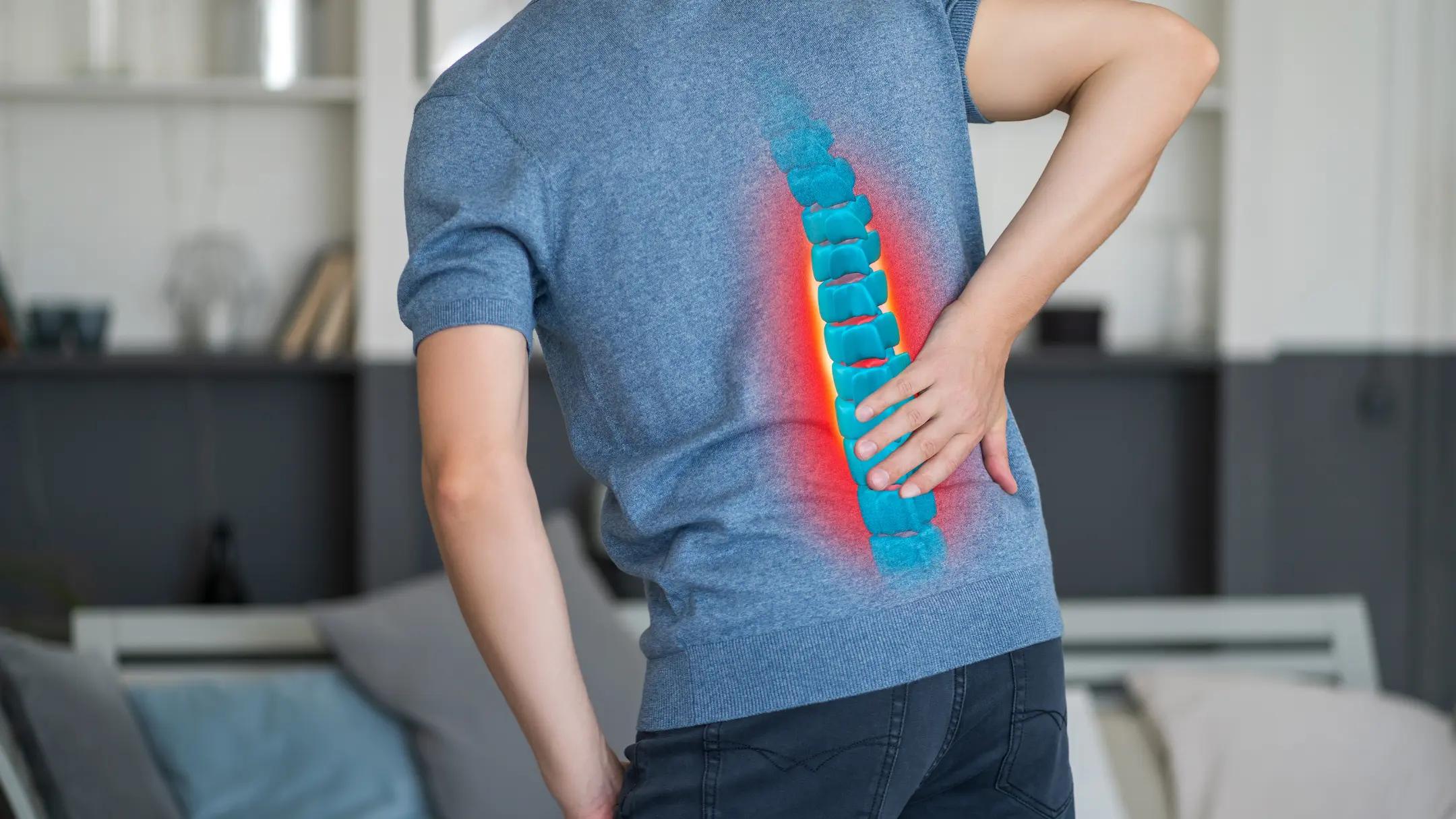
Learn why facet joint syndrome gets worse in November, how cold weather affects joint fluid and stiffness, and evidence-informed treatments available at Unpain Clinic.
Key takeaways
- Facet joint syndrome is irritation of the small joints at the back of the spine, and it often feels worse in winter, especially first thing in the morning.
- The best explanation for the November pattern is not the weather itself. It is how our bodies behave in winter: less movement, more sitting, hunched posture, and tighter muscles.
- Cold does make muscles tighten and joint fluid thicker, which can add to that stiff, locked morning feeling that eases as you warm up and move.
- Careful research has found that everyday temperature and air pressure do not actually trigger back pain episodes, so the fix is about your habits, not the forecast.
- Staying warm and active, correcting winter posture, and treating the joint and muscles all help most people feel better.
In this article
- What is facet joint syndrome?
- Why does facet joint pain feel worse in November?
- Does cold weather itself trigger back pain?
- What does the research say about treatment?
- How does Unpain Clinic treat facet joint syndrome?
- What can you do at home for winter facet pain?
- When should you see a professional?
- Frequently asked questions
If you live somewhere with real winters, you may notice a pattern: once November arrives, your back feels stiffer, sorer, and more locked up, especially first thing in the morning. For many people, the cause is facet joint syndrome, an irritation of the small joints at the back of the spine. The seasonal pattern is real for a lot of people, but as we will explain, it has more to do with how we move and sit in winter than with the weather acting on your spine. The same seasonal pattern shows up with nerve pain, which we cover in our guide to why sciatica flares in winter.
What is facet joint syndrome?
Facet joint syndrome is irritation, inflammation, or wear of the facet joints, the small paired joints at the back of each level of the spine that guide how you bend and twist. Each one is lined with cartilage and wrapped in a capsule of lubricating fluid, and because these joints are rich in nerve endings, even mild irritation can produce noticeable pain.
The symptoms have a recognizable pattern. People usually feel a localized ache in the lower or mid back, rather than pain shooting down the leg. It often worsens when arching or leaning backward, and with twisting. Morning stiffness is common, along with a back that feels like it catches or locks, and discomfort that builds after sitting for a while.
That pattern is a useful clue. Pain that is local, worse with backward bending, and stiff in the morning points more toward the facet joints, while pain that radiates down the leg points more toward a disc or nerve issue like disc-related back pain. An assessment is the reliable way to tell them apart.

Why does facet joint pain feel worse in November?
The main reason facet joint pain flares in late fall is that our behaviour changes with the season, not that the weather is directly attacking your spine. As the days get shorter and colder, most of us move less, sit more, and hunch against the chill, and all three add strain and stiffness to the lower back.
Less movement is the biggest piece. Joints rely on regular motion to stay lubricated and comfortable, so a sedentary winter leaves them stiffer, while the core and gluteal muscles that support the spine get weaker over the season. More sitting and driving keep the back in one position for long stretches, and hunched winter posture shifts load onto the facet joints, so when you straighten up, an already-irritated joint complains.
Cold also plays a supporting role in how stiff you feel. In the cold, muscles tend to tighten and guard, which squeezes the facet joints together, and the fluid that lubricates joints is naturally thicker when cold, which can add to that locked, stiff feeling in the morning. As you warm up and move through the day, muscles relax and the joints loosen, which is exactly why mornings tend to be the worst and why a warm shower and gentle movement help so quickly.
Does cold weather itself trigger back pain?
This is where it helps to be honest about the science: the direct evidence that weather triggers back pain is weaker than many people assume. In a study of nearly 1,000 people with sudden back pain, temperature, humidity, and air pressure showed no association with the onset of a back pain episode [1]. In other words, the barometer is probably not the culprit.
At the same time, there is evidence that longer-term cold exposure is linked to more back trouble. A large study in northern Sweden found that people with high cold exposure had higher odds of low back pain and nerve-related back pain [2]. The difference seems to be sustained exposure and the behaviours around it, rather than a passing cold snap or pressure change.
So if your back genuinely feels worse in winter, you are not imagining it, and the fix is within your control. The driver is much more likely the winter combination of less movement, more sitting, hunched posture, and tighter muscles than the weather acting directly on your joints. That is good news, because those are all things you can change.

What does the research say about treatment?
The research strongly supports an active, hands-on approach for this kind of back pain, rather than rest and waiting it out. Two findings are especially relevant.
Exercise is one of the most effective tools. A 2021 Cochrane review of 249 trials found that exercise is effective for chronic low back pain, improving pain compared with no treatment or usual care [3]. This is why rebuilding movement and strength, rather than avoiding activity, is central to getting winter back pain under control.
Shockwave therapy has evidence for back pain too. A 2023 meta-analysis of 632 patients found that shockwave therapy provided better pain relief and improved lower back function than comparison treatments, with no serious side effects [4]. Direct trials in facet joint syndrome specifically are limited, so shockwave is best used for the muscle tension and sensitivity around the joints, as one part of a plan.
Taken together, the evidence favours a combination: restore movement and strength, calm the irritated joint and surrounding muscles, and address the winter habits feeding the flare.
How does Unpain Clinic treat facet joint syndrome?
We treat facet joint syndrome by restoring movement in the stiff joints, calming the muscles guarding around them, and rebuilding the support the spine needs, rather than only easing the pain for a day. It starts with a thorough 60 minute, one-on-one assessment of your spinal movement, especially backward bending, along with hip mobility and the strength of your core and glutes. A common winter pattern we see is limited extension, tender facet joints, tight back muscles, and sleepy glutes after a sedentary stretch.

From there, a plan usually combines several of the following:
- Manual therapy. Our physiotherapy, chiropractic care, and massage therapy use joint mobilization, soft tissue work, and gentle traction to restore normal joint motion and reduce the compression on the facet joints.
- Focused shockwave therapy. For the tight, guarding muscles and sensitivity around the joints, focused shockwave therapy can help release tension and support healing, breaking the pain and muscle-guarding cycle.
- EMTT and neuromodulation. To calm inflammation and an oversensitive pain response, especially in recurrent cases, we may use EMTT and NESA neuromodulation.
- Corrective exercise. We build a targeted program, often including gentle extension mobility, hip mobility, glute strengthening, core control, and safe bending and lifting, since exercise is one of the most effective long-term tools.
- Winter-proofing. We coach posture, sitting setup, and daily movement habits so the season stops triggering the same flare each year.
We are honest that recovery takes some consistency and that individual results vary, and we track your progress and adjust. If your symptoms suggest a disc or nerve issue, or anything that needs imaging, we assess for that and coordinate with your physician.
What can you do at home for winter facet pain?
A few simple habits make a real difference between visits, and most are about warming up and keeping the joints moving. Ease off anything that sharply increases your pain.

- Warm up in bed before you get up. A minute or two of gentle pelvic tilts, knees rocking side to side, and slow back-and-forth rocking eases the morning stiffness before you stand.
- Use heat before movement. Ten minutes with a heating pad relaxes guarding muscles and makes your first movements of the day easier.
- Move little and often. Every 30 to 60 minutes, stand up, walk for a minute, reach overhead, and gently lean back, since small frequent movements keep the joints loose.
- Keep your back warm outdoors. Cold and wind increase muscle guarding, so a lumbar warmer, an extra base layer, and an insulated jacket help your back stay relaxed.
- Strengthen your glutes and core. Even five minutes a day of glute bridges and gentle core work offloads the spine and protects the facet joints.
- Mind your sitting posture. Use lumbar support, keep your hips level with or slightly above your knees and your feet flat, and avoid long stretches of slouching, which our guide to home office ergonomics covers in detail.
For staying resilient all season, our guide to injury prevention goes further.
When should you see a professional?
Most facet joint pain settles with the right care, but some symptoms deserve a prompt assessment rather than waiting. See a professional if your pain is severe, keeps returning each season, or is not improving with home care and gentle movement. Pain that starts radiating down a leg, or comes with numbness, tingling, or weakness, suggests a nerve is involved and should be assessed, since that points beyond a simple facet joint issue toward low back pain with nerve involvement.
A few symptoms are a medical emergency. Loss of control of your bladder or bowels, numbness in the saddle area between the legs, or sudden significant weakness in the legs needs immediate emergency care. When in doubt, get checked, since back and nerve problems respond best when addressed early.
Frequently asked questions
What exactly is facet joint syndrome?
Facet joint syndrome is irritation, inflammation, or wear of the small joints at the back of the spine that guide movement. It typically causes localized back pain, morning stiffness, and pain when you arch backward or twist. Because these joints have many nerve endings, even mild irritation can feel significant.
Why does facet joint pain get worse in cold weather?
Mostly because of how we behave in winter, not the weather itself. We move less, sit more, and hunch against the cold, which stiffens the joints and weakens the supporting muscles, while cold also tightens muscles and thickens joint fluid, adding to morning stiffness. Careful studies have found that temperature and air pressure do not directly trigger back pain, so the fix is about staying warm, active, and upright.
Can facet joint syndrome be mistaken for disc pain?
Sometimes. Facet joint pain is usually localized to the back and worse with arching backward, while disc or nerve pain more often radiates down the leg with numbness or tingling. Because they can overlap, a clinical assessment is the reliable way to tell which one is driving your pain, and treatment differs.
Does shockwave therapy help facet joint pain?
It can, as part of a plan. Shockwave has good evidence for lower back pain and can help release the tight, guarding muscles and sensitivity around the facet joints. Direct studies in facet joint syndrome specifically are limited, so it is combined with hands-on care and exercise rather than used alone.
Should I avoid exercise if I have facet joint pain?
No. Movement is one of the most effective treatments, and avoiding activity tends to make stiffness and weakness worse. The key is doing the right exercises, often gentle extension mobility, hip mobility, and core and glute strengthening, rather than pushing into sharp pain. A clinician can tailor these to your situation.
Do I need imaging for facet joint syndrome?
Not usually at first. Facet joint pain is generally diagnosed from your symptoms and a physical exam, and imaging is mainly considered if the pain is severe, persistent, worsening, or comes with nerve-related signs like leg pain or weakness. A clinician can advise whether a scan would change your treatment.
“I have the good fortune of having Dr. Barsalou as my Chiropractor. She showed care and concern as I explained my back pain and she was able to relieve my pain through gentle and thorough adjustments. I can't say enough about Dr.Barsalou and would highly recommend her as a Chiropractor.
Thank you Dr.Barsalou!”- Sonda Desjarlais
About the author
Written by Uran Berisha, Founder of Unpain Clinic and Medical Shockwave Institute. Uran has a Bachelor of Science in Physiotherapy and is an International Educator in Shockwave Therapy.
Medically reviewed by Uran Berisha.
Ready to get ahead of winter back pain?
If your back stiffens and locks up every cold season, the next step is a one-on-one assessment where we find what is irritating the joint and build you a clear plan to settle it and keep it settled. Your first visit is 60 minutes, assessment only, and includes:
- A full history and a look at your goals
- Head-to-toe orthopedic and movement testing, including your spinal extension and hip mobility
- A plain-language explanation of what is driving your pain
- A personalized recovery and winter-proofing roadmap
No referral needed. No pressure, no contracts. If we do not think this approach is a good fit for you, we will tell you honestly. Book your initial assessment and let's keep your back moving this winter.
References
- Steffens D, Maher CG, Li Q, Ferreira ML, Pereira LSM, Koes BW, Latimer J. Effect of weather on back pain: results from a case-crossover study. Arthritis Care & Research. 2014;66(12):1867-1872. https://doi.org/10.1002/acr.22378
- Stjernbrandt A, Hoftun Farbu E. Occupational cold exposure is associated with neck pain, low back pain, and lumbar radiculopathy. Ergonomics. 2022;65(9):1276-1285. https://doi.org/10.1080/00140139.2022.2027030
- Hayden JA, Ellis J, Ogilvie R, Malmivaara A, van Tulder MW. Exercise therapy for chronic low back pain. Cochrane Database of Systematic Reviews. 2021;9(9):CD009790. https://doi.org/10.1002/14651858.CD009790.pub2
- Liu K, Zhang Q, Chen L, Zhang H, Xu X, Yuan Z, Dong J. Efficacy and safety of extracorporeal shockwave therapy in chronic low back pain: a systematic review and meta-analysis of 632 patients. Journal of Orthopaedic Surgery and Research. 2023;18(1):455. https://doi.org/10.1186/s13018-023-03943-x
Related Topics