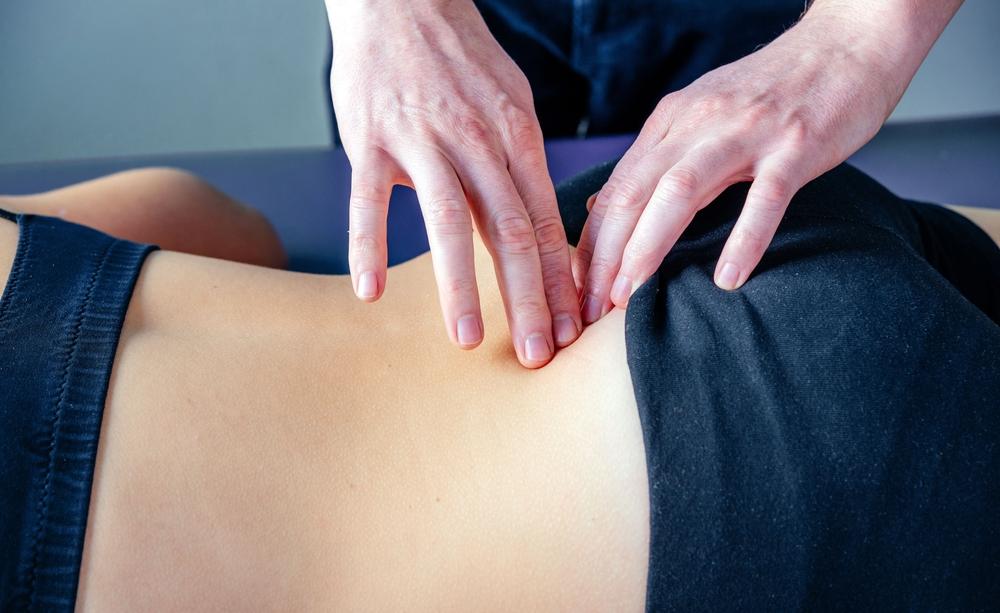
Shockwave therapy for Sacroiliac Joint Dysfunction may reduce chronic SI joint pain and improve movement. Learn what evidence says & what to expect.
Key takeaways
- Sacroiliac joint dysfunction is irritation or instability in the joints that link your spine to your pelvis, and it is a common but often missed cause of low back and buttock pain.
- Studies estimate the SI joint is the underlying cause in roughly 15 to 30 percent of chronic low back pain, yet it often takes months to get a clear diagnosis.
- SI joint pain tends to persist because the real drivers, like weak glutes, inhibited core muscles, or an old surgical scar, are not addressed.
- Shockwave therapy is non-surgical and works by prompting real healing: it improves blood flow, eases scar tissue, calms pain signals, and reduces muscle spasm around the joint.
- At Unpain Clinic in Edmonton, shockwave is one part of a whole-body plan that finds why the SI joint is overloaded and fixes the cause, supported by EMTT, hands-on care, and targeted exercise.
In this article
- What SI joint dysfunction is
- Why the pain becomes chronic
- What the research shows about shockwave
- How we treat it at Unpain Clinic
- What you can do at home
- Common questions
If deep low back and buttock pain, stiffness, and a feeling of instability have made simple movements daunting, you may be dealing with sacroiliac joint dysfunction. Shockwave therapy is becoming a go-to non-surgical option because it targets the tissue problems and muscle inhibition behind chronic SI joint pain instead of just masking the ache. This guide explains what SI joint dysfunction is, what the research shows, and how we approach it. For a seasonal angle, see our note on why SI joint pain flares in winter.
This is general information, not a substitute for a professional assessment or medical advice. Results vary from person to person.

What is sacroiliac joint dysfunction?
Sacroiliac joint dysfunction is pain and stiffness that comes from the sacroiliac joints, the two joints that connect the base of your spine, the sacrum, to the hip bones on each side. These joints carry your body weight and keep the pelvis stable, so when one or both become irritated, inflamed, or move poorly, the result is often a deep, aching pain near the waistline or buttock.
Several things can set it off. Common causes include a ligament injury from a fall or heavy lift, arthritis or degeneration of the joint, pregnancy-related changes in the pelvis, and muscle imbalances that load the SI region unevenly. The pain can radiate to the groin or down the leg, which is why it is often mistaken for sciatica or a disc-related lower back problem.
SI joint dysfunction is frequently underdiagnosed. Its symptoms overlap with general low back pain, so it can take months or years to get a clear answer, which is a big part of why people feel so frustrated by the time they find help. If your low back or buttock pain has an on-and-off pattern and does not fit a tidy disc or nerve picture, the sacroiliac joint is worth assessing.

Why does SI joint pain become chronic?
SI joint pain becomes chronic when the underlying drivers are never corrected, so the pain returns as soon as normal activity resumes. People try rest, heat and ice, anti-inflammatory medication, or an SI joint belt, and these can help for a while, but the relief tends to fade because the source of the dysfunction is still there.
Standard physiotherapy exercises to strengthen the core and glutes are important, but they do not always stick if key muscles are switched off by pain or by an old injury. An abdominal or C-section scar, for example, can quietly inhibit the deep core muscles that stabilize the pelvis, so the SI joint keeps getting overloaded no matter how many exercises you do. Some people move on to cortisone injections into the joint or radiofrequency ablation, which can dull pain for a time but do not always fix the joint dysfunction itself.
The result is a familiar cycle: some short-term relief, then the pain roars back. Breaking that cycle means finding and treating what is actually driving the SI joint to hurt, which is exactly where shockwave therapy, used inside a whole-body plan, can help.
What does the research say about shockwave therapy for SI joint dysfunction?
The research is encouraging: shockwave therapy has outperformed placebo for SI joint pain and, in the broader low back pain literature, it reliably reduces pain and improves function with a strong safety record. Direct studies on the SI joint are still relatively few, since SI joint dysfunction has only recently gained attention as a distinct diagnosis, but the evidence that exists points in a positive direction.
Shockwave beat a sham treatment for SI joint pain. One of the first controlled trials, published in 2017, randomly assigned 30 people with sacroiliac joint pain to true shockwave or a sham treatment, with the shockwave group receiving about 2,000 pulses per session at a tolerable energy level. After four weeks, the shockwave group had significantly less pain, with average scores dropping from roughly 6.4 out of 10 to about 3.6, while the sham group barely changed [1]. That tells us the benefit is real, not just placebo.
It helped postpartum SI joint dysfunction, especially combined with hands-on care. A 2024 clinical trial in postpartum women compared focused shockwave, manual therapy, and both together. Shockwave produced a faster improvement in disability after just one week and a high overall improvement rate, while the combination of shockwave and manual therapy gave the best results, and no adverse events were reported over two months of follow-up [2]. This fits what we see clinically: shockwave often kick-starts early gains, and a comprehensive plan gives the best lasting result.
The broader low back pain evidence is supportive. Because the SI joints are a common contributor to low back pain, the wider research matters. A 2023 meta-analysis that pooled 12 randomized trials and 632 people with chronic low back pain found that adding shockwave led to greater pain relief than control treatments at both four and twelve weeks, along with better function and no serious side effects [3]. A 2024 systematic review of focused shockwave for low back pain reached similar conclusions about its potential [4].
How does shockwave therapy work? In plain terms, it sends high-energy sound waves into the affected tissue, creating a small, safe mechanical stress that wakes up the body's repair response. It can increase blood flow and the growth of new blood vessels, prompt the release of growth factors that support healing, and help break up calcifications or scar tissue around the ligaments and joint capsule. It also calms pain by overstimulating nerve endings to reset pain signalling, and it can reduce muscle spasm and tightness in the low back and pelvis. Our explainer on how shockwave therapy works goes deeper, and our guide to shockwave therapy for lower back pain covers the wider low back picture.

How does Unpain Clinic treat SI joint dysfunction?
At Unpain Clinic in Edmonton, shockwave therapy is a primary tool for SI joint dysfunction, used inside a whole-body plan that asks not just where it hurts, but why. SI joint pain is often the result of a problem elsewhere, like stiff hips, an old surgical scar weakening the core, or movement patterns that overload the pelvis. Cracking the joint or resting it may give short-term relief, but lasting change means correcting those drivers.

A thorough assessment. We start with a 60-minute, one-on-one assessment that looks at your whole movement pattern, not just the sore spot. We test which motions provoke your SI pain, check the mobility of your lower back and hips, and look for muscle weakness or imbalance, for example whether your glutes are firing and whether tight hip flexors are tilting your pelvis. Clues like an old C-section scar or a past sports injury often point to the compensation pattern behind the pain.
Focused shockwave sessions. Focused shockwave therapy is usually front and centre. We target the posterior SI ligaments that hold the sacrum to the ilium, the attachments of the muscles that stabilize the region such as the gluteus medius and piriformis, and any tender trigger points contributing to the pain, moving methodically along the joint line and surrounding tissue. Many people describe a strong vibration or pressure during treatment, which we adjust to your tolerance, and it lasts only a few minutes per spot. There is no anesthesia and no downtime, just mild soreness that usually fades within a day. We generally treat once a week, and most SI joint cases need about three to five sessions, with more severe cases sometimes needing a few more.
EMTT and neuromodulation. We often pair EMTT with shockwave in the same session. Shockwave handles the mechanical, tissue side, while EMTT uses a deep-penetrating magnetic field to reduce inflammation and calm pain pathways at a cellular level, which is especially helpful for very sensitive people or winter flare-ups. When chronic pain has shut certain muscles down or turned the pain dial up, NESA neuromodulation and related tools help coax the nervous system back into balance, so your brain can re-engage the deep core while pain settles.
Hands-on manual therapy. Our physiotherapy, chiropractic care, and massage therapy address structure. That can mean gently mobilizing a stuck SI joint, releasing tight muscles like the piriformis, quadratus lumborum, and hip flexors, and making sure the lower back and hips move well so the SI joint does not have to compensate. A gentle SI joint adjustment can unlock the joint when appropriate, usually after shockwave has relaxed the tissues, and we always follow it with active exercises to stabilize the new movement, because combining manual therapy with exercise gives better results than either alone.
Targeted exercise. Once shockwave has reduced pain and improved tissue quality, we solidify the gains with strengthening. That usually means glute activation and deep core work for the muscles that stabilize the pelvis, progressing from pelvic tilts and abdominal bracing to glute bridges, bird-dogs, clamshells, and side planks, along with flexibility work for tight hamstrings or hip flexors. You get a home program to continue between visits, because that is what makes the results last. Shockwave opens the window by reducing pain and restriction, and exercise builds the support that keeps the SI joint healthy.
We also treat scars when they matter. In one case discussed on our C-Section recovery podcast episode, a mother with years of chronic low back and SI joint pain had an old C-section scar disrupting her core activation, and treating the scar and SI region with focused shockwave, alongside exercise, helped restore her stability. Individual results vary, but it shows why we look beyond the obvious to the root cause.

How do the common treatments for SI joint pain compare?
The common approaches differ mainly in whether they calm the symptom or fix the cause, and in how long the relief holds. Rest, heat and ice, anti-inflammatory medication, and an SI joint belt can settle a flare, but the relief is usually short-lived once you return to activity, because the underlying instability is unchanged. Cortisone injections and radiofrequency ablation can dull pain for weeks or months, though they target the pain rather than the joint dysfunction that produced it, so the pain often returns. A targeted exercise and core-stability program builds the support that protects the SI joint and is essential for lasting change, but on its own it can stall if key muscles are inhibited by pain or an old scar. Shockwave therapy sits between quick relief and slow rebuilding: it prompts the tissue to heal and, in trials, often kick-starts early improvement, which is why we use it to break a stubborn case out of a stall and make the exercise work better. Manual therapy and a gentle adjustment can unlock a stuck joint for immediate relief, but the change only holds if it is followed by stabilizing exercise. Surgery, such as SI joint fusion, is reserved for severe cases that fail thorough conservative care. The most durable results usually come from combining the tools that rebuild, exercise and shockwave, while using belts, medication, or injections as short-term support and fixing the whole-body mechanics behind the pain.

What can you do at home for SI joint dysfunction?
What you do at home makes a real difference between visits. These tips are general and meant to complement professional care, not replace it. Keep everything comfortable, use pain as your guide, and check with your clinician before starting new exercises if you have other health conditions.

- Stay gently active. Prolonged sitting or bed rest tends to stiffen the SI joint and weaken the muscles that support it. Work light movement into your day, like a few short 5 to 10 minute walks, and if you sit for work, stand up to stretch or walk in place at least every 30 minutes. A sit-stand desk or an exercise-ball chair for part of the day can help.
- Mind your posture. Slouching tilts the pelvis and strains the SI joints. Support the curve of your lower back with a small cushion when sitting, keep your hips and knees level, and when standing, avoid hanging on one hip. A quick reset is to imagine a string lifting the top of your head to lengthen your spine and gently draw the shoulder blades back.
- Use heat for tightness and ice for flares. A warm pack or hot bath loosens tight muscles around the SI area and eases achy stiffness, which is useful before activity. If you overdo it and the joint is sharply inflamed, ice for about 15 minutes to calm it, always with a cloth between the pack and your skin. Some people warm up with heat and settle down afterward with ice.
- Do gentle mobility stretches. A knees-to-chest stretch, a figure-four stretch for the piriformis and hip, and a kneeling hip flexor stretch can ease tension that pulls on the pelvis. Hold each about 20 to 30 seconds without pushing into sharp pain. Gentle pelvic tilts, slowly rocking the pelvis to flatten and arch the low back, keep the area mobile without strain.
- Wake up the glutes and core. Simple activation like abdominal bracing to find the deep core, then glute bridges and clamshells, helps the muscles that stabilize the SI joint start doing their job. Start light and focus on control rather than load, and stop anything that sharpens your pain.
- Adjust your sleeping position. Many people with SI pain feel better on their side with a pillow between the knees, which keeps the pelvis neutral, or on their back with a pillow under the knees. Stomach sleeping tends to be hardest on the SI joints because of the twist, so minimize it, and a medium-firm mattress usually supports the spine best.
- Know when to seek help. Get prompt medical attention for red flags such as severe pain with fever, loss of bladder or bowel control, numbness or weakness in the legs, or pain after significant trauma like a fall. If your SI pain is not improving at all after a few weeks of home care and therapy, check back in, since further assessment may be needed.
Frequently asked questions about shockwave therapy and SI joint dysfunction
Is shockwave therapy safe for SI joint dysfunction?
Yes, shockwave therapy is generally safe for musculoskeletal conditions like SI joint dysfunction, and studies of shockwave for chronic low back and SI joint pain have reported no serious side effects. It is non-invasive, with no incisions, injections, or anesthesia, and the most common after-effects are mild soreness, redness, or minor bruising for a day or two. It is avoided over an active infection or tumour and over the pelvis in pregnancy, and used with caution in people with bleeding disorders or on strong blood thinners, so your provider will screen you first.
How many shockwave sessions will I need for SI joint dysfunction?
Most plans range from about three to six sessions, spaced roughly a week apart. Many people notice some improvement after one or two sessions, such as less pain getting out of a chair or better flexibility, with the fuller benefit building over the following weeks. Long-standing cases tend to need the higher end of that range, while more recent or mild cases may settle in three. Your provider reassesses along the way and adjusts the plan to your progress.
Does shockwave therapy hurt?
Most people describe it as a strong, rapid tapping rather than severe pain. Discomfort can range from mild to moderate depending on the settings and the sensitivity of the area, but each pulse is quick and the intensity is adjustable, so it stays tolerable and stops when the device pauses. Afterward the area may feel a little sore for a day or two, similar to after a deep massage, and many people actually feel less pain in the days that follow.
Can shockwave therapy help if I have had SI joint dysfunction for years?
Yes, it can. Shockwave is designed for chronic, hard-to-heal problems, and much of the research focuses on pain that has lasted many months or years. Chronic SI joint dysfunction often involves poorly healed ligaments, long-standing scar tissue, or muscles that have shut down, and shockwave targets exactly these changes by prompting a fresh healing response. Longstanding cases usually do best when shockwave is combined with movement retraining and strengthening.
Who should not have shockwave therapy?
Shockwave is avoided over the pelvis and abdomen in pregnancy, in people with a significant bleeding disorder or on strong blood thinners, and over an active infection, tumour, or an acute fracture. It is also used with caution where there is severe nerve damage with loss of sensation, since you cannot give feedback on pain. A past cancer unrelated to the area is not automatically a barrier. Your provider reviews your history first, and if shockwave is not suitable, there are other options.
Is shockwave therapy covered by insurance?
It depends on your plan. Public health plans generally do not cover shockwave, but because it is delivered by licensed physiotherapists or chiropractors, many extended health plans cover the visit itself under physiotherapy or chiropractic. Some insurers recognize shockwave or radial pressure wave therapy specifically, and others treat it as an add-on. Check whether your plan covers the appointment, ask the clinic about any added fee and about package pricing, and request detailed receipts so you can submit for reimbursement.
What are the side effects of shockwave therapy?
Side effects are usually minor and short-lived, most commonly temporary soreness, redness, or mild bruising in the treated area, which fade within a day or two. Some people notice brief tingling or feel a little tired after a session, both of which pass on their own. There is no radiation and no risk of infection since nothing breaks the skin, and no long-term complications have been documented for shockwave on SI or back pain.
“I’m acquainted with all the therapists here and everyone is amazing at what they do! Dr. Lacina treated me after I was struggling with back pain for several years. Within 3 treatments I feel absolutely no pain! I can live my life normally and for the first time in 2 years I can train legs at the gym with no pain. She’s been completely life changing! I can’t recommend this clinic enough if you are struggling with pain! :)”- Holly LeBlanc
About the author
Written by Uran Berisha, Founder of Unpain Clinic and Medical Shockwave Institute. Uran has a Bachelor of Science in Physiotherapy and is an International Educator in Shockwave Therapy. Medically reviewed by Uran Berisha.
Book your initial assessment
SI joint dysfunction can feel like it is running your life, but it does not have to. The most durable results come from finding why the SI joint became overloaded and treating the cause, with shockwave therapy prompting real healing while EMTT, hands-on care, and targeted exercise support the process. If you are tired of the cycle of try everything and feel nothing, our assessment is designed for you. We ask not just where it hurts, but why. Your first visit is 60 minutes, assessment only, and includes a full history and goal setting, head-to-toe orthopedic and muscle testing, motion analysis, imaging decisions if needed, pain-pattern mapping, and a personalized treatment roadmap.
You will see a licensed physiotherapist or chiropractor, and if we are a good fit, we schedule your first treatment and start your plan. No referral needed, no pressure, and no long-term upsells, just honest, effective care. We will tell you honestly if this approach is not right for you. Book your initial assessment at Unpain Clinic.
References
- Moon, Y.E., Seok, H., Kim, S.H., Lee, S.Y., and Yeo, J.H. (2017). Extracorporeal shock wave therapy for sacroiliac joint pain: a prospective, randomized, sham-controlled short-term trial. Journal of Back and Musculoskeletal Rehabilitation, 30(4), 779 to 784. https://pubmed.ncbi.nlm.nih.gov/28372309/
- Tan, K.L., et al. (2024). Effectiveness of focused extracorporeal shock wave versus manual therapy in postpartum patients with sacroiliac joint dysfunction: a prospective clinical trial. Journal of Orthopaedic Surgery and Research, 19(1), 28. https://link.springer.com/article/10.1186/s13018-023-04491-0
- Liu, K., Zhang, Q., Chen, L., et al. (2023). Efficacy and safety of extracorporeal shockwave therapy in chronic low back pain: a systematic review and meta-analysis of 632 patients. Journal of Orthopaedic Surgery and Research, 18(1), 455. https://pubmed.ncbi.nlm.nih.gov/37355623/
- Ferdinandov, D., et al. (2024). Focused extracorporeal shockwave therapy for the treatment of low back pain: a systematic review. Frontiers in Medicine, 11, 1435504. https://www.frontiersin.org/journals/medicine/articles/10.3389/fmed.2024.1435504/full
- Berisha, U. (Host). (2025). How Chronic Back Pain Stopped When the C-Section Was Treated. Unpain Clinic Podcast, Episode 13. https://www.unpainclinic.com/en/podcast/c-section-recovery-shockwave-therapy
- Unpain Clinic. Why SI Joint Pain Flares in Winter and What You Can Do Daily. https://www.unpainclinic.com/en/articles/sacroiliac-joint-dysfunction-in-winter
- Unpain Clinic. Shockwave Therapy for Lower Back Pain. https://www.unpainclinic.com/en/articles/shockwave-therapy-lower-back-pain
- Muir, J., and McClure, P. (2020). Contraindications for Shockwave Therapy. Physiopedia. https://www.physio-pedia.com/Extracorporeal_Shockwave_Therapy
Related Topics