Metatarsalgia explained: causes of ball-of-foot pain, what the research says about treatment, and safe self-care from Unpain Clinic Edmonton.
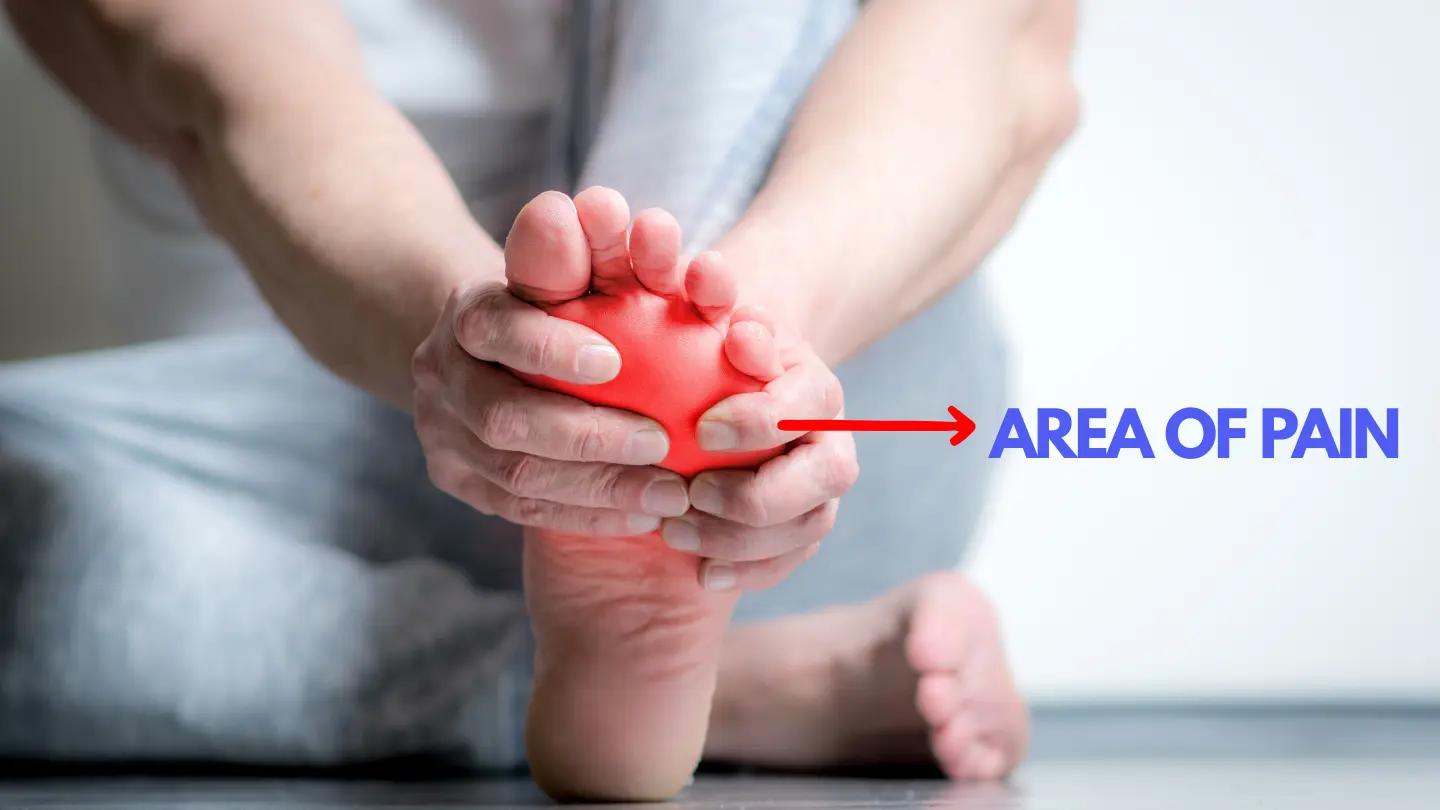
You know that feeling of a small stone stuck in your shoe. The one you keep stopping to shake out, only to realize there is nothing there. That is often the first description people give when they walk into the clinic with metatarsalgia. There is no stone. What there is, is a spot right under the ball of the foot where the pressure has been building up for weeks or months, and the tissue underneath has finally started to protest.
Metatarsalgia is the medical term for pain in the ball of the foot, in the region of the metatarsal heads. It is less a single disease than a symptom pattern that can come from a number of different underlying causes. That is part of what makes it frustrating to treat if you have been chasing it with generic advice like "get better shoes and rest it." Better shoes can help. Rest can help. But if you have not figured out why the pressure is landing where it is landing, the pain tends to come back the moment you step back into normal activity.
This article is the plain-language, evidence-informed version. What metatarsalgia actually is, why it happens, what the research supports for treatment, and how we approach it at Unpain Clinic in Edmonton. It also covers what you can start doing at home while you figure out your next step.
KEY TAKEAWAYS
- Metatarsalgia is pain in the ball of the foot, typically under the second, third, or fourth metatarsal heads. It is a symptom pattern with multiple possible causes, not a single diagnosis.
- The most common driver is mechanical overload: pressure is being concentrated on a small area of the forefoot because of foot shape, gait pattern, footwear, activity load, or a combination of these. Identifying the specific driver is what makes treatment work.
- The strongest direct evidence for a conservative treatment is offloading through footwear and foot orthoses. The systematic review and meta-analysis of bespoke orthotic treatment for central metatarsalgia in the Journal of Orthopaedics found that customised orthoses meaningfully reduce plantar pressure under the central metatarsal heads compared to no treatment.
- The evidence base for shockwave therapy specifically in metatarsalgia is limited, and shockwave is best positioned as an adjunct in specific presentations rather than as a stand-alone first-line treatment. This is not the case for every foot condition, but it is the honest picture for this one.
- Consistent conservative care that addresses the actual driver, applied over weeks to months, is what turns chronic ball-of-foot pain around. A proper assessment is what determines what the driver is in your case.
IN THIS ARTICLE
- What is metatarsalgia, and where does the pain come from?
- What are the main types and causes?
- Why does metatarsalgia keep coming back?
- What does the research say about treatment for metatarsalgia?
- How does treatment for metatarsalgia work at Unpain Clinic Edmonton?
- What can you safely do at home?
- Frequently asked questions

WHAT IS METATARSALGIA, AND WHERE DOES THE PAIN COME FROM?
The forefoot has five long bones called metatarsals, one running to each toe. The heads of these bones sit just behind the toes and take load with every step. When you push off the ground to walk or run, the second, third, and fourth metatarsal heads (the middle three) do most of the pressure-bearing work. This is by design, but it is also why this is the region where pain most commonly shows up.
The word metatarsalgia literally means "pain in the metatarsal region." As a clinical term, it is more of a symptom pattern than a specific diagnosis. The current clinical review of metatarsalgia in the Journal of the American Academy of Orthopaedic Surgeons describes it as a symptom that can arise from a range of underlying mechanical, structural, and neurological problems, all of which converge on the same complaint: pain in the ball of the foot with weight-bearing.
The pain itself usually has one or more of these qualities. A deep, aching pressure under the ball of the foot after prolonged standing or walking. A burning or bruised sensation when you push off during a stride. A sharp, focal pain right at a specific metatarsal head, often the second. That "walking on a pebble" sensation. Sometimes tingling or numbness in the adjacent toes when a nerve is involved.
Because the underlying causes vary, treatment that is designed for one type of metatarsalgia may not touch a different type. This is why a proper assessment is worth more than a generic protocol. Getting the driver right is the difference between six weeks of steady improvement and six months of chasing your tail.
WHAT ARE THE MAIN TYPES AND CAUSES?
Clinicians typically group metatarsalgia into three broad categories, based on what is driving the overload. The 2019 overview of metatarsalgia in Orthopedics organises the condition this way and it is a useful mental model for patients too.
Primary metatarsalgia is caused by the anatomy of the foot itself. This can include a long second metatarsal (a second toe that sits noticeably longer than the first, sometimes called a Morton's foot), a first metatarsal that is short or hypermobile (so it does not take its fair share of load on push-off, transferring that load onto the second and third), a plantar plate injury under one of the metatarsal heads, or a fat pad that has thinned with age and stopped cushioning the way it used to. In each of these, the anatomy pushes more force into a small area, and the tissue eventually complains.
Secondary metatarsalgia is caused by something outside the forefoot that is changing how load is distributed to it. This can include an ankle that does not bend upward enough (limited dorsiflexion), a tight calf, weak hips or glutes changing the way the foot rolls through each step, systemic conditions such as rheumatoid arthritis affecting the metatarsophalangeal joints, or nerve-driven pain such as Morton's neuroma (a thickening of the interdigital nerve, most often between the third and fourth toes, which can cause burning or numbness that overlaps with mechanical metatarsalgia).
Iatrogenic metatarsalgia is caused by a previous foot surgery or intervention that changed the mechanics of the forefoot in a way that shifted load. This is less common but important to identify, because the treatment plan looks different when the anatomy has been surgically altered.
Beyond these three categories, everyday drivers are what most people are dealing with. A jump in activity level. Long hours on your feet in shoes that were not designed for it. Very flat or very narrow shoes that concentrate pressure onto a small area of the forefoot. High heels, which shift 70 to 80 percent of body weight onto the ball of the foot with every step. A change in body weight that raises the daily load through the forefoot. A running program that ramped up faster than the tissue could adapt.
In practice, most patients have a mix of contributors rather than a single villain. A slightly long second metatarsal plus a tight calf plus shoes that stopped supporting the arch, and it is the combination that pushes the tissue past its threshold.
WHY DOES METATARSALGIA KEEP COMING BACK?
The single most common reason chronic ball-of-foot pain relapses is that treatment addressed the pain without addressing the load.
If a metatarsal pad or a cushioned insole takes the edge off the pain, that is a real and useful thing. It is not, on its own, the same as fixing the problem. If the calf is still tight, if the ankle still does not bend upward well, if the shoes are still concentrating pressure on a small area, then the moment the padding fails or the activity ramps back up, the pain returns.
The other reason chronic cases persist is that the tissue itself has adapted. A fat pad that has been compressed for years can atrophy. A plantar plate that has been strained can develop microscopic damage. A nerve that has been irritated in an interdigital space can become sensitised, so that even normal pressure fires off pain signals. These adaptations do not disappear on their own. They respond to a plan that combines load management (so the tissue is not being re-injured) with active rebuilding of foot mechanics (so the load is being distributed properly again).
This is why the goal of treatment is not to make the pain vanish in a hurry. It is to give the forefoot a durable rebuild.
WHAT DOES THE RESEARCH SAY ABOUT TREATMENT FOR METATARSALGIA?
The evidence base for metatarsalgia is more limited than for plantar fasciitis or Achilles tendinopathy, and this is worth being honest about. Fewer high-quality randomised controlled trials have been published on this condition, and most of what does exist focuses on offloading strategies (footwear, insoles, orthoses) rather than on modality-based treatments. The scientific evidence review in Foot and Ankle Clinics makes this point directly: the literature offers reasonable guidance for most conservative interventions, but definitive high-quality evidence for many specific treatments is still lacking. That is not a reason to ignore the evidence that does exist. It is a reason to weigh it honestly.
Offloading through foot orthoses and footwear has the strongest direct evidence.
The systematic review and meta-analysis of bespoke orthotic treatment for central metatarsalgia in the Journal of Orthopaedics pooled five studies including 158 participants and found that customised orthoses reduced plantar pressure under the second to fourth metatarsal heads more effectively than no treatment. Interestingly, the same review found no significant difference between customised orthoses, standardised footwear, standardised orthoses, and isolated metatarsal domes when compared head-to-head. The takeaway: offloading works, but the specific product may matter less than the fact that offloading is happening.
The systematic review of custom-made foot orthoses for forefoot pain in International Orthopaedics reached similar conclusions across a broader group of forefoot conditions, including secondary metatarsalgia. Custom-made foot orthoses improved forefoot pain in the studies reviewed. Quality of the underlying studies varied, and this is a common theme in the metatarsalgia literature.
The Foot and Ankle Clinics review of conservative management of metatarsalgia and lesser toe deformities frames this well. Conservative treatment starting with footwear modifications, offloading, physical therapy for the calf and foot muscles, and activity adjustment addresses the majority of cases. Surgery is reserved for cases where a specific structural problem (a large plantar plate tear, a significant toe deformity, a symptomatic prominent metatarsal head) has been identified and is not responding to those measures.
Exercise for the foot and lower limb is a consistent part of conservative care.
Progressive strengthening of the intrinsic foot muscles (the small muscles inside the foot that support the arch and control the metatarsal position), stretching of the calf and Achilles complex (which unloads the forefoot by improving ankle motion), and hip and glute strengthening (which affects how load is distributed all the way down the leg) show up in essentially every clinical review of metatarsalgia. Individual trials are small and heterogeneous, but the principle is well-established: a foot connected to a stronger, more mobile lower limb takes less concentrated pressure through the ball of the foot.
Shockwave therapy is an adjunct, not a primary treatment, for metatarsalgia.
This is where honest framing matters. Shockwave therapy has a robust evidence base for several other lower-limb conditions (plantar fasciitis, Achilles tendinopathy, calcific rotator cuff tendinopathy). The evidence base for shockwave specifically in metatarsalgia is thin. Most of what exists comes from studies of adjacent conditions such as Morton's neuroma or shockwave used across a broad range of chronic foot and ankle pain syndromes, rather than from trials of metatarsalgia specifically.
Where shockwave can be a useful adjunct in metatarsalgia is when the picture includes contributors that shockwave has stronger evidence for, such as an associated plantar fasciitis, an insertional tendinopathy at the base of a metatarsal, or a Morton's neuroma component. The general mechanism of action of shockwave (stimulation of local blood flow, effects on pain-signalling nerve endings, tissue remodeling) is discussed in the mechanism review in the Journal of Clinical Orthopaedics and Trauma, and it is plausible that these effects apply to forefoot pain in the right presentations. The key word is "plausible." For metatarsalgia specifically, the offloading and rehabilitation side of the plan is doing most of the heavy lifting.
What does not have good evidence.
Injections into the metatarsophalangeal joints, particularly with corticosteroids, carry a real risk of local complications and have not been shown to produce durable benefit in most metatarsalgia presentations. Rigid orthotics that lock the foot into a fixed position are less useful than accommodative devices that offload pressure while allowing the foot to move naturally. And any single passive treatment applied in isolation (whether shockwave, ultrasound, laser, or a manual therapy technique) is less likely to hold than a plan that also addresses the load.
"The most useful question I can ask a new metatarsalgia patient is: what changed? Activity, shoes, weight, work, footwear, life. Almost always there is something that shifted in the weeks or months before the pain started. Get that answer, and you have the direction of the treatment plan. Skip that answer, and you are treating the pain in isolation, which is why chronic ball-of-foot cases so often bounce back." Uran Berisha, PT, RMT, Founder of Unpain Clinic, International Educator in Shockwave Therapy

HOW DOES TREATMENT FOR METATARSALGIA WORK AT UNPAIN CLINIC EDMONTON?
Your first appointment is a 60-minute physiotherapy assessment. The goal on that first visit is not to start treatment. It is to figure out which flavour of metatarsalgia we are dealing with and where the load is coming from.
That means a full history: how the pain started, what makes it worse, what makes it better, what you have already tried, and what you actually want to get back to (walking pain-free, standing at work without the end-of-day flare, running, dancing, whatever fits your life). It also means a physical assessment that looks at the whole chain, not just the sore spot. Foot shape and metatarsal alignment. Toe mobility. Fat pad quality under the metatarsal heads. Ankle dorsiflexion range. Calf flexibility. Hip and glute strength. A gait analysis to see where the pressure is landing when you actually walk. Palpation to locate the specific tender structures and to screen for a Morton's neuroma. Screening for red flags that would need a physician referral first (a suspected stress fracture, a large plantar plate tear, a systemic inflammatory condition).
At the end of the assessment, you get a clear explanation of which type of metatarsalgia is driving your pain, a personalised plan, and a straight answer on realistic timelines. Metatarsalgia that has been going for a few weeks often responds within a month or two of consistent care. Cases that have been chronic for years take longer.
Treatment is built around a small set of tools working together.
The foundation is load management and offloading. This includes shoe recommendations (adequate toe box, appropriate cushioning, avoiding very flat or very narrow footwear during a flare), metatarsal padding placement (proper position matters and is often what over-the-counter attempts get wrong), and activity modification while the tissue settles.
Around that, we work on the lower-limb mechanics that are pushing pressure into the forefoot. Progressive intrinsic foot strengthening. Calf stretching and, where the ankle is stiff, joint mobilisation to restore dorsiflexion. Hip and glute strengthening where the assessment shows weakness contributing to the picture. A gait retraining component when it is relevant.
Where shockwave therapy is indicated by the assessment (typically when there is an associated tendinopathy, a Morton's neuroma component, or a chronic plantar fasciitis contributing to the picture), we add it. Focused shockwave therapy is used when the target is a specific structure at depth. Radial shockwave therapy is used for broader surface coverage around the forefoot and calf.
Custom or semi-custom orthoses may be prescribed based on your assessment findings, targeted to the specific pattern of pressure concentration. Not every metatarsalgia patient needs an orthotic. Some benefit substantially from one.
Most treatment plans run six to eight weeks with re-assessment every few sessions to check progress and adjust. The goal is not just to reduce pain in the short term. It is to build a foot that can hold up to your actual life without needing continual maintenance.
The dedicated metatarsalgia (forefoot pain) service page has more detail on the condition-specific pathway.

WHAT CAN YOU SAFELY DO AT HOME?
This is general education, not individual medical advice, and results vary. If your ball-of-foot pain has been ongoing for weeks and is not settling with these steps, an assessment is the right next move.
RE-EVALUATE YOUR FOOTWEAR Shoes with a wide, roomy toe box, moderate cushioning, and a reasonably stiff sole tend to be much friendlier to a sore forefoot than narrow, flat, or thin-soled shoes. Very high heels shift a large share of body weight onto the ball of the foot and should be minimised during a flare. If your daily shoes are more than a year old and visibly worn under the ball of the foot, replacement often does more than any other single intervention.
TRY A METATARSAL PAD OR OFFLOADING INSOLE An over-the-counter metatarsal pad placed just behind the sore metatarsal head (not directly on it) can meaningfully reduce the pressure landing on the tissue. Placement matters. A pad that is too far forward can worsen the pain. Start with a lightweight adhesive pad, position it just proximal to the tender spot, and give it two to three days of walking to judge whether it is helping.
STRENGTHEN THE INTRINSIC FOOT MUSCLES Towel scrunches (using your toes to pull a towel toward you across the floor), marble pickups (using your toes to pick up marbles from the floor and drop them into a cup), and short-foot exercises (drawing the ball of the foot slightly back toward the heel without curling the toes) build the small muscles that support the arch and stabilise the metatarsal heads. Two or three sets of 10 to 15 repetitions daily, over weeks.
STRETCH THE CALF AND ACHILLES A tight calf limits ankle motion and pushes more load onto the forefoot. Stretch the calf with the knee straight (gastrocnemius) and with the knee slightly bent (soleus), holding each stretch 30 seconds, two or three times daily. Mild, tolerable tension is the goal, not sharp pain.
LOOK AT ACTIVITY LOAD If your ball-of-foot pain started after a jump in walking, running, standing hours, or a change in job or shoes, reducing that load back toward its previous level (and building it back up gradually) is a substantial part of the fix. Cross-training with cycling or swimming during a flare lets you keep your fitness while the forefoot settles.
MASSAGE THE FOREFOOT Gentle self-massage of the ball of the foot, and rolling the sole of the foot slowly over a small firm ball (like a golf ball or lacrosse ball) for a couple of minutes at the end of the day, can help release tension in the plantar tissue.
USE ICE AFTER FLARES Ten to fifteen minutes of ice wrapped in a thin cloth, applied to the ball of the foot after a flare-up day, can settle the local inflammation. Do not ice to the point of numbness.
Some symptoms are not "wait and see" symptoms. Sudden, severe pain in the forefoot after a specific event (a jump, a hard step, a fall) can indicate a stress fracture and needs medical assessment. Rapid swelling, discolouration, or visible deformity should be checked. Burning or numbness that spreads down the toes, particularly between the third and fourth toes, can indicate a Morton's neuroma and warrants a specific assessment.

FREQUENTLY ASKED QUESTIONS
What does metatarsalgia feel like?
Most patients describe metatarsalgia as a deep ache or pressure under the ball of the foot that is worse with standing, walking, and pushing off the ground. Many people describe the sensation as walking on a small stone or pebble that is stuck in their shoe. In some cases there is a more focal, sharp pain right at a specific metatarsal head, most commonly the second. When a nerve is involved (as in Morton's neuroma), the pain can also include burning or tingling that radiates into the adjacent toes.
How long does metatarsalgia take to recover?
For most patients whose pain has been going for a few weeks, meaningful improvement is felt within four to eight weeks of consistent care that addresses the actual driver. Chronic cases that have been ongoing for months or years can take longer. The single biggest predictor of a good outcome is identifying the underlying driver correctly at the start and matching the plan to it, rather than applying generic treatment.
Do metatarsalgia and Morton's neuroma overlap?
They can. Morton's neuroma is a specific condition (a thickening of an interdigital nerve, most often between the third and fourth toes) that causes burning, tingling, and sometimes numbness that radiates into the toes. Because it sits in the same region of the foot as mechanical metatarsalgia, the symptoms can overlap and coexist. A proper assessment is what distinguishes them, because the treatment approach differs.
Does metatarsalgia always require surgery?
No. Surgery is reserved for a small minority of cases that have not responded to conservative care and where a specific structural problem has been identified, such as a large plantar plate tear, a significant toe deformity, or a prominent metatarsal head that is producing focal overload. For the majority of patients, the answer is conservative treatment addressing the actual driver, applied consistently over weeks to months.
Are custom orthotics worth it for metatarsalgia?
Sometimes. The systematic review evidence supports foot orthoses as a useful tool for reducing plantar pressure under the metatarsal heads. Interestingly, the evidence does not consistently show that expensive custom orthotics outperform well-fitted off-the-shelf products with the right features for a given foot. Whether an orthotic is worth pursuing, and whether custom or semi-custom fits your case, is best decided after a physiotherapy assessment that includes a look at your gait and pressure pattern.
Is shockwave therapy an effective treatment for metatarsalgia specifically?
The honest answer is that the evidence for shockwave therapy specifically in metatarsalgia is limited. Most of the shockwave evidence base is in adjacent conditions such as plantar fasciitis, Achilles tendinopathy, and Morton's neuroma. Shockwave can be a useful adjunct in metatarsalgia when the presentation includes one of those adjacent conditions as part of the picture, but it is not typically a first-line stand-alone treatment for metatarsalgia. Load management, offloading, and lower-limb rehabilitation carry more of the treatment plan for this condition.
Can I keep walking and exercising while I have metatarsalgia?
In many cases, yes, with modifications. Reducing very high-impact activities (running, jumping, fast walking on hard surfaces) during a flare is usually helpful, and cross-training with cycling, swimming, or rowing preserves fitness while the forefoot settles. Reasonable everyday walking in supportive shoes is generally fine and often preferable to complete rest, because prolonged inactivity does not resolve the underlying mechanical issues.
When should I stop self-treating and book a physiotherapy assessment?
If your ball-of-foot pain has lasted more than a few weeks despite good shoes, a metatarsal pad, and reduced activity, or if it keeps returning every time you try to increase activity, that is the point where a proper assessment is likely to save you time. Metatarsalgia is a condition where identifying the specific driver makes a substantial difference to how quickly the pain resolves, and a proper assessment is what gets you there.
PATIENT TESTIMONIAL
“I took my son to Dr.Lacina. We had been seeing several other health professionals throughout the summer and Dr. Lacina performed the most thorough assessment of any of them! She treated him for his back pain via shockwave therapy and chiropractic. She also identified that he may benefit from shockwave to his knee and ankle by listening intently to him during the assessment and treated him as part of the same appointment. Although he ended up having a more major injury than initially suspected, she was amazing to deal with and has followed up with me personally several times and continued to offer additional advice. She is highly educated and knowledgeable in her field. I recommend Dr. Lacina at the Unpain Clinic for any sort of ailment you may have currently or if you are suffering from past injuries.”- Rhelda Baschuk
ABOUT THE AUTHOR
Written by Uran Berisha, PT, RMT, Founder of Unpain Clinic and Medical Shockwave Institute in Edmonton. Uran is a physiotherapist and an International Educator in Shockwave Therapy, with a clinical focus on chronic musculoskeletal pain that has not responded to first-line care. Medically reviewed by Uran Berisha, PT, RMT.
BOOK YOUR INITIAL ASSESSMENT
If ball-of-foot pain has been slowing you down and generic advice has not sorted it out, the next step is a 60-minute physiotherapy assessment at Unpain Clinic Edmonton. The assessment identifies what is driving your pain, screens for anything that would need a physician referral first, and lets you leave with a clear, specific plan. No referral is required to see a physiotherapist in Alberta. Book your initial assessment with Unpain Clinic.
WHAT WE DO NOT OFFER
We do not perform cortisone injections, prescribe medications, or perform surgery. We do not manufacture orthotics on-site (when custom orthoses are indicated, we prescribe them through a partner lab). We do not sell or endorse specific shoe brands. If your presentation suggests a stress fracture, a large plantar plate tear, a systemic inflammatory condition, or anything requiring urgent medical evaluation, we will tell you plainly and help you find the right next step.
REFERENCES
- Arias-Martín I, Reina-Bueno M, Munuera-Martínez PV. Effectiveness of custom-made foot orthoses for treating forefoot pain: a systematic review. International Orthopaedics. 2018;42(8):1865-1875. doi:10.1007/s00264-018-3817-y. PMID: 29423640. https://pubmed.ncbi.nlm.nih.gov/29423640/
- Awan O, Chen L, Resnik CS. Overview of Metatarsalgia. Orthopedics. 2019;42(1):e138-e143. doi:10.3928/01477447-20181227-02. PMID: 30540873. https://pubmed.ncbi.nlm.nih.gov/30540873/
- Espinosa N. Scientific Evidence in the Treatment of Metatarsalgia. Foot and Ankle Clinics. 2019;24(4):xiii-xiv. doi:10.1016/j.fcl.2019.08.001. PMID: 31653364. https://pubmed.ncbi.nlm.nih.gov/31653364/
- Espinosa N, Maceira E, Myerson MS. Current concept review: metatarsalgia. Journal of the American Academy of Orthopaedic Surgeons. 2010;18(8):474-485. doi:10.5435/00124635-201008000-00004. PMID: 20675640. https://pubmed.ncbi.nlm.nih.gov/20675640/
- Federer AE, Tainter DM, Adams SB, Schweitzer KM Jr. Conservative Management of Metatarsalgia and Lesser Toe Deformities. Foot and Ankle Clinics. 2018;23(1):9-20. doi:10.1016/j.fcl.2017.09.003. PMID: 29362036. https://pubmed.ncbi.nlm.nih.gov/29362036/
- Ruiz-Ramos M, Orejana-García ÁM, García-Oreja S, Calvo-Wright MDM, Lázaro-Martínez JL, Molines-Barroso RJ. Effectiveness of bespoke or customised orthotic treatment in plantar pressure reduction of the central metatarsals: A systematic review and meta-analysis. Journal of Orthopaedics. 2024;59:111-118. doi:10.1016/j.jor.2023.12.006. PMID: 39399760. https://pubmed.ncbi.nlm.nih.gov/39399760/
- Simplicio CL, Purita J, Murrell W, Santos GS, Dos Santos RG, Lana JFSD. Extracorporeal shock wave therapy mechanisms in musculoskeletal regenerative medicine. Journal of Clinical Orthopaedics and Trauma. 2020;11(Suppl 3):S309-S318. doi:10.1016/j.jcot.2020.02.004. PMID: 32523286. https://pubmed.ncbi.nlm.nih.gov/32523286/
Related Topics