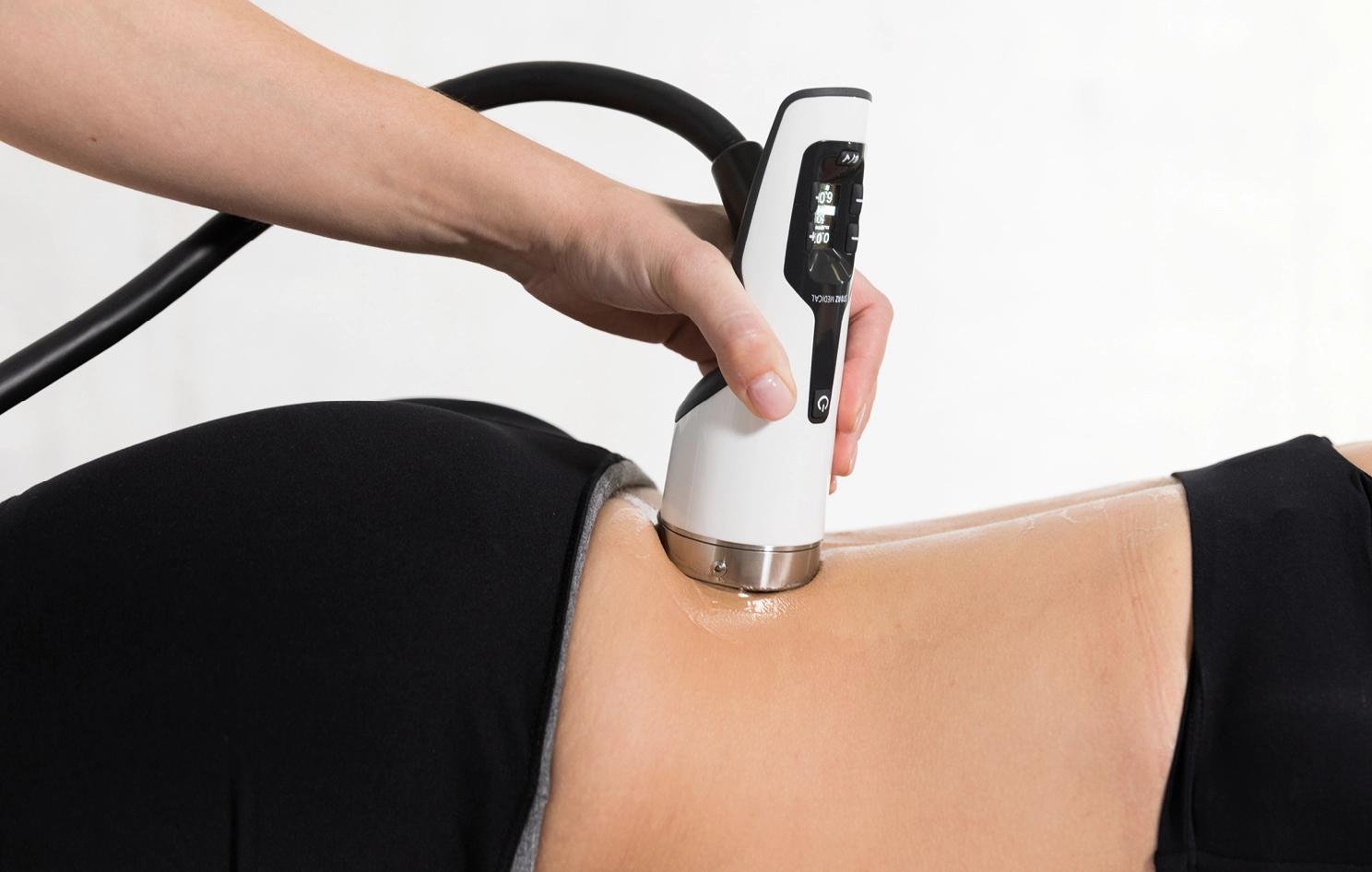
Frustrated by Degenerative Disc Disease pain? Discover how shockwave therapy may relieve spine pain without surgery. Evidence-based, non-invasive care.
Key takeaways
- Degenerative disc disease is wear-and-tear change in the spinal discs, and pain comes from how the body is functioning, not just the disc's appearance on a scan.
- Shockwave therapy is a non-invasive treatment that aims to stimulate healing and calm pain, rather than mask it.
- Research supports shockwave for chronic low back pain, with meaningful pain and function improvement and an excellent safety record.
- Evidence for related spinal problems like facet joint pain is promising, while disc regeneration itself has so far only been shown in the lab.
- It is not a guideline-endorsed first-line treatment or an overnight fix, but it can be a useful part of a comprehensive, non-surgical plan.
In this article
- What is degenerative disc disease?
- Why does the pain persist?
- What is shockwave therapy, and how does it work?
- Does shockwave therapy work for degenerative disc disease?
- How does Unpain Clinic use shockwave for disc-related back pain?
- What can you do at home?
- When should you seek urgent care?
- Frequently asked questions
Living with degenerative disc disease can be exhausting. The chronic back pain and stiffness often persist despite rest, medication, and standard therapy, and if you have been told your spine is worn out or that surgery is the only option left, you may be looking for alternatives. Shockwave therapy, a non-invasive treatment, is gaining attention as a way to stimulate healing and relieve chronic back pain without surgery or injections. This article explains what degenerative disc disease is, why the pain lingers, and what the research honestly shows about how shockwave may help.
This is general information, not a substitute for a professional assessment or medical advice.

What is degenerative disc disease?
Degenerative disc disease is not really a disease in the infectious sense. It refers to wear-and-tear changes in the intervertebral discs, the cushions between your spinal bones. Over time, or after injury, discs can lose hydration, flatten, and develop small tears, which can lead to chronic lower back pain or neck pain, stiffness, and sometimes nerve pain if a disc or bone spur presses on a nerve. Common contributors include aging, repetitive strain, past trauma, and genetics.
A crucial point is that imaging findings do not always match pain. You can have an MRI showing degeneration, disc bulges, and arthritis yet feel little pain, or the reverse. It is common to see badly worn discs on a scan in someone who is comfortable, and mild changes in someone with significant pain.
Pain comes from dysfunction, not just structural damage. A worn disc can contribute to pain, but often it is how the body is moving, along with muscle, joint, and other factors, that actually generates the pain. That is why treatment aimed only at the disc's appearance often disappoints, and why a whole-body view matters.

Why does the pain persist?
Degenerative disc pain persists partly because discs have a very limited blood supply, so they heal slowly, and the lower back bears a lot of daily load. Every time you sit, bend, or lift, the pressure on those discs can interrupt healing, and over time the surrounding facet joints and muscles can become irritated too, creating a cycle of inflammation and pain that is hard to break.
Many people start by treating symptoms with rest, heat, or pain relievers, then move on to physiotherapy, chiropractic, or massage. These can help, but if they only address the local spine without fixing underlying issues like core weakness or hip stiffness, the relief is often temporary. From there it is common to escalate to steroid injections, which can numb pain for a while without fixing the underlying problem, and finally to consider surgery.
The frustration is feeling stuck in a loop of painkillers, therapy, injection, and repeat. Even surgery does not always end it, because fusing a segment or removing a disc herniation does not retrain how the body moves, so pain can return if compensations like tight hips or old scar tissue remain. Understandably, many people want something that promotes healing rather than only masking pain, which is where shockwave therapy enters the picture.

What is shockwave therapy, and how does it work?
Shockwave therapy, or extracorporeal shock wave therapy, is a non-invasive treatment that uses acoustic pulses delivered through a handheld device to stimulate healing in targeted tissue. Originally developed to break up kidney stones, the technology was adapted for musculoskeletal use when these pulses were found to trigger tissue repair. Our explainer on how shockwave therapy works covers the technology in more detail.
It works by delivering a controlled, therapeutic micro-stimulus that prompts the body's repair mechanisms. The pulses increase blood flow and encourage the growth of small new blood vessels, bringing oxygen and nutrients to tissue that normally has poor circulation, and they stimulate cells to produce the collagen needed to repair damaged soft tissue around the spine. Shockwave also appears to reduce pain through several mechanisms, including lowering a pain-signalling chemical called substance P, prompting the release of the body's natural painkillers, and calming inflammation.
There are two main types, and the distinction matters for the back. Focused shockwave penetrates deeper to reach specific structures, while radial pressure waves spread energy more broadly and superficially, so for deeper back tissue a focused device is often used. Importantly, shockwave for the back is applied to the muscles, fascia, and joints around the spine, not directly over the spine itself, which is part of what keeps it safe.

Does shockwave therapy work for degenerative disc disease?
The honest answer is that shockwave has good evidence for chronic low back pain, promising evidence for some related spinal conditions, and, so far, only laboratory evidence for actually regenerating discs. It helps to look at each layer, because being straight about this lets you make a good decision.
Chronic low back pain is where the evidence is strongest. A 2023 systematic review and meta-analysis of 12 trials and 632 patients with chronic low back pain found that people who received shockwave had meaningfully greater pain relief than those given sham or conventional therapy at both 4 and 12 weeks, along with greater improvement in disability, and importantly, no serious adverse effects were reported [1]. Another review of ten trials reached a similar conclusion of significant short-term pain relief and better function, again with no serious side effects [2]. These are modest but clinically meaningful improvements, meaning people felt a real difference.
Evidence for related spinal problems is promising. Degenerated discs often stress the facet joints at the back of the spine, and a 2025 randomized sham-controlled trial of 128 patients with chronic lumbar facet joint pain found that focused shockwave produced about a 64 percent reduction in pain a year after treatment, with disability improving roughly 42 percent compared with about 12 percent in the sham group, and MRI showing resolution of joint inflammation in most treated patients, with no side effects [5]. Since facet arthritis often develops alongside disc degeneration, this is directly relevant, and our guide to facet joint pain explores that overlap. Research on disc herniation and on nerve-related leg pain, or sciatica, also suggests shockwave may help, though those studies are fewer [3, 4].
Actual disc regeneration is, so far, only a laboratory finding. In an animal model, combining low-energy shockwave with gentle traction helped restore disc height and reduced the enzymes that break down disc tissue, hinting at a more favourable healing environment [6]. This is an early, pre-clinical result, and human studies are needed before anyone can claim shockwave regenerates discs. For now, the realistic goal of shockwave in disc-related back pain is pain relief and improved function.
So the fair summary is this. Shockwave is a well-tolerated, non-invasive option with solid evidence for chronic low back pain and promising evidence for related spinal conditions, but it is still relatively new for disc degeneration specifically, and it is not yet a guideline-endorsed first-line treatment. It is best understood as a useful part of a comprehensive plan, not a stand-alone fix.
How does Unpain Clinic use shockwave for disc-related back pain?
We use shockwave as one part of a whole-body plan, applied to the tissues around the spine rather than the spine itself, and always paired with finding out why your back is painful. It starts with a thorough 60 minute, one-on-one assessment that reviews your history and examines you head to toe, since people with disc-related pain often also have hip mobility limits, core weakness, old surgical scars, or tight muscles that alter how the spine loads. A common finding is that scar tissue or a stiff hip is pulling on the lower back, and we plan to address that, not just the disc.

A typical plan may combine several of the following:
- Focused shockwave therapy. We apply focused shockwave therapy to the muscles beside the degenerated level, the facet joint region, the gluteal and hip muscles, and often around the sacroiliac joints, to reduce protective muscle spasm and take strain off the discs. A session feels like a firm tapping, is adjusted to your comfort, needs no anesthesia, and has no downtime.
- A short, cumulative course. Because shockwave works cumulatively, we usually recommend a course of about five to eight sessions, once or twice a week over several weeks, with many people noticing change around the fourth week and functional gains building over two to three months. We then reassess and often transition you to a maintenance or exercise-focused plan.
- Supportive therapies. We may add gentle spinal mobilization or traction, and hands-on care through our physiotherapy, chiropractic care, and massage therapy, and where pain is very sensitized we may use EMTT or NESA neuromodulation.
- Active rehabilitation and education. We prescribe core stabilization, hip mobility, and, for sciatica, nerve-gliding exercises to do between sessions, and we coach posture, movement, and even breathing, since the whole system matters, not just the disc.
We set realistic expectations from the start. Shockwave stimulates your body's healing, so gradual improvement is normal, and it is not a way to erase degenerative changes overnight. We track your progress with pain scales and functional goals and adjust the plan, and we are honest that results vary and that degenerative disc disease is a chronic condition we aim to manage well rather than erase.
What can you do at home?
What you do at home makes a real difference alongside professional care. Personalize these with your provider, and stop anything that sharply increases your pain.

- Stay active, but smart. Avoid prolonged bed rest beyond a day or two of a severe flare, and keep gently moving with low-impact activity like walking or swimming, while avoiding heavy lifting and extreme bending or twisting during flares.
- Build core endurance. Gentle exercises like pelvic tilts, dead bugs, and modified planks help your core support the spine and offload the discs. Even 5 to 10 minutes a day helps, and remember to breathe rather than hold your breath.
- Mind your posture and take motion breaks. Set up a spine-friendly workstation, and every 30 to 60 minutes stand, stretch your hip flexors, and gently move your back, since continuous pressure is hard on discs.
- Use heat for muscle relief. A warm pack or shower for 15 to 20 minutes can ease tight lower-back muscles and improve circulation, though it will not heal the disc itself. Some people prefer ice for an acute, inflamed flare.
- Support your overall health. Stay hydrated, eat a balanced, anti-inflammatory diet, keep a healthy weight to reduce spinal load, and if you smoke, consider quitting, since smoking reduces blood flow to discs.
- Sleep in a supportive position. A medium-firm mattress suits many people, and sleeping on your side with a pillow between the knees, or on your back with a pillow under the knees, helps keep the spine aligned.
- Manage flares responsibly. Short-term use of over-the-counter anti-inflammatories or topical creams can help a pain spike, but they are a temporary aid, so check with your provider if you need them regularly.
When should you seek urgent care?
Most degenerative disc pain is not dangerous, but a few symptoms need emergency attention rather than watchful waiting. Seek urgent care right away if you experience loss of bowel or bladder control, numbness in the groin or inner thighs, or rapidly worsening weakness in the legs, since these can signal a serious nerve compression called cauda equina syndrome.
Also let your doctor know about non-mechanical warning signs. Back pain accompanied by unexplained weight loss, fever, or pain that does not change with movement or rest deserves prompt medical evaluation, since it can point to a different underlying cause. When in doubt, get it checked.
Frequently asked questions
Is shockwave therapy safe for degenerative disc disease?
Yes, when applied by a trained professional it is considered very safe and non-invasive, with no incisions or anesthesia. Studies covering hundreds of back pain patients have reported no serious adverse events, and the most common experience is mild discomfort during treatment and brief soreness afterward. It is applied to the muscles and joints around the spine rather than directly over the spine, lungs, or other organs, and your therapist will screen you for the few situations where it should be avoided.
How many shockwave sessions will I need for degenerative disc disease?
Most people need a series rather than a single session, often starting with about five to six sessions and then reassessing. A typical course runs across three to six weeks at one to two sessions per week, and some people with severe or long-standing pain benefit from extending it. The relief tends to be cumulative, with studies showing continued improvement for months after a course, and maintenance sessions every few weeks can help sustain the benefit.
Does shockwave therapy hurt?
It can cause some discomfort, but it is generally tolerable. People describe a rapid tapping against the skin, and the intensity is adjustable, so it is kept to a level you can handle without tensing up. Afterward you may feel mild soreness like after a workout, occasionally slight bruising, and many people notice a reduction in their usual pain within hours to a couple of days. It is far less intense than a steroid injection or surgery.
Can shockwave therapy help if I have had degenerative disc disease for years?
It may. Shockwave is specifically aimed at chronic conditions where natural healing has stalled, and many of the studies involved people with pain lasting months or years. Long-standing scar tissue can soften and chronically tight muscles can relax with treatment, so a long history does not rule you out. That said, outcomes vary with your overall health and the extent of degeneration, and the realistic aim is meaningful pain relief and better function rather than erasing years of wear.
Who should not have shockwave therapy?
Shockwave is suitable for most people, but it is avoided during pregnancy over the back or pelvis, over an active infection, open wound, or tumour, and directly over the lungs or intestines. Extra caution is used for people on blood thinners or with a bleeding disorder, those who recently had a steroid injection in the area, severe osteoporosis, or an electronic implant nearby. Your therapist reviews your history first to make sure it is appropriate, and will suggest alternatives if it is not.
Is shockwave therapy covered by insurance?
Coverage varies by plan. Provincial health care in Canada does not typically cover shockwave, but many extended health benefit plans do when it is provided by a registered physiotherapist or chiropractor as part of a treatment session. It is worth asking your insurer whether physiotherapy or chiropractic that includes shockwave is covered, and whether a doctor's referral is needed for reimbursement. We provide detailed invoices with the practitioner's credentials to help with claims.
What are the side effects of shockwave therapy?
The side effect profile is minimal, especially compared with medications or surgery. The most common effects are mild discomfort during treatment and short-lived soreness, redness, or occasionally small bruises, usually resolving within a day or two. There is no sedation, no incision, and no infection risk since nothing is injected. Rarely, a superficial nerve can be briefly irritated, which resolves. We suggest avoiding strenuous new activity with the treated area for a couple of days afterward.
[IMAGE 4: OUTCOME]
[TESTIMONIAL PLACEHOLDER: paste one real, current Google review from Unpain Clinic here, ideally from a patient treated with shockwave for chronic back pain. Quote it accurately, one to three sentences, attributed with the reviewer's first name and last initial as shown on Google, plus the words "Google review." Do not paraphrase or invent, and avoid a review that claims shockwave regenerated or fixed a disc.]
About the author
Written by Uran Berisha, Founder of Unpain Clinic and Medical Shockwave Institute. Uran has a Bachelor of Science in Physiotherapy and is an International Educator in Shockwave Therapy.
Medically reviewed by Uran Berisha.
Book your initial assessment
Degenerative disc disease is a wear-and-tear condition, but it does not have to mean a life of pain. Traditional approaches often fall short because they address only symptoms or isolated structures, while shockwave therapy aims at the root causes of the pain, reducing inflammation, improving blood flow, easing restrictive scar tissue, and stimulating healing in the tissues around the discs, non-surgically and safely. It is not a quick fix or a one-size solution, but for the right person it is a valuable tool. If you have been frustrated by ongoing back pain and are wary of invasive procedures, an assessment is the place to start. We ask not just where it hurts, but why. Your first visit is 60 minutes, assessment only, and includes:
- A full history and goal setting
- Head-to-toe orthopedic and muscle testing, plus motion analysis
- Imaging decisions if needed, and pain-pattern mapping
- A personalized treatment roadmap
You will see a licensed physiotherapist or chiropractor, and if we are a good fit, we schedule your first treatment and start your plan. No referral needed, no pressure, and no long-term upsells, just honest, effective care. If we do not think this approach is right for you, we will tell you honestly. Book your initial assessment and let's find out what is really going on and how to help.
References
- Liu K, Zhang Q, Chen L, Zhang H, Xu X, Yuan Z, Dong J. Efficacy and safety of extracorporeal shockwave therapy in chronic low back pain: a systematic review and meta-analysis of 632 patients. Journal of Orthopaedic Surgery and Research. 2023;18(1):455. https://doi.org/10.1186/s13018-023-03943-x
- Notarnicola A, Paoli A, Mangone M, et al. Effectiveness of shock-wave therapy for the treatment of chronic low back pain: a systematic review and meta-analysis. European Journal of Orthopaedic Surgery & Traumatology. 2019;29(2):447-456.
- Rompe JD, Furia J, Maffulli N. Shockwave therapy for patients with lumbosacral radicular syndrome: a prospective, randomized, double-blind, placebo-controlled trial. Journal of Orthopaedic Surgery and Research. 2018;13(1):204.
- Mokhtar MM, et al. Comparative study between shock wave therapy and electromagnetic field therapy in elderly patients with lumbar disc prolapse. Egyptian Journal of Medical Sciences. 2023.
- Nedelka T, Katolicky J, Nedelka J, Hobrough P, Knobloch K. Efficacy of high-energy, focused extracorporeal shockwave therapy in the treatment of lumbar facet joint pain: a randomized sham-controlled trial. International Journal of Surgery. 2025;111(7):4177-4186. https://doi.org/10.1097/JS9.0000000000002538
- Chen Y, Zhang X, Li J, et al. Low-energy extracorporeal shock wave therapy combined with low tension traction can better reshape the microenvironment in degenerated intervertebral disc regeneration and repair (animal study). The Spine Journal. 2020;20(12):1921-1933.
- Unpain Clinic. Evidence-Based Relief: Shockwave Therapy for Lower Back Pain. Blog article, August 22, 2025.
- Unpain Clinic Podcast. How to Relieve Back Pain When Nothing Else Works. Episode 7, 2023. Hosted by Uran Berisha.
- Unpain Clinic. Back Pain and The Unconventional Fixes. YouTube video, 2023. Featuring Uran Berisha.
Related Topics