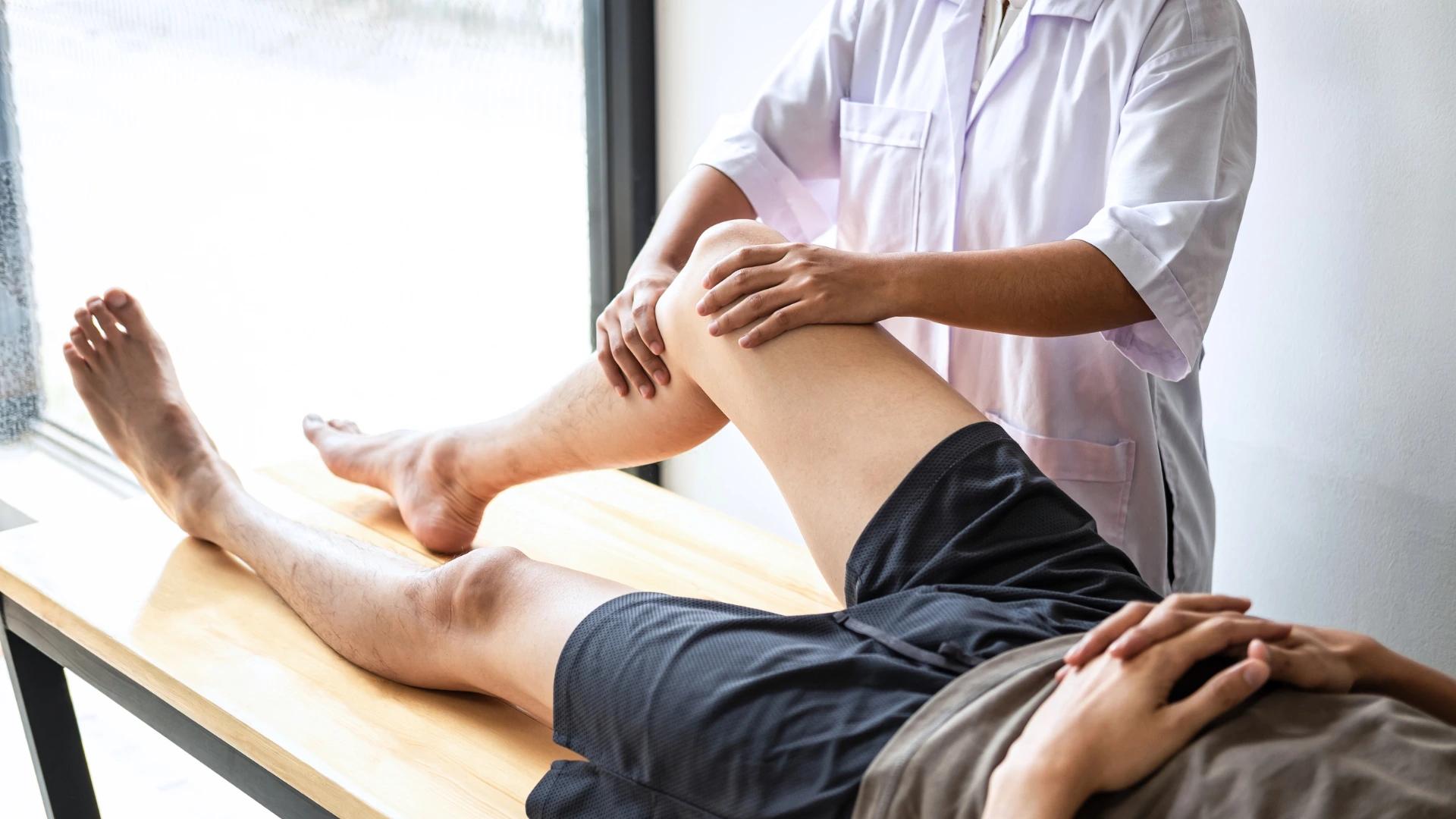
Shockwave therapy may relieve chronic ACL or MCL knee pain when rehab fails. Non-surgical, evidence-based option for active adults 40+.
You had the surgery. You did the rehab. You got back to some version of life. The knee is stronger than it was six months post-op, and most days you barely think about it. But there is a persistent ache after a long day, a sharp reminder when you go down a flight of stairs, a subtle guardedness that stops you from fully trusting the leg. It has been eighteen months, or three years, or seven. You have done the exercises. You have seen more than one physiotherapist. Something is still there.
If that sounds like your knee, you are in a group that gets talked about less than it should. Anterior cruciate ligament (ACL) reconstruction is one of the most successful operations in orthopaedic surgery, and most patients do well. A meaningful minority, though, continue to have pain, stiffness, or reduced confidence in the knee well after the standard rehab window has closed. For those patients, the question is not whether rehab worked, because rehab is still the foundation. The question is what to add when the standard plan has taken you as far as it can.
This article is about that question. What the research honestly shows about shockwave therapy as an adjunct in the post-ACL reconstruction knee, where the evidence is strong and where it is thin, and how we think about it at Unpain Clinic in Edmonton for patients whose recovery has plateaued.
KEY TAKEAWAYS
- Standard rehabilitation is the foundation of recovery after ACL reconstruction, and for most patients it works. This article is not an argument against rehab. It is written for the meaningful minority whose pain, stiffness, or function has plateaued despite well-delivered rehab.
- Persistent pain after ACL reconstruction has several possible sources: incomplete graft maturation, patellar tendon donor-site pain (in bone-patellar-tendon-bone grafts), secondary patellofemoral pain, meniscal or cartilage issues, muscle weakness that never fully resolved, and, over the long term, early post-traumatic osteoarthritis. The right addition to your plan depends on which of these is driving your pain.
- Extracorporeal shockwave therapy has been tested as an adjunct to rehabilitation after ACL reconstruction in multiple randomised controlled trials. The Song and colleagues randomised trial in BMC Musculoskeletal Disorders, the Zhang and colleagues 24-month randomised trial in the Orthopaedic Journal of Sports Medicine, and the Weninger and colleagues randomised trial in the Journal of Clinical Medicine have all reported meaningful improvements in pain and function when shockwave was added to standard rehab.
- The BMC Musculoskeletal Disorders systematic review and meta-analysis of shockwave combined with standard rehabilitation after ACL reconstruction pooled the available trials and found positive effects on patient-reported outcomes. It also concluded that the risk of bias across included trials was high, which is important context: the direction of the evidence is positive, but the quality of the underlying trials is limited. Shockwave for ACL-related knee pain is a promising adjunct with an emerging evidence base, not an established gold-standard treatment.
- Shockwave therapy is not a replacement for rehab. In every trial cited above, both groups received a rehabilitation program, and the question tested was whether adding shockwave produced further improvement. It sometimes did. That is a different clinical claim than "shockwave works when rehab does not."
- A proper physiotherapy assessment identifies why your knee is still bothering you and builds a plan around it. Shockwave is one adjunct we consider for specific presentations. It fits inside a larger plan, not in place of one.
IN THIS ARTICLE
- Why do some knees keep hurting after ACL reconstruction?
- Why doesn't standard rehab resolve everyone's pain?
- What does the research say about shockwave for post-ACL knee pain?
- How does treatment for chronic post-ACL knee pain work at Unpain Clinic Edmonton?
- What can you safely do at home?
- Frequently asked questions

WHY DO SOME KNEES KEEP HURTING AFTER ACL RECONSTRUCTION?
ACL reconstruction restores a torn ligament, but it does not restore a knee to exactly what it was before injury. The graft (whether taken from your own hamstring, patellar tendon, or quadriceps tendon, or from a donor) has to mature over months and years to reach its full strength and function. The joint has to adapt to slightly different mechanics. The muscles around the knee, particularly the quadriceps, take longer to recover than most people expect. And the underlying cartilage, meniscus, and joint surfaces have been through a significant event.
For most patients, all of this works out. Standard rehabilitation restores strength, range of motion, and function, and by twelve months most patients report satisfaction with their outcome. But not all. A meaningful minority (rates vary across studies but typically fall between 15 and 25 percent) report ongoing pain, stiffness, or reduced confidence in the knee a year or more after surgery.
Persistent post-ACL knee pain is not one condition. It is a category with several possible sources, and identifying which one is driving your pain shapes what treatment will help.
Graft-related pain and delayed graft maturation. The reconstructed ligament goes through a maturation process that takes 18 to 24 months to complete. During this time the graft can be a source of low-grade pain, particularly with high loads. In some patients, imaging shows that the graft has not matured as expected, which can correspond to symptoms that continue past the usual rehab timeline.
Donor site pain, particularly with a patellar tendon graft. If your surgery used a bone-patellar-tendon-bone (BPTB) graft, the middle third of the patellar tendon was harvested. Chronic anterior knee pain, patellar tendinopathy, and kneeling discomfort at the harvest site are all known complications and can persist long after the ACL itself has healed. Hamstring grafts avoid this particular pain pattern but can produce their own donor-site issues at the back of the thigh.
Secondary patellofemoral pain. Changes in how the knee loads after surgery (often driven by ongoing quadriceps weakness on the operated side) can concentrate stress under the kneecap and produce chronic anterior knee pain. This is one of the most common causes of persistent post-ACL knee pain and one of the most responsive to targeted rehab.
Meniscal or cartilage issues. ACL tears often occur with meniscus or cartilage damage at the same time. Meniscal repairs can partially fail. Cartilage damage that seemed minor at the time of surgery can progress. If your pain feels deep in the joint, catches or locks, or produces episodic swelling, this is a possibility that warrants imaging.
Muscle weakness that never fully resolved. Quadriceps strength deficits of 10 to 20 percent on the operated side compared to the other leg are common two or more years after ACL reconstruction. Ongoing weakness in the glutes and hamstrings compounds the load pattern. When rehab ended too early or was not intense enough to fully restore strength, chronic knee pain is a common result.
Kinesiophobia and altered movement patterns. Fear of re-injuring the knee changes how you move. Some patients continue to load the operated leg lightly for years, producing overuse patterns on the other side and altered mechanics that generate their own pain.
Early post-traumatic osteoarthritis. Over the longer term (typically 10 years and beyond, though sometimes earlier), the risk of osteoarthritis in an ACL-reconstructed knee is elevated compared to an uninjured knee. Persistent pain that has emerged five, ten, or fifteen years after surgery may be starting to reflect this.
The right treatment depends on which of these is driving your particular pain, which is why a proper assessment is a better starting point than any single treatment.
WHY DOESN'T STANDARD REHAB RESOLVE EVERYONE'S PAIN?
Standard post-ACL rehabilitation, delivered well, resolves the majority of cases. When it does not, the reasons are usually one or more of the following, and they are worth knowing because they shape what to add.
Rehab often ends before strength is fully restored. Insurance and clinical protocols usually cover a defined block of physiotherapy, often ending at 6 to 12 months post-op. Full quadriceps strength restoration typically takes 12 to 24 months or longer. When care ends before strength has caught up, residual weakness produces residual pain and reduced function.
Return-to-sport criteria are often not met. There are validated criteria (limb symmetry index, hop tests, strength-to-body-weight ratios, functional performance measures) that identify when a knee is ready for full return. In real-world practice, these are often not tested, and patients return to previous activity levels before their knee is genuinely ready. This produces flares and a pattern of recurring symptoms that gets labelled as "chronic pain."
Neuromuscular control deficits are not always addressed. Strength on a test in the clinic is not the same as strength during a demanding activity. Rehab programs that focus on gym-based strength without progressing to neuromuscular control, plyometrics, and sport-specific loading leave a gap that shows up as pain during real activities.
The wrong drivers are being targeted. If your persistent pain is coming from the patellar tendon donor site, hamstring exercises will not fix it. If it is coming from patellofemoral pain, isolated ACL-focused rehab misses the mark. Rehab that continues after the actual driver has changed produces frustration without progress.
None of these problems mean rehab has failed as a treatment approach. They mean the rehab that was delivered was not the rehab that was needed for the specific pain pattern in that specific knee. The addition to consider is usually more rehab (better targeted), plus adjuncts in specific cases where they fit.
WHAT DOES THE RESEARCH SAY ABOUT SHOCKWAVE FOR POST-ACL KNEE PAIN?
The evidence base has grown notably in the last decade. Several randomised trials have directly tested extracorporeal shockwave therapy as an adjunct to standard rehabilitation after ACL reconstruction. A recent systematic review has synthesised the available data. Understanding both the promising signal and the important caveats matters for making a good decision about your knee.
The direct randomised trials.
The Song and colleagues randomised controlled trial in BMC Musculoskeletal Disorders enrolled 72 patients following ACL reconstruction and compared standard rehabilitation plus radial shockwave therapy to standard rehabilitation plus sham shockwave. At 24 weeks, the shockwave group showed significantly greater improvement on the Lysholm knee score, range of motion, VAS pain scale, and IKDC functional score compared to the sham group. Both groups improved (rehabilitation is doing work in both arms), but the shockwave group improved more.
The Zhang and colleagues randomised controlled trial in the Orthopaedic Journal of Sports Medicine randomised 30 patients three months after hamstring autograft ACL reconstruction to either a 5-week advanced rehabilitation program alone or that program plus weekly radial shockwave therapy. At 24-month follow-up, the shockwave group showed enhanced graft maturation on MRI and greater improvements in functional scores compared to the rehab-only group.
The Weninger and colleagues prospective randomised trial in the Journal of Clinical Medicine randomised 65 patients after primary hamstring-tendon ACL reconstruction to focused shockwave therapy plus rehabilitation or rehabilitation alone. The shockwave group received treatment at weeks 4, 5, and 6 post-op. At 3, 6, 9, and 12-month follow-ups, and on 12-month MRI, the shockwave group showed improved outcomes including graft maturation.
An earlier foundational study by Wang and colleagues in the Journal of Surgical Research had established the biological plausibility of applying shockwave to the tibial tunnel area during ACL reconstruction recovery, with two-year follow-up outcomes suggesting improved Lysholm scores and knee stability.
The systematic review picture.
The systematic review and meta-analysis of shockwave combined with standard rehabilitation after ACL reconstruction in BMC Musculoskeletal Disorders pooled the available randomised evidence and confirmed the overall direction: adding shockwave to standard rehabilitation is associated with improved patient-reported outcomes compared to rehabilitation alone.
The important caveats. The systematic review also concluded that the risk of bias across the included randomised trials was high. Sample sizes have been small (most trials under 100 patients). Most trials have been conducted at single centres, most in populations that may differ from a general Canadian clinic population, and blinding of participants and clinicians is technically difficult with shockwave (the device produces a distinctive sensation). The more recent GRADE-assessed systematic review noted that while shockwave produced statistically significant improvements in pain at three months, the effect size did not exceed the minimum clinically important difference. In plain terms: the improvement in pain was detectable statistically, but was smaller than the threshold most experts consider meaningful to a patient.
The honest bottom line. Shockwave therapy has emerging positive evidence as an adjunct to rehabilitation after ACL reconstruction. The trials to date have generally been small and at high risk of bias, so this is not a fully established gold-standard treatment. Effects have been small to moderate. In every trial, both groups received rehabilitation. The question tested has consistently been whether shockwave adds to good rehab, not whether shockwave can replace it. Represented honestly, shockwave is a reasonable adjunct to consider for specific presentations, particularly patients whose recovery has plateaued and where the underlying pattern (graft maturation, patellar tendon donor-site pain, chronic muscle tightness driving load through the joint) fits what shockwave is thought to help. It is not a rescue treatment, and it is not marketed as one here.
"The most useful frame I can offer a patient with post-ACL knee pain who has plateaued is that this is almost never a single-treatment problem. The reason the pain is still there is usually a combination: strength that never fully caught up, one specific tissue that is still angry, and a movement pattern that has not been fully retrained. The plan has to address all three. Shockwave is one adjunct that fits inside that plan in the right cases. It is not the answer on its own, and I would be sceptical of any clinic that presents it as one." Uran Berisha, Founder of Unpain Clinic and Medical Shockwave Institute

HOW DOES TREATMENT FOR CHRONIC POST-ACL KNEE PAIN WORK AT UNPAIN CLINIC EDMONTON?
Your first appointment is a 60-minute physiotherapy assessment. On that first visit we are not starting treatment. We are figuring out where you sit in your recovery, what is actually driving your persistent pain, what has already been tried, and what to add.
The assessment includes a full history (when your surgery was, what type of graft was used, how rehab went, what work you have done since, what you have already tried, what you actually want to get back to), a targeted physical exam (knee range of motion, patellar mobility, ligament stability tests, quadriceps and hamstring strength, single-leg squat and step-down analysis, gait assessment), a review of your imaging if you have it, and screening for anything that would need a physician referral first (a suspected meniscal issue that needs orthopaedic review, a graft that may not have matured normally, an unusual inflammatory presentation).
At the end of the assessment, you get a clear explanation of what is driving your pain now, a personalised plan, and a straight answer on realistic timelines. Chronic post-ACL knee pain that has been present for months to years usually improves gradually over 8 to 16 weeks of consistent, well-targeted care. Some patients feel meaningfully better in the first month. Some need the full timeline and beyond.
Treatment is built around a small set of tools working together, with the strongest-evidence intervention at the centre.
The core is targeted, progressive rehabilitation, not a repeat of the plan you have already done. If quadriceps strength has never caught up to the other leg, that is where the work sits. If neuromuscular control is the gap, plyometric and sport-specific loading is where the plan goes. If the pain is coming from the patellar tendon donor site, tendon-loading rehab is what shifts it. The specifics depend on the assessment. What we do not do is start you on the same plan that has not been enough.
Manual therapy is used to unlock the physical work. Soft tissue work on the quadriceps, hamstrings, calf, and glutes where they are loaded up. Mobilisation of the patella and knee joint capsule where they are stiff. Treatment of the hip and ankle where their contribution is limiting the knee.
Where shockwave therapy is indicated by the assessment, we use it as an adjunct. Focused shockwave therapy can be applied over specific target tissues (the patellar tendon in donor-site pain, the pes anserinus insertion, sometimes the graft area under ultrasound guidance in appropriate cases). Radial shockwave therapy can be used for broader muscle work across the thigh and around the knee. We are honest with patients that the direct randomised evidence is promising but limited in quality, and that shockwave works with the rehab plan, not instead of it. It is offered when the presentation fits, not by default.
Return-to-activity planning is part of every plan. Whether your goal is a return to a specific sport, comfortable stairs and hikes, or just being able to trust the leg through a long day, we build a graded plan with clear thresholds for how far and how fast you can progress before adding more.
Most treatment plans run over 8 to 16 weeks with re-assessment every few sessions. If progress is not tracking as expected, we adjust the plan or discuss the option of referral (an orthopaedic review if a structural issue emerges, a sport medicine physician for a specific injection question, imaging if the picture warrants it).

WHAT CAN YOU SAFELY DO AT HOME?
This is general education, not individual medical advice, and results vary. If your pain has been ongoing for weeks or months and home strategies have not helped, an assessment is the right next move.
Do not stop strengthening because rehab has ended.
The single most common pattern I see in chronic post-ACL pain is a strength program that ended a year or more ago and was never replaced. Even without a formal rehab appointment, keeping up two or three strength sessions per week targeting the quadriceps, hamstrings, glutes, and calves is one of the most valuable things you can do. Wall-sits, split squats with a rear foot elevated, glute bridges progressing to single-leg bridges, and step-ups from a low box are all safe places to start.
Test your strength honestly.
Sit on a chair. Stand up using only the operated leg (letting the other foot rest lightly on the floor for balance if needed). Compare that to the same movement with the other leg. If there is a clear difference, that is your target. Single-leg strength imbalances after ACL surgery often persist for years and are correctable with targeted work.
Warm the knee before demanding activity.
A brief warm-up (five to ten minutes of easy walking, cycling, or gentle bodyweight movements) reduces stiffness and pain during the activity that follows. Cold or stiff tissue tolerates load poorly. Warm tissue tolerates it better.
Change surfaces and progressions gradually.
If your knee is still building capacity, the way to fail is to jump straight from what you can currently do to what you want to be doing. Add one thing at a time. Increase either intensity, duration, or the surface you are on, not all three at once. When you flare, reduce load rather than stopping altogether.
Address surrounding contributors.
A tight calf that limits ankle motion, weak glutes that fail to control the thigh, tight hip flexors from long sitting hours: all of these change how load moves through the knee. Working on them (calf stretching, hip flexor stretching, glute strengthening) is often more useful for the knee than working on the knee alone.
Use heat and ice as symptom-management tools.
Heat for 15 to 20 minutes before demanding activity can help the knee loosen up. Ice for 10 to 15 minutes after a flare can help symptoms settle. Neither changes the underlying pattern. Both are useful tools.
Take stairs and hills seriously.
Going down stairs and hills loads the patellar tendon and quadriceps heavily. If your persistent pain flares on descent, gradually build tolerance with slow, controlled step-downs from a low box (2 to 3 sets of 8 to 12 per side, most days of the week) before progressing to steeper terrain.
Some symptoms are not "wait and see." Sudden severe knee pain, a knee that gives way, catching or locking, or a rapidly swelling joint warrants medical assessment (orthopaedic or family physician) rather than a home program.

FREQUENTLY ASKED QUESTIONS
Why does my knee still hurt years after ACL surgery?
Persistent pain years after ACL reconstruction is common enough that it is a recognised clinical pattern rather than a personal failure. The most frequent contributors are residual quadriceps weakness that never fully caught up on the operated side, secondary patellofemoral pain from altered loading, donor site pain (particularly with a bone-patellar-tendon-bone graft), and, over longer timelines, early post-traumatic osteoarthritis. Which one is driving your pain shapes what will help. A proper assessment usually sorts it out.
Is shockwave therapy effective for post-ACL knee pain?
The direct evidence is emerging and positive but limited in quality. Several randomised trials have shown that adding shockwave to standard rehabilitation after ACL reconstruction improves pain, function, and (in some trials) graft maturation on MRI compared to rehab alone. Systematic reviews of this evidence note that the risk of bias in included trials is high and that effect sizes are small to moderate. Shockwave is a reasonable adjunct in the right presentation, but it is not a stand-alone treatment and it does not replace rehab.
Can shockwave help if I never had a good rehab program in the first place?
The most useful thing is usually to get the rehab right first. Every randomised trial of shockwave for post-ACL knee pain has combined shockwave with a rehabilitation program. The evidence is about what shockwave adds to good rehab, not what it does when rehab is absent. If your original rehab was cut short, was not well-targeted, or was never fully completed, restarting a properly designed program is the first step. Shockwave can then fit alongside it if the presentation warrants it.
How many shockwave sessions might I need?
Protocols in the published trials vary. Most have used three to six weekly sessions. In practice, the number depends on your specific presentation, the target tissue, and how you respond over the first few sessions. We reassess after every few sessions and adjust the plan rather than committing to a fixed number in advance.
Is shockwave therapy safe after ACL surgery?
Shockwave therapy has a favourable safety profile in the trials to date. It has been used at various time points after ACL reconstruction (from as early as 4 weeks post-op in some trials to 3 or more months in others) without serious adverse events reported. It is not used directly over open wounds, over metal hardware in an unusual position, or in the presence of specific contraindications. A proper assessment identifies whether shockwave is appropriate for your specific case.
Should I get an MRI on my knee if it still hurts?
Not always, and not as a first step. Post-ACL knee pain is very often mechanical (strength, control, load pattern) rather than structural. A careful clinical assessment is the right first step and often resolves the question. Imaging becomes more important when a specific structural concern (a suspected meniscal or cartilage issue, delayed graft healing, an unusual pain pattern) needs to be ruled out, or when the response to well-delivered treatment is not what was expected.
How long does chronic post-ACL knee pain take to improve?
Meaningful improvement is typically felt within 4 to 8 weeks of consistent, well-targeted care, with continued gains over the following months. Long-standing pain patterns (present for years) can take longer. The single biggest predictor of a good outcome is combining targeted strength and neuromuscular work with adjunct interventions in the specific presentation where they fit, and staying with the plan for months rather than weeks.
When should I book a physiotherapy assessment?
If your knee is still bothering you a year or more after ACL surgery, if pain or function has plateaued despite the rehab you have already done, or if you have concerns about a specific activity you would like to get back to, an assessment is likely to save you time. In Alberta, no referral is required to see a physiotherapist, and there is no reason to wait until things are severe.
PATIENT TESTIMONIAL
“I was referred to Unpain Clinic by my chiropractor. Have been having sciatic problems for years. Recently knee problems. Have seen Uran the therapist for treatments. Have had great results with pain relief and mobility. I have just had treatment but the results are already there. When you research this therapy you will find that it takes a few months for this treatment to really take affect. Just the relief I have had already is well worth the treatment. I would recommend this treatment as very useful. Also this clinic has very capable people.”- Kurt W
ABOUT THE AUTHOR
Written by Uran Berisha, Founder of Unpain Clinic and Medical Shockwave Institute. Uran has a Bachelor of Science in Physiotherapy and is an International Educator in Shockwave Therapy. Medically reviewed by Uran Berisha. Learn more about the clinic at Unpain Clinic.
BOOK YOUR INITIAL ASSESSMENT
If your ACL-reconstructed knee has not fully settled and generic advice or a repeat of the same rehab has not been enough, the next step is a 60-minute physiotherapy assessment at Unpain Clinic Edmonton. The assessment identifies what is driving the pain now, screens for anything that would need a physician referral first, and lets you leave with a clear plan built around the evidence. No referral is required to see a physiotherapist. Book your initial assessment with Unpain Clinic.
WHAT WE DO NOT OFFER
We do not perform corticosteroid injections, PRP or biologic injections, orthopaedic surgery, or medication prescribing. If your presentation suggests a graft or meniscal issue, an inflammatory arthritis, an infection, or anything requiring urgent medical or orthopaedic evaluation, we will tell you plainly and help you find the right next step. We work alongside your orthopaedic surgeon and family physician, not in place of them.
REFERENCES
- Song Y, Che X, Wang Z, Li M, Zhang R, Wang D, Shi Q. A randomized trial of treatment for anterior cruciate ligament reconstruction by radial extracorporeal shock wave therapy. BMC Musculoskeletal Disorders. 2024;25(1):46. doi:10.1186/s12891-024-07177-8. PMID: 38216944. https://pubmed.ncbi.nlm.nih.gov/38216944/
- Wang CJ, Ko JY, Chou WY, Hsu SL, Ko SF, Huang CC, Chang HW. Shockwave therapy improves anterior cruciate ligament reconstruction. Journal of Surgical Research. 2014;188(1):110-118. doi:10.1016/j.jss.2014.01.050. PMID: 24485000. https://pubmed.ncbi.nlm.nih.gov/24485000/
- Weninger P, Thallinger C, Chytilek M, Hanel Y, Steffel C, Karimi R, Feichtinger X. Extracorporeal shockwave therapy improves outcome after primary anterior cruciate ligament reconstruction with hamstring tendons. Journal of Clinical Medicine. 2023;12(10):3350. doi:10.3390/jcm12103350. PMID: 37240586. https://pubmed.ncbi.nlm.nih.gov/37240586/
- Zhang S, Wen A, Li S, Yao W, Liu C, Lin Z, Jin Z, Chen J, Hua Y, Chen S, et al. Radial extracorporeal shock wave therapy enhances graft maturation at 2-year follow-up after ACL reconstruction: a randomized controlled trial. Orthopaedic Journal of Sports Medicine. 2022;10(9):23259671221116340. doi:10.1177/23259671221116340. PMID: 36777827. https://pubmed.ncbi.nlm.nih.gov/36777827/
- Use of extracorporeal shockwave therapy combined with standard rehabilitation following anterior cruciate ligament reconstruction: a systematic review with meta-analysis. BMC Musculoskeletal Disorders. 2025;26(1):73. doi:10.1186/s12891-025-08277-9. PMID: 39833820. https://pubmed.ncbi.nlm.nih.gov/39833820/
- Salimi M, Keshtkar A, Mosalamiaghili S, et al. Efficacy of extracorporeal shock wave therapy for anterior cruciate ligament reconstruction: a GRADE-assessed systematic review and meta-analysis of randomized controlled trials. Rehabilitación. 2025. PMID: 40515569. https://pubmed.ncbi.nlm.nih.gov/40515569/
Related Topics