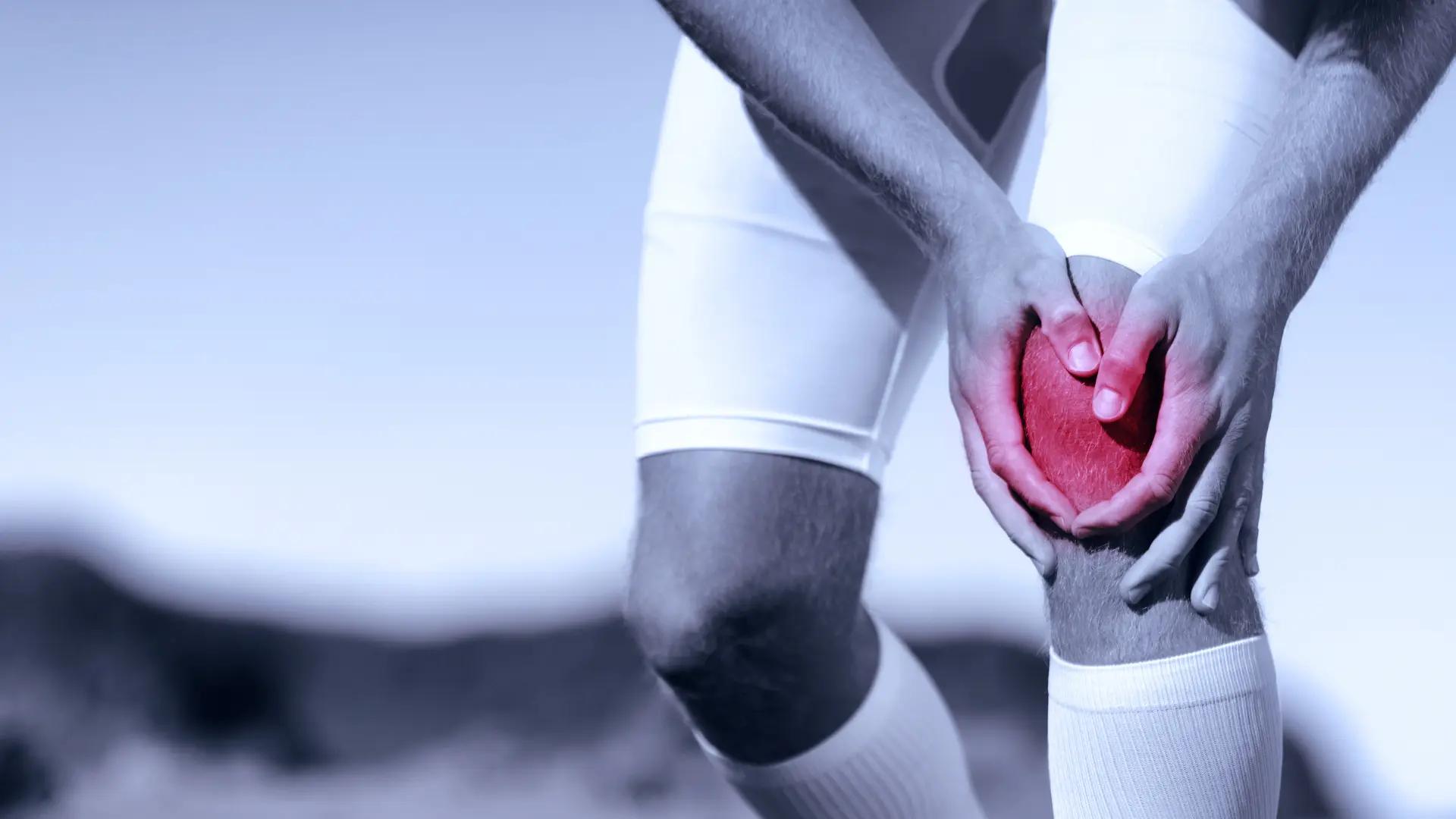
Prevent ACL and MCL injuries in daily life with simple knee protection tips. Edmonton physiotherapy experts offer advice on pain relief and cold therapy.
Key takeaways
- ACL and MCL injuries are largely preventable, and simple daily habits plus a bit of targeted training make a big difference.
- Strengthening the muscles around the knee, especially the thighs, hamstrings, and glutes, is one of the most effective protections.
- How you land, cut, and decelerate matters, since most ACL tears happen without contact, from an awkward movement.
- Everyday choices like good footwear, smart lifting, warming up, and not overloading tired legs protect your knees too.
- No approach removes all risk, but proven training programs cut ACL injuries by roughly half.
In this article
- What are the ACL and MCL, and how do they get injured?
- Can you really prevent ACL and MCL injuries?
- What are the best exercises to protect your knees?
- How can you protect your knees in daily life?
- How do you move and land safely to avoid ACL tears?
- Are some people at higher risk?
- How does Unpain Clinic help protect and recover knees?
- When should you see a professional?
- Frequently asked questions
Your knees carry you through every step, stair, and stumble of daily life, so protecting them is worth a little effort. The ACL and MCL are two key ligaments that stabilize the knee, and tears of either can be painful and slow to recover from. The encouraging news is that most of these injuries are preventable with a mix of simple daily habits and a few targeted exercises. This guide shows you how to protect your knees, whether you are an athlete or just want to move well for years to come. For a broader look at staying resilient, see our guide to injury prevention.
This is general information, not a substitute for a professional assessment or medical advice.
What are the ACL and MCL, and how do they get injured?
The ACL, or anterior cruciate ligament, sits inside the knee and keeps your shin bone from sliding forward and rotating too far. The MCL, or medial collateral ligament, runs along the inner side of the knee and resists forces that push the knee inward. Together they are major stabilizers, especially during twisting, pivoting, and side-to-side movement.
They tend to be injured in different ways. Most ACL tears happen without any contact, during a sudden stop, a hard landing, or a quick change of direction when the knee rotates or caves inward. MCL injuries more often follow a blow to the outer knee or a twisting force that stresses the inner side. Both can cause pain, swelling, and a feeling of the knee giving way, and an ACL tear is often felt as a pop.
The key insight is that many of these injuries come down to movement and control, not just bad luck. That is exactly why they can be reduced. When the muscles and movement patterns that protect the knee are strong and well trained, the ligaments are far less likely to be overloaded.

Can you really prevent ACL and MCL injuries?
Yes, to a meaningful degree you can, and the evidence for it is strong. Structured training programs that build strength, balance, and good movement technique have been shown to substantially lower knee injury risk. A meta-analysis combining eight earlier reviews found that ACL injury prevention training programs reduced the risk of all ACL injuries by about half in athletes, and cut non-contact ACL injuries by roughly two-thirds in female athletes [1].
Warm-up-based programs help too. A review of the FIFA 11+ program, a structured neuromuscular warm-up, found it reduced injuries in soccer players by about 30 percent [2]. And more broadly, a meta-analysis of strength training found it substantially reduced sports injuries, with more training linked to greater protection [3].
No program removes all risk, and injuries can still happen. But the message is clear and hopeful: a large share of knee injuries are preventable, and the same training that protects athletes protects everyone else in daily life too.
What are the best exercises to protect your knees?
The best knee-protecting exercises build strength and control in the muscles that support the joint, so the ligaments are not left to do the work alone. You do not need a gym or heavy weights to start, just consistency a few times a week.

- Thigh strengthening. Squats, wall sits, step-ups, and lunges, done with good form, build the quadriceps that stabilize the kneecap and absorb load. Start with bodyweight and a comfortable range.
- Hamstring strengthening. The hamstrings directly protect the ACL by controlling the shin bone. Bridges, hamstring curls, and slow, controlled Nordic-style lowers are excellent, built up gradually.
- Glute and hip strengthening. Strong hips keep the knee from caving inward, which is where many ACL tears begin. Clamshells, side-lying leg raises, and band walks target these muscles.
- Calf and lower-leg work. Calf raises and ankle strengthening improve how you absorb landings and keep the whole leg stable.
- Balance and control. Single-leg balance, reaching drills, and wobble-surface work train the quick reactions that keep the knee aligned when you are caught off guard.
- Landing and jumping practice. Practising soft, controlled landings and safe jump-and-land drills, with knees bent and tracking over the toes, teaches your body the mechanics that protect the ACL.
Consistency matters more than intensity here. Ten to fifteen minutes a few times a week, done regularly, builds the protection that lasts.
How can you protect your knees in daily life?
Beyond exercise, everyday habits do a lot to keep your knees safe. These are simple and easy to build in.

- Warm up before activity. A few minutes of easy movement before sport, a workout, or heavy tasks prepares the muscles and improves control, lowering injury risk.
- Lift smart. Bend at the hips and knees, keep loads close, and avoid twisting while carrying something heavy, so the knee is not loaded in a vulnerable position.
- Wear supportive footwear. Shoes with good support and grip, suited to your activity, help your feet and knees track well and reduce slips. Replace worn-out shoes.
- Take stairs and slopes with control. Go down stairs and hills deliberately, using the rail when needed, since downhill loads the knee more.
- Mind tired legs and new activity. Many injuries happen when fatigued or when ramping up a new activity too fast. Build up gradually and rest when your legs are spent.
- Keep a healthy weight and stay active. Less load through the knees and stronger supporting muscles both reduce strain over time, which also helps prevent longer-term wear, as our guide to knee osteoarthritis relief explains.
None of these is complicated, and together they meaningfully reduce your risk day to day.
How do you move and land safely to avoid ACL tears?
Because most ACL tears happen without contact, how you move is one of your best protections. The common thread in non-contact injuries is the knee collapsing inward, often on a stiff, straight leg during a landing or a sudden change of direction.
The fix is to train a safer pattern. When you land or decelerate, aim to land softly with your hips and knees bent, keep your knees tracking over your toes rather than caving in, and avoid landing on a locked, straight leg. When you cut or change direction, plant with a bent knee and stay balanced rather than lunging off-balance. Practising these patterns in your training, so they become automatic, is what carries them into the fast, unplanned moments where injuries happen.
This is the heart of why prevention programs work. They rehearse good landing and cutting mechanics until your body defaults to them, which is far more reliable than trying to think about your knees mid-movement.
Are some people at higher risk?
Some people do carry a higher risk, and knowing that helps you target prevention. Female athletes have a notably higher rate of ACL injury than males in comparable sports, likely due to a mix of anatomical, hormonal, and neuromuscular factors, and prevention programs are especially effective for them. In the research, non-contact ACL injuries in female athletes dropped by about two-thirds with training programs [1].
Other risk factors include a previous knee injury, which raises the chance of another, and sports with lots of jumping, pivoting, and cutting, such as basketball, soccer, and skiing. A family history and certain movement patterns, like the knee caving inward on landing, also play a part. If several of these apply to you, a targeted prevention program and a movement assessment are especially worthwhile.

How does Unpain Clinic help protect and recover knees?
We help on both sides of the equation: reducing your injury risk with targeted training, and getting you back to strength if you are recovering from a knee problem. It starts with a thorough 60 minute, one-on-one assessment of your knee, hips, strength, balance, and movement, including how your knee behaves when you squat, land, and change direction, so we can spot the patterns that raise your risk.

From there, a plan may include several of the following:
- A tailored strength and control program. We build and coach the strengthening, balance, and landing mechanics that protect the ACL and MCL, matched to your sport or daily demands.
- Movement retraining. We correct patterns like the knee caving inward, so safer movement becomes automatic.
- Recovery care when needed. For existing knee pain or a healing injury, our physiotherapy, chiropractic care, and massage therapy, and where appropriate focused shockwave therapy, support healing of the surrounding tissues.
- A safe return to activity. We guide a gradual, confident return to sport or activity, rather than rushing back before the knee is ready.
We are honest that no plan removes all risk, but building strength and control genuinely tilts the odds in your favour. If you have knee pain now, our guide to what causes knee pain is a useful starting point.
When should you see a professional?
See a professional promptly if you have injured your knee and notice a pop at the time, rapid swelling, a feeling that the knee is unstable or giving way, or you cannot put weight on it, since these can signal a ligament tear that needs assessment. Ongoing knee pain or a knee that keeps feeling unstable during activity is also worth having checked.
It is also worth seeing a professional before problems start. If you play a high-risk sport, have had a previous knee injury, or notice your knee caving inward when you land or squat, a movement assessment and a personalized prevention program can meaningfully lower your risk. Prevention is far easier than recovery from a torn ligament.
Frequently asked questions
Can you really prevent ACL and MCL injuries?
To a large degree, yes. Structured programs that build strength, balance, and good landing and cutting technique have been shown to cut ACL injuries by about half, and by even more for non-contact tears in women. No program removes all risk, but a large share of these injuries are preventable, which makes the effort well worth it.
What are the best exercises to protect your knees?
Focus on strengthening the thighs, hamstrings, and glutes, plus balance and landing practice. Squats, lunges, bridges, hamstring curls, clamshells, and single-leg balance drills all help, and practising soft, controlled landings trains the mechanics that protect the ACL. Consistency a few times a week matters more than intensity.
Why are ACL injuries more common in women?
Female athletes have a higher ACL injury rate than males in similar sports, likely from a combination of anatomical, hormonal, and neuromuscular factors that can lead to the knee caving inward on landing. The encouraging part is that prevention programs are especially effective for women, cutting non-contact ACL injuries by roughly two-thirds in the research.
Do knee braces prevent ACL injuries?
Braces have a limited and uncertain role in preventing ACL injuries, and they are not a substitute for training. Some functional braces are used after an injury or surgery for support, but the evidence that a brace prevents a first ACL tear is weak. Strengthening and movement training are the proven ways to lower your risk.
How can I protect my knees at the gym or while running?
Warm up first, build load and mileage gradually, and use good form, keeping your knees tracking over your toes during squats, lunges, and landings. Strengthen your hips and hamstrings, wear supportive shoes, and ease off when your legs are fatigued, since many injuries happen when tired. Progressing slowly is one of the simplest protections.
What does an ACL tear feel like?
Many people feel or hear a pop at the moment of injury, followed by rapid swelling, pain, and a sense that the knee is unstable or wants to give way. Putting weight on it can feel unsafe. If you have these signs after a twist or awkward landing, it is important to get the knee assessed rather than pushing through.
“Recently Dr Lacina Barsalou treated me with shockwave for two separate injuries. Last season she successfully treated my Achilles tendinitis. After treatment the pain was significantly reduced and it healed well. More recently she has been treating me for a fall on stairs where I injured both knees and hip. Dr B can readily pinpoint the source of pain, administer shockwave therapy and offer home exercise to support the treatment. Her treatment and advice for both injuries has helped me tremendously. I highly recommend shockwave, the Unpain Clinic and Dr Lacina Barsalou. I’ve found it to be a miracle like therapy for pain and injury.”-Barbara Burton
About the author
Written by Uran Berisha, Founder of Unpain Clinic and Medical Shockwave Institute. Uran has a Bachelor of Science in Physiotherapy and is an International Educator in Shockwave Therapy.
Medically reviewed by Uran Berisha.
Ready to protect your knees for the long run?
Whether you want to lower your injury risk or bounce back stronger from a knee problem, the next step is a one-on-one assessment where we check your strength, balance, and movement and build you a clear plan. Your first visit is 60 minutes, assessment only, and includes:
- A full history and a look at your goals
- Head-to-toe orthopedic and movement testing, including how your knee handles squats, landings, and direction changes
- A plain-language explanation of what raises or lowers your risk
- A personalized prevention or recovery roadmap
No referral needed. No pressure, no contracts. If we do not think this approach is a good fit for you, we will tell you honestly. Book your initial assessment and let's keep your knees strong and steady.
References
- Webster KE, Hewett TE. Meta-analysis of meta-analyses of anterior cruciate ligament injury reduction training programs. Journal of Orthopaedic Research. 2018;36(10):2696-2708. https://doi.org/10.1002/jor.24043
- Sadigursky D, Braid JA, De Lira DNL, Machado BAB, Carneiro RJF, Colavolpe PO. The FIFA 11+ injury prevention program for soccer players: a systematic review. BMC Sports Science, Medicine and Rehabilitation. 2017;9:18. https://doi.org/10.1186/s13102-017-0083-z
- Lauersen JB, Andersen TE, Andersen LB. Strength training as superior, dose-dependent and safe prevention of acute and overuse sports injuries: a systematic review, qualitative analysis and meta-analysis. British Journal of Sports Medicine. 2018;52(24):1557-1563. https://doi.org/10.1136/bjsports-2018-099078
Related Topics