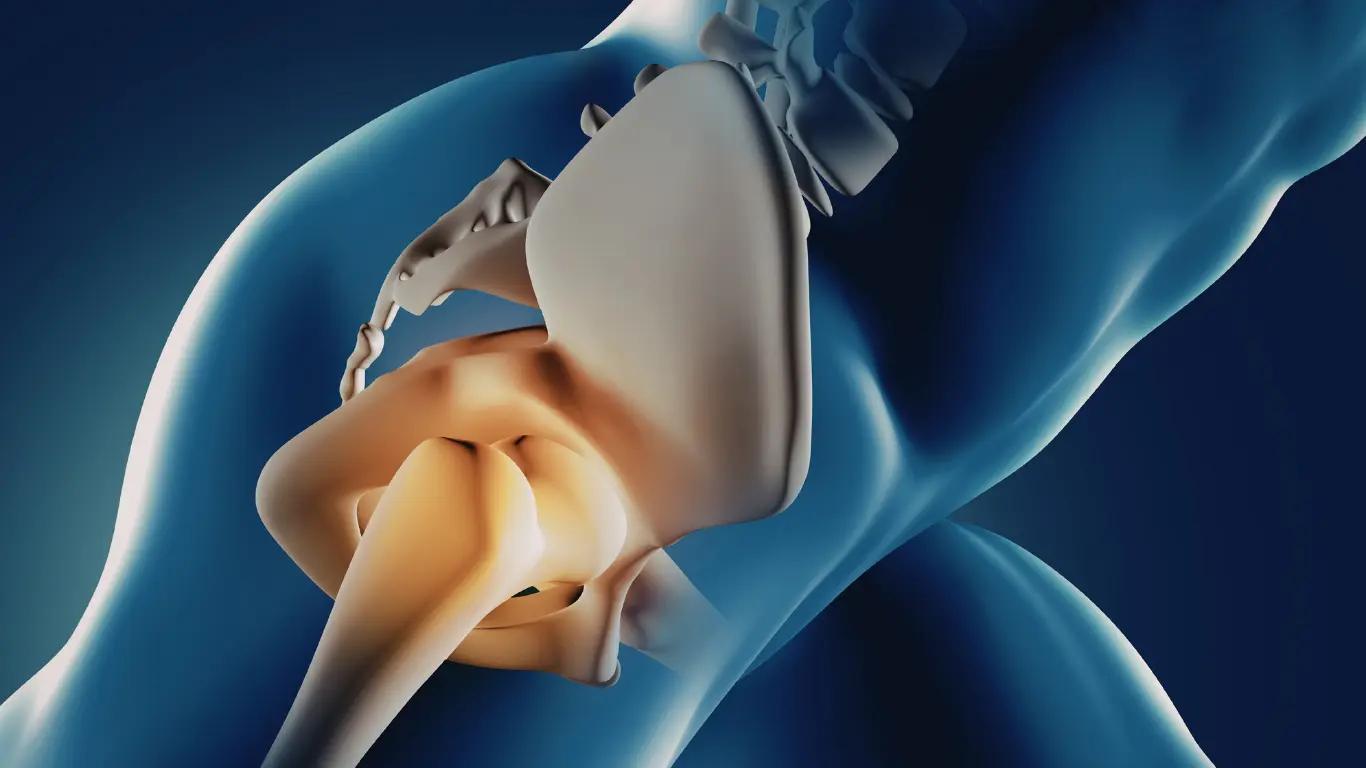
Struggling with back-of-hip pain? Learn common causes, evidence-based treatments and self-care tips from Unpain Clinic in Edmonton.
KEY TAKEAWAYS
- The most common cause of persistent pain in the back or outside of the hip in adults over 40 is gluteal tendinopathy (also called greater trochanteric pain syndrome or GTPS), a load-related tendon condition where the tendons of the small hip muscles have failed to finish healing.
- A randomised clinical trial published in the BMJ in 2018 compared education plus exercise, a single corticosteroid injection, and a wait-and-see approach in 204 patients with gluteal tendinopathy. At eight weeks, education plus exercise was superior to both the injection and wait-and-see groups for pain and global improvement. At one year, education plus exercise still had less frequent pain and a stronger global improvement rating than the injection group.
- A 2024 systematic review and meta-analysis of eight randomised trials involving 754 patients found that extracorporeal shockwave therapy was associated with significant short-term pain reduction and functional improvement at six months in gluteal tendinopathy. The authors flagged that most of the included trials were at high risk of bias and called for larger, better-quality studies.
- Hip osteoarthritis, referred pain from the lumbar spine, sacroiliac joint dysfunction, and deep gluteal syndrome can all cause pain in the same general area and need to be distinguished by clinical assessment. The right treatment depends on the actual driver.
- The best-supported approach combines load management and education (change the movements that keep compressing the tendon), progressive strengthening (rebuild the hip abductors), and, when appropriate, focused shockwave therapy to help the tendon repair. Injections may offer short-term relief but do not build resilience.
IN THIS ARTICLE
- What is causing your back-of-hip pain?
- What does the research actually say about gluteal tendinopathy treatment?
- How do different treatments compare for back-of-hip pain?
- What is the evidence for shockwave in gluteal tendinopathy?
- How does treatment for back-of-hip pain work at Unpain Clinic?
- What can you safely do at home between visits?
- Frequently asked questions
INTRODUCTION
If you have persistent pain in the back or outside of your hip, if lying on the affected side wakes you up at night, if getting out of a car or climbing stairs makes it flare, and if a round of rest and anti-inflammatories has not fixed it, this article is written for you.
Pain in the back-of-hip region is a common presentation, and the label patients use for it (back of hip, side of hip, deep buttock, outside of hip) does not always tell you what structure is actually driving it. The hip joint, the gluteal tendons that attach to the bony bump on the outside of the hip, the sacroiliac joint, the piriformis and the deep gluteal muscles, and the nerve roots exiting the lumbar spine can all produce pain in the same general area. In older adults, a hip joint problem can even refer to the knee or the groin instead. So the first task in getting back-of-hip pain to settle is answering a clinical question: what is actually causing this?
This article walks through the most common causes in adults, what the current research says about the treatments that work, and how we approach these presentations at Unpain Clinic in Edmonton. It is a long read because the topic warrants it. The Key Takeaways above cover the short version.

WHAT IS CAUSING YOUR BACK-OF-HIP PAIN?
There is no single answer here. Several conditions cause pain in the back and outside of the hip in adults, and the treatment depends on which one is driving the picture. The list below covers the ones we see most often, roughly in order of frequency in the 40-plus population.
Gluteal tendinopathy (greater trochanteric pain syndrome, or GTPS). This is the most common cause of persistent pain in the outer and back-of-hip area in adults over 40, particularly in women in their 40s to 60s. The pain sits over the bony bump on the outside of the hip (the greater trochanter) and can radiate down into the outside of the thigh. It typically worsens with lying on the affected side, with climbing stairs, with sitting for long periods with the knees crossed, and with standing on one leg. The canonical review by Grimaldi and colleagues in Sports Medicine reframed this condition away from the older name "trochanteric bursitis." What is really happening is a load-related change in the tendons of the gluteus medius and gluteus minimus where they attach to the outside of the greater trochanter. The tendon has failed to finish healing under repeated compressive load, and the fibres are disorganized and mechanically weaker than they should be. Bursal irritation may be present, but the tendon is the primary driver in most cases.
The mechanism matters because it changes the treatment logic. GTPS is a compression-based tendinopathy. When the hip moves into adduction (as happens when you sit with your legs crossed, sleep on your side without a pillow between your knees, or stand with one hip dropped), the iliotibial band presses down on the gluteal tendons against the greater trochanter. Weak hip abductor muscles worsen the compression because the pelvis drops on the unsupported side during walking and single-leg stance. Repeated compression is what keeps the tendon irritated, and simply resting does not rebuild strength.
Hip osteoarthritis. Hip osteoarthritis classically causes pain in the groin or the front of the hip, but referral into the buttock, the back-of-hip area, or the outside of the thigh is common. Morning stiffness lasting up to about 30 minutes, difficulty putting on socks, a limp that develops as you walk longer, and pain with deep hip flexion or rotation (for example, pulling out of a car) are typical features. Later-stage hip osteoarthritis can cause pain at rest or at night. The 2019 OARSI guidelines for non-surgical management of hip and knee osteoarthritis recommend a foundation of patient education, structured land-based exercise, weight management for those who are overweight, and pain-management strategies before considering surgical intervention.
Referred pain from the lumbar spine. Sciatica, in the strict sense, refers to nerve root irritation from the lumbar spine that produces pain travelling from the low back into the buttock, the back of the thigh, and sometimes below the knee. When the referral pattern includes the buttock and back of hip but does not cross below the knee, the source can also be a facet joint or muscular referral pattern from the lower lumbar segments. Numbness, tingling, or weakness that follows a dermatomal pattern points more strongly to nerve root involvement. First-line care for non-specific lumbar radicular pain is non-drug management, per the 2017 clinical guideline from the American College of Physicians on non-invasive treatments for low back pain.
Deep gluteal syndrome and piriformis-related pain. The deep gluteal space contains the sciatic nerve and several small muscles including the piriformis. Compression or irritation of the sciatic nerve within this space can produce a deep aching buttock pain, sometimes with tingling or altered sensation in the leg. This presentation overlaps clinically with lumbar radicular pain and needs a careful examination to distinguish.
Sacroiliac joint dysfunction. The sacroiliac joints sit at the very back of the pelvis and can produce a localized pain just below the belt line, often unilateral, sometimes with referral into the buttock and the back of the thigh. Diagnostic clusters of provocation tests and, in some cases, image-guided injections are used to confirm the source.
Red flags to know. Some symptoms need urgent evaluation and are not "wait and see" symptoms. Sudden severe back or hip pain after significant trauma, progressive weakness or numbness in the leg, bladder or bowel changes, saddle-area numbness, unexplained fever or chills, or unexplained weight loss with hip pain can all indicate serious conditions that need urgent workup. Night pain that is unrelieved by any position, especially in someone with a cancer history, needs medical review.
WHAT DOES THE RESEARCH ACTUALLY SAY ABOUT GLUTEAL TENDINOPATHY TREATMENT?
The strongest single piece of evidence in this area is the 2018 LEAP trial published in the BMJ by Mellor and colleagues. It is worth walking through in detail because it directly shapes how we think about GTPS.
LEAP randomised 204 adults with lateral hip pain lasting more than three months, confirmed by clinical examination and MRI, to one of three groups: a load-management education plus targeted exercise programme delivered over 14 physiotherapy sessions across eight weeks, a single ultrasound-guided corticosteroid injection into the greater trochanteric bursa, or a wait-and-see approach with basic advice only. Participants were mostly women in their mid-50s.
At eight weeks, the education plus exercise group had a significantly better global rating of change than both the injection group and the wait-and-see group. The education plus exercise group also had less frequent pain and greater clinically meaningful pain reduction than the injection group. At 52 weeks, the education plus exercise group still had a better global rating of change than the wait-and-see group and less frequent pain than the injection group, although some of the secondary outcomes had narrowed by that point.
The takeaway is not that injections are useless. It is that a structured programme of load management and progressive tendon loading, delivered by a physiotherapist who understands GTPS, produces better outcomes than an injection at eight weeks and better global improvement than an injection at one year. Corticosteroid injections deliver short-term symptom relief for some patients but do not rebuild the tendon or address the movement patterns that keep compressing it. Wait-and-see is not a plan.
The compressive load piece is worth emphasising because it drives every part of good GTPS management. Anything that puts the hip into adduction, such as sitting with the legs crossed, standing with the hip dropped, sleeping on the affected side without a pillow between the knees, or aggressive iliotibial band stretching, keeps compressing the tendon. Fixing the compression is often more important than adding modalities on top.
"The failure pattern I see with back-of-hip pain is almost always the same. Someone rests, then feels better, then goes back to the same daily loading pattern that irritated the tendon in the first place. The tendon flares again and they blame the exercise. What actually needs to change is the loading pattern, and the way to change it is to strengthen the hip and to modify the compressive positions in daily life. That is the work." Uran Berisha, PT, RMT, Founder of Unpain Clinic

HOW DO DIFFERENT TREATMENTS COMPARE FOR BACK-OF-HIP PAIN?
A useful way to think about back-of-hip pain options is to compare what each one is actually doing. Some treatments quiet pain quickly. Some try to rebuild the tendon or restore joint tolerance slowly. They are not the same job and they age differently over weeks and months.
REST, ICE, AND ANTI-INFLAMMATORIES What it is doing: Lowers symptoms and reduces early inflammation. How fast: Days. How long it tends to hold: Pain tends to return with activity because the tendon has not been rebuilt and the compressive loading pattern has not been changed. Total rest also weakens the hip abductors, which makes the underlying problem worse.
CORTISONE INJECTION What it is doing: Suppresses local pain and inflammation around the greater trochanter. How fast: Days to a few weeks. How long it tends to hold: Strong early relief that often does not hold. In the LEAP trial, at both eight weeks and one year, education plus exercise had better global improvement than a single corticosteroid injection. Repeated injections into the same tendon area can also weaken the tendon over time.
LOAD MANAGEMENT EDUCATION AND PROGRESSIVE EXERCISE What it is doing: Removes the compressive load pattern that keeps irritating the tendon, and rebuilds hip abductor strength. How fast: Weeks to months. How long it tends to hold: In the strongest available trial, this approach outperformed both injection and wait-and-see at eight weeks and at one year for global improvement in gluteal tendinopathy.
FOCUSED SHOCKWAVE THERAPY What it is doing: Stimulates tendon remodeling, new small blood vessel growth, and pain modulation in the affected tendon. How fast: Builds over weeks. How long it tends to hold: Meta-analysis suggests significant short-term pain reduction and functional improvement at six months when used alongside a rehabilitation programme, with caveats about the quality of the underlying trials.
MANUAL THERAPY What it is doing: Reduces muscle guarding, restores joint mobility, improves movement quality. How fast: Weeks. How long it tends to hold: A useful supporting tool. Not a stand-alone fix for GTPS.
WEIGHT MANAGEMENT AND LOW-IMPACT AEROBIC EXERCISE (FOR HIP OSTEOARTHRITIS) What it is doing: Reduces the load carried through the hip during walking and stairs and improves the surrounding musculature. How fast: Weeks to months. How long it tends to hold: Recommended as core treatment in the OARSI 2019 hip and knee osteoarthritis guidelines. Meaningful, sustainable strategy for hip OA.
HIP JOINT REPLACEMENT SURGERY (FOR ADVANCED HIP OSTEOARTHRITIS) What it is doing: Structural correction of a degenerated joint. How fast: Weeks to months with rehabilitation. How long it tends to hold: Highly effective and appropriate when advanced hip osteoarthritis has failed six or more months of appropriate conservative care. Not first-line for GTPS or referred lumbar pain.
The two comparisons that come up most often in clinic are cortisone injections and standard passive care (rest, ice, anti-inflammatories). Cortisone tends to feel like the winner at four weeks and the loser at six months, because the steroid is masking pain without changing the tissue or the loading pattern. Rest tends to feel like it is helping while it is happening and to fail as soon as normal loading returns. Load management plus progressive strengthening feels slower and less immediately gratifying but is the only approach with strong evidence for durable improvement in GTPS.

WHAT IS THE EVIDENCE FOR SHOCKWAVE IN GLUTEAL TENDINOPATHY?
Shockwave therapy for GTPS is worth discussing in its own section because it comes up in almost every conversation about persistent hip pain and the evidence is nuanced.
The best available synthesis is the 2024 systematic review and meta-analysis by Rhim and colleagues published in the British Journal of Sports Medicine group, which pooled eight randomised controlled trials involving 754 patients with GTPS. The meta-analysis found that extracorporeal shockwave therapy was associated with significant short-term pain reduction and improved functional outcomes at six months compared with control groups. The authors were transparent about a limitation that matters. Seven of the eight included trials were at high risk of bias, one at moderate risk, and the confidence in the estimates is therefore lower than it would be with better trials. The direction of the evidence is positive; the certainty is not yet high.
A separate 2023 cross-over randomised trial by Barassi and colleagues compared focused shockwave therapy and therapeutic exercise in GTPS. Both approaches produced significant reductions in pain and improvements in function. Shockwave was associated with greater functional improvement than exercise alone in this comparison, and the combination of both approaches was helpful in patients who did not fully respond to either alone.
Two things worth taking from this. First, shockwave is not a stand-alone treatment for GTPS. It is best positioned as an adjunct to a proper load management and strengthening programme, not a substitute. Second, the evidence base for shockwave in GTPS is smaller and lower-quality than the evidence base for shockwave in some other tendinopathies, and honest patient counselling reflects that. What we can say is that when the assessment identifies GTPS as the driver, shockwave is a reasonable and generally safe addition to a good rehabilitation programme. What we cannot say is that shockwave alone will fix the problem.
HOW DOES TREATMENT FOR BACK-OF-HIP PAIN WORK AT UNPAIN CLINIC?
At Unpain Clinic in Edmonton, the goal is not to chase the painful spot at the outside of the hip. It is to answer the question of why the pain is still there. Most persistent back-of-hip cases sit inside a longer chain of issues (a weak hip abductor group, a tight thoracic spine that changes how you load through the pelvis, a movement pattern from work or sport that keeps loading the tendon in the wrong position). The assessment is built to find that chain, not just the sore spot.
Your first visit is a 60-minute assessment, not treatment. It usually follows this order.
- A full history of how the pain started, what aggravates it, what calms it, what treatments you have tried, and what you actually want to get back to (walking without limping, sleeping through the night, returning to running, gardening without pain the next day).
- Orthopedic and neurological testing of the lumbar spine, sacroiliac joints, hips, and lower limbs. Palpation of the greater trochanter and the surrounding tendon attachments. Provocation tests for GTPS, hip OA, sacroiliac joint dysfunction, and lumbar radiculopathy. Screening for red flags.
- Motion and load analysis of how you actually move. Single-leg balance testing, sit-to-stand mechanics, gait observation, and specific position testing to reproduce the pain pattern.
- A check for any red flags (progressive neurologic symptoms, cancer history, fracture concern, infection markers, inflammatory features) that mean a physician's opinion or imaging is the right next step before physiotherapy proceeds.
- A clear, personalized plan that decides what belongs in your treatment: some combination of load management education, a progressive strengthening programme, manual therapy where appropriate, and passive modalities such as focused shockwave when indicated.
From there, treatment sessions are built around a small set of high-leverage tools.
- Load management education is the foundation. This is the biggest single lever for GTPS and it starts on the first treatment visit. It includes how to sit, stand, walk, and sleep in ways that stop compressing the gluteal tendons, and how to gradually reintroduce activity without triggering flares.
- A progressive strengthening programme. Hip abductor strengthening in positions that avoid compression, deep core control, and thoracic and lumbar mobility work. The specific exercises depend on what your assessment showed. This is the part that builds durable improvement.
- Focused shockwave therapy when the picture warrants it, delivered to the tendon attachment at the greater trochanter as an adjunct to the load management and strengthening programme. Focused shockwave penetrates deeper than radial devices, which matters for reaching the tendon attachment. A typical course is six to eight sessions, once or twice weekly, with re-assessment along the way.
- EMTT as an adjunct in some cases, paired with shockwave when the irritation covers a broader area including the surrounding muscle and fascial layer.
- Manual therapy for the surrounding muscle guarding and any restricted mobility in the thoracic spine, lumbar spine, or hip joint.
- NESA neuromodulation in select cases where central sensitization is a significant part of the picture, particularly in longer-standing cases.
Cortisone is generally not added during a shockwave course, because the steroid effect can blunt the healing response we are trying to encourage in the tendon. If a cortisone injection is being considered, we usually recommend completing the shockwave and exercise course first and reassessing.

WHAT CAN YOU SAFELY DO AT HOME BETWEEN VISITS?
This is general education, not individual medical advice, and results vary. A few principles tend to help most people with back-of-hip pain stay better between visits.
Change the compressive positions. This is the single most important home change for gluteal tendinopathy.
- Sleep on your back or on your unaffected side with a pillow between your knees. If you must sleep on the affected side, use a pillow under the affected hip to reduce direct pressure.
- Sit with both feet flat on the floor and your knees roughly hip-width apart. Do not sit with your legs crossed. Do not sit in low, soft chairs that pull the affected hip into adduction.
- Stand with your weight evenly distributed on both feet. Avoid the "hip-hanging" posture where you drop your weight onto one leg and let the other hip stick out to the side.
- Avoid aggressive stretching of the iliotibial band. Rolling the outside of the thigh on a foam roller or pulling the affected hip into deep adduction stretches often makes GTPS worse, not better.
Do gentle strengthening. The specific exercises should be chosen with your clinician based on your assessment, but a few general principles apply.
- Hip abductor strengthening in positions that do not compress the tendon. Side-lying hip abduction with a small range of motion, isometric holds (contracting the muscle without moving the joint), and later on standing hip abduction against a resistance band are common starting points.
- Progress load slowly. Tendons respond to loading, but only if the loading is progressive and tolerable. Sharp pain during exercise or pain that worsens for more than 24 hours afterward means the load was too much.
- Do not skip the rest of the body. The hip does not work in isolation. Deep core control, thoracic mobility, and calf and ankle strength all contribute to how the hip loads.
Manage the daily load. Short walks are typically fine and often helpful. Long walks, prolonged standing, and sudden increases in activity are the most common flare triggers. Small changes in daily routine reduce cumulative load on the tendon.
For hip osteoarthritis, the same principles apply, plus the specific recommendations from the 2019 OARSI guidelines. Structured land-based exercise programmes and, for those who are overweight, weight management are core treatments. Small reductions in body weight can produce meaningful reductions in the load carried by the hip during walking and stair use.
Some symptoms are not "wait and see" symptoms. Get medical attention if you develop sudden severe hip pain after a fall or significant trauma, progressive weakness or numbness in the leg, bladder or bowel changes, saddle-area numbness, unexplained fever, or unexplained weight loss with hip pain. Night pain that does not settle in any position, especially in someone with a cancer history, also needs review.
FREQUENTLY ASKED QUESTIONS
Why does my hip hurt when I sit or at night?
The most common reason is gluteal tendinopathy, and the mechanism is compression. When you sit with your legs crossed, lie on the affected side, or sit in a low soft chair, the tendons of the small hip muscles get compressed between the iliotibial band and the greater trochanter. Prolonged compression reduces local blood flow and irritates the tendon. Adjusting your sitting and sleeping positions and starting a progressive strengthening programme are usually more effective than rest or medication.
What is the fastest way to relieve back-of-hip pain?
There are no instant cures for a chronic tendon problem. A corticosteroid injection may reduce pain within a few days for some patients, but the LEAP trial shows this relief often does not hold at 12 weeks or one year, and education plus exercise produces better global improvement over time. The fastest realistic path is a proper assessment to identify the driver, load management to stop making it worse, and a structured strengthening programme with or without focused shockwave therapy.
Where is arthritis hip pain felt?
Hip osteoarthritis classically causes a deep ache in the groin or the front of the hip, but referral into the buttock, back-of-hip area, or outside of the thigh is common. Morning stiffness lasting up to about 30 minutes and pain with deep hip flexion or rotation (pulling out of a car, putting on socks) are typical features. Later-stage hip osteoarthritis can cause pain at rest or at night.
Is it gluteal tendinopathy or sciatica?
Both can produce pain in the back-of-hip and buttock area, but the pattern differs. Gluteal tendinopathy is worse with lying on the affected side, with climbing stairs, with prolonged standing on one leg, and with sitting with the legs crossed. The tender spot is typically over the bony bump on the outside of the hip. Sciatica in the strict sense is nerve root pain from the lumbar spine that travels from the low back into the buttock and down the leg, often below the knee, sometimes with tingling, numbness, or weakness in a specific pattern. A proper clinical examination is what distinguishes them.
How many shockwave sessions will I need?
For gluteal tendinopathy, a common plan is six to eight weekly sessions of focused shockwave, paired with a structured strengthening programme. Re-assessment usually happens after the first three or four sessions to see whether you are responding. Most of the change tends to build over the four to eight weeks after the last session as tissue remodels.
Should I get a cortisone injection for gluteal tendinopathy?
A cortisone injection is not the wrong answer for every patient. It may help with pain in the short term, particularly if the pain is preventing you from starting a rehabilitation programme. What the research shows is that a single corticosteroid injection alone does not build durable improvement, and the LEAP trial demonstrated that education plus exercise had better global outcomes than injection at both 8 weeks and 52 weeks. The best use case for an injection is a bridge into rehabilitation, not a stand-alone fix.
Can I still walk and exercise if I have gluteal tendinopathy?
Yes, and you should. Total rest weakens the hip abductor muscles, which makes the underlying problem worse. What matters is what kind of activity and how much. Short walks in the pain-free range are typically fine. Long walks, stairs done at pace, aggressive iliotibial band stretching, and any activity that spikes the pain for more than a day afterward should be modified or paused until your rehabilitation programme brings the tendon up to that load.
When should I stop self-treating and book an assessment?
If your back-of-hip pain has lasted more than a few weeks despite smart movement and load changes, keeps coming back, is waking you up at night, is accompanied by leg symptoms, or is limiting the activities you care about, it is worth getting properly assessed. Persistent back-of-hip pain is one of the more diagnosable conditions in physiotherapy when the assessment is done properly, and the right plan depends on knowing what is actually driving the pain.
PATIENT TESTIMONIAL
“I had the pleasure of visiting Dr. Lacina Barsalou's clinic to demo the DD Robotec, and I left thoroughly impressed. Dr. Barsalou's commitment to continuous learning was evident through the various cutting-edge technologies on display, including shockwave therapy. What struck me most was her collaborative approach, working seamlessly with other healthcare practitioners to provide comprehensive care. With personalized treatments for back, neck, knee, and hip pain, Dr. Barsalou's clinic offers innovative solutions tailored to individual needs. Highly recommended for anyone seeking progressive chiropractic care in the Edmonton area.” Mike Wojcicki
ABOUT THE AUTHOR
Written by Uran Berisha, PT, RMT, Founder of Unpain Clinic and the Medical Shockwave Institute in Edmonton. Uran is an International Educator in Shockwave Therapy. Medically reviewed by Uran Berisha, PT, RMT.
BOOK YOUR INITIAL ASSESSMENT
If your back-of-hip pain has not budged with the usual care and you want a clear answer on what is driving it, the next step is a 60-minute one-on-one assessment at Unpain Clinic Edmonton. We will identify whether the driver is gluteal tendinopathy, hip osteoarthritis, referred pain from the lumbar spine, or something else, screen for red flags that need medical workup first, and tell you honestly whether shockwave therapy fits your case. No referral needed. No long contracts. Book your initial assessment with Unpain Clinic.
REFERENCES
- Mellor R, Bennell K, Grimaldi A, Nicolson P, Kasza J, Hodges P, Wajswelner H, Vicenzino B. Education plus exercise versus corticosteroid injection use versus a wait and see approach on global outcome and pain from gluteal tendinopathy: prospective, single blinded, randomised clinical trial. BMJ. 2018;361:k1662. doi:10.1136/bmj.k1662. PMID: 29720374. https://pubmed.ncbi.nlm.nih.gov/29720374/
- Grimaldi A, Mellor R, Hodges P, Bennell K, Wajswelner H, Vicenzino B. Gluteal tendinopathy: a review of mechanisms, assessment and management. Sports Medicine. 2015;45(8):1107-1119. doi:10.1007/s40279-015-0336-5. PMID: 25969366. https://pubmed.ncbi.nlm.nih.gov/25969366/
- Rhim HC, Shin J, Beling A, Guo R, Pan X, Afunugo W, Ruiz J, Andrew MN, Kim J, Tenforde AS. Management of the greater trochanteric pain syndrome: a systematic review and meta-analysis of extracorporeal shockwave therapy. 2024. PMID: 39297780. https://pubmed.ncbi.nlm.nih.gov/39297780/
- Barassi G, Di Simone E, Galasso P, Cristiani S, Supplizi M, Kontochristos L, Panunzio M, Marano A, Colarusso S, Guglielmi V, Lococo B, Prosperi L, Di Iorio A. Shock Waves and Therapeutic Exercise in Greater Trochanteric Pain Syndrome: A Prospective Randomized Clinical Trial with Cross-Over. Journal of Personalized Medicine. 2023;13(6):1035. doi:10.3390/jpm13061035. https://pmc.ncbi.nlm.nih.gov/articles/PMC10301141/
- Bannuru RR, Osani MC, Vaysbrot EE, Arden NK, Bennell K, Bierma-Zeinstra SMA, Kraus VB, Lohmander LS, Abbott JH, Bhandari M, Blanco FJ, Espinosa R, Haugen IK, Lin J, Mandl LA, Moilanen E, Nakamura N, Snyder-Mackler L, Trojian T, Underwood M, McAlindon TE. OARSI guidelines for the non-surgical management of knee, hip, and polyarticular osteoarthritis. Osteoarthritis and Cartilage. 2019;27(11):1578-1589. doi:10.1016/j.joca.2019.06.011. PMID: 31278997. https://pubmed.ncbi.nlm.nih.gov/31278997/
- Qaseem A, Wilt TJ, McLean RM, Forciea MA; Clinical Guidelines Committee of the American College of Physicians. Noninvasive treatments for acute, subacute, and chronic low back pain: a clinical practice guideline from the American College of Physicians. Annals of Internal Medicine. 2017;166(7):514-530. doi:10.7326/M16-2367. PMID: 28192789. https://pubmed.ncbi.nlm.nih.gov/28192789/
Related Topics