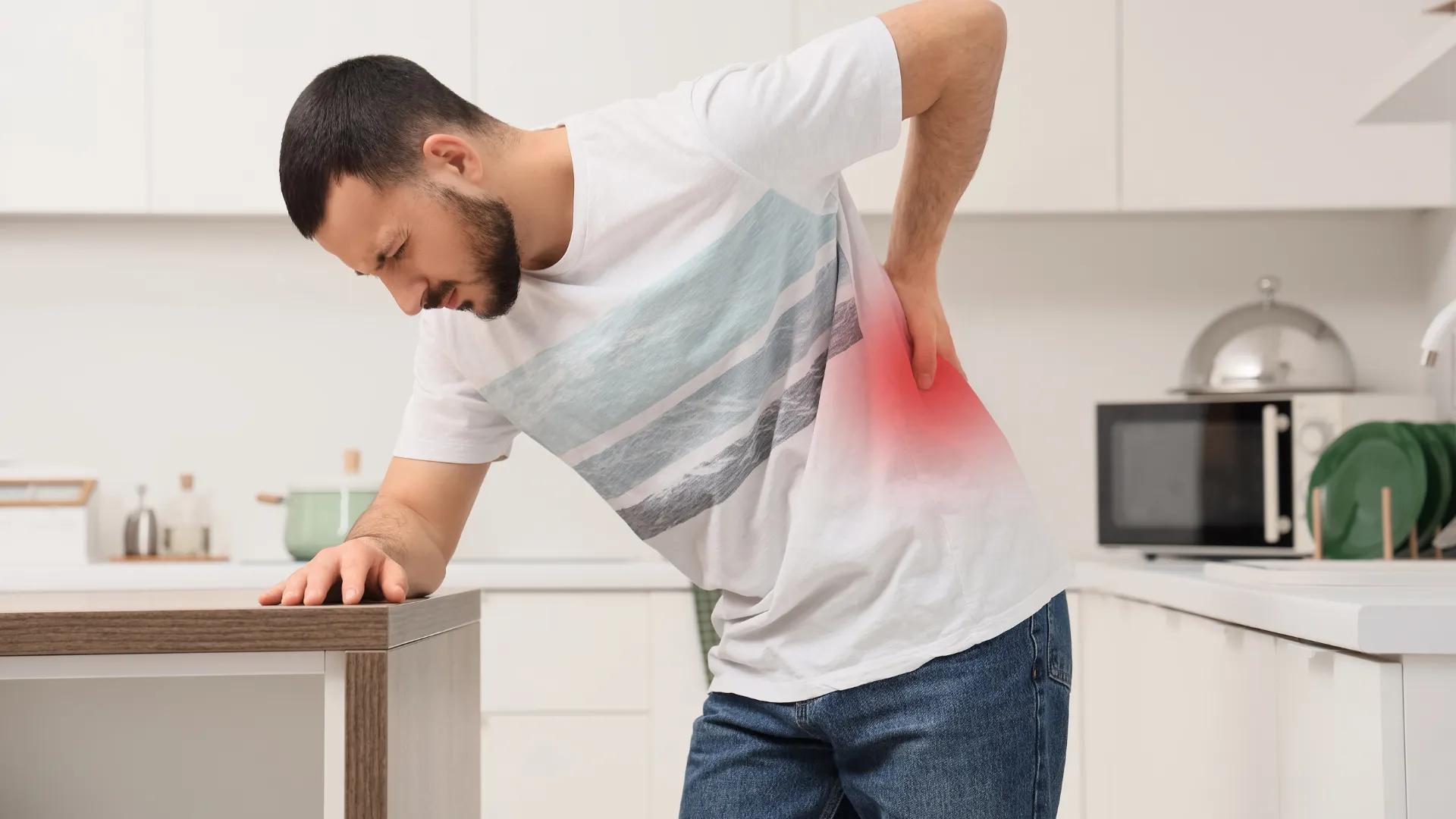
Back or shoulder pain flare-up after holidays? Learn why ignoring pain often leads to worse outcomes in the new year — and what to do about it.
Key takeaways
- Ignoring pain does not make it go away. It gives the underlying issue more time to progress, and research shows people who downplay symptoms tend to delay care and end up with worse outcomes.
- Holiday habits quietly fuel pain: skipped exercise, long sitting, stress, poor sleep, and the "I'll deal with it in January" mindset all set you up for a January flare.
- The boom-bust cycle, pushing through pain during the holidays then crashing afterward, is one of the most common patterns in chronic pain and can be broken with pacing.
- Sleep loss alone can lower your pain threshold by amplifying how the brain processes pain signals.
- Treating pain early, rather than waiting months, is linked to less need for strong medication, imaging, and surgery down the line. Starting care now protects your January.
In this article: why pain gets worse after the holidays, how holiday stress and habits fuel it, the boom-bust cycle, what early treatment prevents, how we treat it at Unpain Clinic, what you can do at home, and common questions.
The holidays are supposed to be for joy and rest, but if you have been quietly pushing through an ache, hoping it will sort itself out by January, that plan often backfires. A tolerable twinge in December can become a full-blown flare-up in the new year, and by then the underlying issue has had weeks of extra time to dig in. This article explains why that happens, what the research says about the cost of waiting, and how to break the cycle. For a companion read on what to do when the flare has already hit, see our guide to post-holiday pain as feedback.
This is general information, not a substitute for a professional assessment or medical advice. Results vary from person to person.

Why does pain often get worse after the holidays?
Pain gets worse after the holidays because ignoring it does not pause the underlying problem, it gives it more time to progress. And the holiday season adds a perfect storm of fuel.
Toughing it out delays care, and that has real consequences. Research shows that people with a high pain tolerance tend to postpone seeking help, which allows conditions to worsen before they are addressed [2]. A 2023 study of people with new knee arthritis found that those who started physiotherapy within the first month had far better outcomes, while those who waited several months were significantly more likely to end up relying on strong pain medication [4]. Early treatment is not just about comfort. It can prevent a cascade of bigger interventions.
Holiday habits quietly pull the rug out. In one survey, 79 percent of people admitted to neglecting their health routines during the holidays [1]. Skipped exercises, long stretches of sitting, disrupted sleep, extra stress, and a change in diet all accumulate. If you have a lower back or shoulder issue, a few weeks without your usual maintenance can leave the area stiff, weak, and primed for a flare the moment you resume normal life.
Stress amplifies pain. Holiday stress is not just a mood problem. Elevated cortisol and inflammatory chemicals can genuinely intensify how much you hurt and reduce your tolerance for it. Many people carry extra muscle tension in the neck and low back during hectic periods, and that tension can push a borderline ache into real pain.
Sleep loss lowers your pain threshold. A study at UC Berkeley found that just one night of sleep deprivation made healthy adults significantly more sensitive to pain, with the brain's pain-processing regions becoming hyperactive while pain-inhibiting centres went quiet [6]. Late holiday nights, travel across time zones, and disrupted routines can all prime your system to feel more pain.

What is the boom-bust cycle, and why does it matter?
The boom-bust cycle is one of the most common patterns in chronic pain, and the holidays are a textbook trigger. During the "boom," you push through activities despite pain, lifting luggage, standing all day cooking, dancing at the New Year's party, essentially ignoring pain signals. Then comes the "bust," a delayed explosion of pain that forces you to stop.
Pain specialists call this habitual overactivity: doing too much on a good day, then paying for it the next. One study in people with chronic back pain found that high activity on one day was followed by a significant pain spike the following day [7]. If you have ever said, "I felt fine while hosting the dinner, but the next morning my back went out," you have lived it.
Each flare creates more inflammation or micro-injury, keeping you in a loop. Breaking the cycle requires pacing: doing a little less on good days so you do not crash, and staying gently active on bad days instead of collapsing into bed. It is a counterintuitive skill, but it is one of the most powerful things you can learn for managing pain long-term.
What happens when you wait too long to treat pain?
Waiting too long lets a fixable problem dig in. Untreated acute pain can trigger neural and immune changes that make the pain more permanent, essentially rewiring your system toward a chronic state. Once pain becomes chronic, it does not just hurt physically. It is linked to sleep disruption, social withdrawal, and a markedly higher risk of depression and anxiety.
The research on early intervention is striking. A systematic review found that starting physiotherapy early for back pain is linked to less need for opioids, injections, and surgery later [4]. Conversely, waiting months to address pain significantly raises the odds of needing stronger medication to cope. Every week of "I'll deal with it later" is a week the problem gets harder to fix.
How does Unpain Clinic help after a holiday flare-up?
At Unpain Clinic in Edmonton, we treat the root cause of a holiday flare-up, not just the symptom, using a whole-body plan that finds what the holidays exposed.

A thorough initial assessment. Your first visit is a 60-minute, head-to-toe evaluation. We look at your movement, strength, flexibility, posture, old injuries, and lifestyle to find the factors that primed your flare-up. Patients often discover that the real driver was something they did not connect to the pain, like a stiff hip overloading the back, or scar tissue from an old surgery disrupting nerve signals.
Shockwave therapy to restart healing. Focused shockwave therapy targets chronic tightness, scar tissue, and degenerated tissue that the holidays aggravated. It breaks down adhesions, boosts blood flow, and prompts collagen repair in tissue that was already struggling before the break. In our podcast episode The Hidden Link Between Chronic Pain and Past Injuries, Uran Berisha discusses how untreated adhesions can quietly undermine your resilience, and how shockwave helps reset the tissue. Learn more about how shockwave therapy works.
EMTT and neuromodulation to calm the nervous system. When holiday stress has left your nervous system in overdrive and your pain is amplified beyond what the tissue alone would explain, EMTT and NESA neuromodulation help dial things down. EMTT uses pulsed magnetic fields to reduce inflammation and encourage a shift toward the calmer parasympathetic state, and neuromodulation resets overactive pain pathways. Together they address the neurological side of pain that manual treatment alone may not reach.
Manual therapy and exercise. Our physiotherapy, chiropractic care, and massage therapy release the knots and stiffness that built up over the holidays, restore joint mobility, and then lock in the gains with a tailored exercise program that targets the weak links the assessment found. The goal is to make your body more resilient, so next holiday season you are not back at square one.

What can you do at home to manage or prevent a holiday flare?
These tips are clinician-approved and meant to complement professional care, not replace it. If something causes sharp pain, stop and check with a provider.

- Keep moving, but pace yourself. Total rest often makes pain worse. Aim for consistent, light activity, even 15 minutes of walking or a short yoga routine each day, and break heavy tasks into smaller chunks instead of powering through.
- Take stretch and posture breaks. Every hour, stand up, roll your shoulders, and gently stretch your back. On long drives, schedule rest stops to move around. Support your lower back with a small cushion when sitting, and keep your feet flat on the floor.
- Use heat for stiffness and ice for fresh pain. A warm compress or shower loosens tight muscles, and ice for 10 to 15 minutes reduces swelling from a fresh strain. After a few days, switch to heat to encourage healing.
- Protect your sleep. Aim for 7 to 8 hours, sneak in a nap if nights are short, and do a gentle evening stretch or foam roll to signal your body to wind down. Quality sleep is when your body repairs, and losing it amplifies how much you hurt.
- Manage stress proactively. Deep breathing, a quick walk outside, or a meditation app can reset a stress response and lower the muscle tension that feeds pain.
- Do not rely on painkillers as a cure. Over-the-counter anti-inflammatories can help you through a tough day, but if you need them for weeks, that is a sign to get assessed. Use moderation with alcohol too, since it disrupts sleep and can worsen muscle cramps.
- Know when to stop. Mild soreness that eases as you move is normal. Sharp or radiating pain, joint swelling, weakness or numbness, or pain that wakes you at night should not be pushed through. Those are signals to get checked.
Frequently asked questions about holiday pain
Is it normal to have a pain flare-up after the holidays?
Yes, it is common. Altered routines, less activity, more stress, and unusual physical tasks all combine to trigger latent issues. If the pain is mild and improves with gentle movement over a few days, monitor it. If it is intense, lingering, or limiting your daily life, get it assessed.
I toughed it out over the holidays. Did I do harm?
If you used common sense, you probably did not cause a new structural injury, but you may have aggravated an existing issue, and the worst pain often shows up a day or two later. Focus now on calming the flare with gentle stretching, perhaps a short course of anti-inflammatories, and seeing a clinician. Going forward, practise pacing: enjoy activities but take breaks, and listen when your body signals for a rest.
Can stress really make my pain worse?
Yes, and it is not just in your head. Stress raises cortisol and muscle tension, which can turn a low-level ache into real pain, and it can slow healing. Managing stress through even brief relaxation, breathing, or gentle exercise can measurably reduce how much you hurt.
I felt fine when I did it, but the pain hit days later. Why?
Adrenaline and the body's acute response can temporarily mask pain. Over the next 24 to 72 hours, inflammation builds as the body begins repair, and that is when you feel it. Delayed pain does not mean the injury is not real. If it is significant or worsening, get it checked early.
When should I see a clinician for post-holiday pain?
If your pain is sharp, severe, or persists more than a week despite gentle home care, or if you notice weakness, numbness, swelling, or are relying on painkillers to get through the day, do not wait. An assessment gives you knowledge and a plan, and most people wish they had come sooner.
How is Unpain Clinic different from regular physiotherapy?
We take a whole-body, root-cause approach. In our initial assessment, we examine your entire movement pattern, looking for hidden contributors like old injuries, posture habits, and muscle imbalances. We also use advanced tools like shockwave, EMTT, and neuromodulation that many standard clinics do not offer, and we combine them with hands-on care and exercise to give you a comprehensive solution rather than a temporary fix.
“I’m acquainted with all the therapists here and everyone is amazing at what they do! Dr. Lacina treated me after I was struggling with back pain for several years. Within 3 treatments I feel absolutely no pain! I can live my life normally and for the first time in 2 years I can train legs at the gym with no pain. She’s been completely life changing! I can’t recommend this clinic enough if you are struggling with pain! :)”-Holly LeBlanc
About the author
Written by Uran Berisha, Founder of Unpain Clinic and Medical Shockwave Institute. Uran has a Bachelor of Science in Physiotherapy and is an International Educator in Shockwave Therapy. Medically reviewed by Uran Berisha. Last reviewed on July 8, 2026.
Book your initial assessment
Ignoring pain is not a holiday gift to yourself. It is a loan that comes due with interest in January. The good news is that with understanding, timely action, and the right care, you can break the cycle. If your pain has been getting worse, or if you are ready to finally understand why it hurts, our assessment is designed for you. We ask not just where it hurts, but why. Your first visit is 60 minutes, assessment only, and includes a full history and goal setting, head-to-toe orthopedic and muscle testing, motion analysis, imaging decisions if needed, pain-pattern mapping, and a personalized treatment roadmap.
You will see a licensed physiotherapist or chiropractor, and if we are a good fit, we schedule your first treatment and start your plan. No referral needed, no pressure, and no long-term upsells, just honest, effective care. We will tell you honestly if this approach is not right for you. Book your initial assessment at Unpain Clinic.
References
- Wakefield Research for American Heart Association. (2023). Holiday season stress leads 79% of people to overlook self-care. News release, Dec 18, 2023. https://newsroom.heart.org/
- Smith, J.A., et al. (2020). Pain perception and delay in seeking medical care: implications for diagnosis and treatment. Journal of Pain Research, 13, 112 to 120.
- Brown, C.M., et al. (2021). High pain tolerance and the underreporting of chronic pain conditions. Journal of Rheumatology, 48(4), 567 to 574.
- Kumar, D., et al. (2023). Delayed timing of physical therapy initiation increases the risk of future opioid use in knee osteoarthritis. British Journal of Sports Medicine, 57(15), 958 to 964.
- Stults-Kolehmainen, M.A., and Sinha, R. (2014). The effects of stress on physical activity and exercise. Frontiers in Physiology, 5, 246.
- Krause, A.J., Prather, A.A., Wager, T.D., Lindquist, M.A., and Walker, M.P. (2019). The pain of sleep loss: a brain characterization in humans. Journal of Neuroscience, 39(12), 2291 to 2300. https://pubmed.ncbi.nlm.nih.gov/30692228/
- Andrews, N.E. (2019). Can individuals with chronic pain do "too much"? Overactivity and the boom-bust cycle. IASP Pain Research Forum. https://www.iasp-pain.org/
- Berisha, U. (Host). The Hidden Link Between Chronic Pain and Past Injuries. Unpain Clinic Podcast, Episode 8. https://www.unpainclinic.com/en/podcast/the-hidden-link-between-chronic-pain-and-past-injuries
- Unpain Clinic. (2025). Understanding Chronic Shoulder Pain: How Shockwave Therapy Can Help Break the Pain Cycle. https://www.unpainclinic.com/en/articles/chronic-shoulder-pain-shockwave
Related Topics