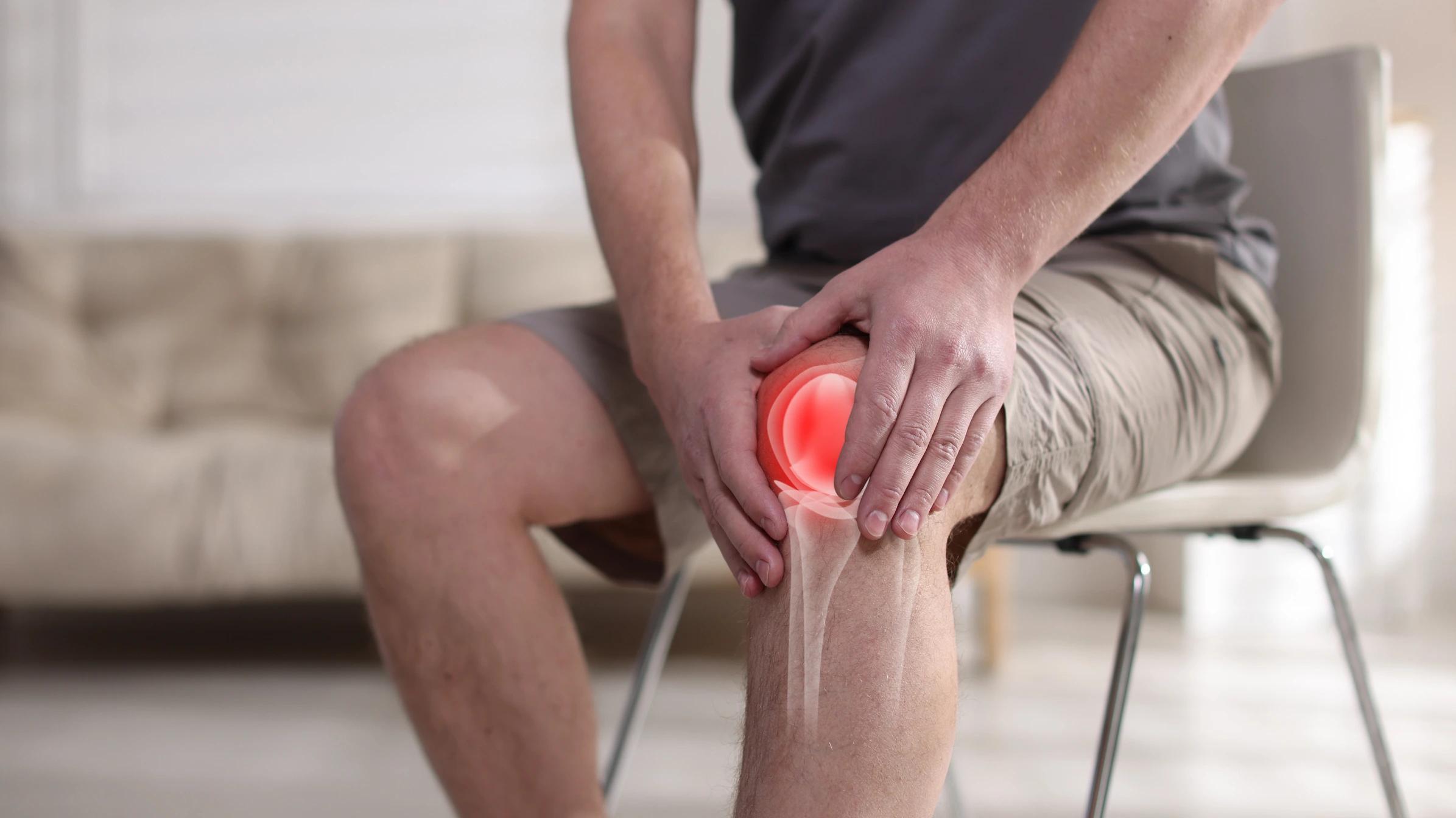
Looking for knee osteoarthritis relief in Canada? Learn what actually helps—from braces and exercises to non-invasive shockwave and EMTT therapies.
Key takeaways
- The single most effective thing for knee osteoarthritis is exercise, which research shows works about as well as anti-inflammatory medication for pain.
- Losing even a modest amount of weight noticeably reduces the load on your knees and eases pain.
- Supplements are oversold. Turmeric has some short-term evidence, while the popular glucosamine and chondroitin have little support.
- Braces and simple devices can help the right person, but many gadgets are not worth the money.
- Knee osteoarthritis cannot be reversed, but for most people it is very manageable without surgery.
In this article
- What is knee osteoarthritis, and can it be reversed?
- What actually helps most? Exercise and movement
- Does losing weight help knee arthritis?
- Do supplements work for knee osteoarthritis?
- Do knee braces help?
- What about devices, from canes to shockwave to gadgets?
- How does Unpain Clinic help with knee osteoarthritis?
- What can you do at home starting today?
- When should you see a professional or consider surgery?
- Frequently asked questions
Osteoarthritis is one of the most common causes of knee pain in Canada, and if you have it, you have probably been offered a dizzying list of creams, pills, braces, and gadgets. Some of it genuinely helps. A lot of it is oversold. This guide sorts through the options by what the evidence actually shows, so you can spend your time and money on what works. Knee osteoarthritis is very manageable for most people, and the best tools are often the simplest.
This is general information, not a substitute for medical advice. Talk to your healthcare provider or pharmacist before starting supplements or a new program, especially if you take other medications.

What is knee osteoarthritis, and can it be reversed?
Knee osteoarthritis is the gradual wearing of the cartilage that cushions your knee joint, along with changes to the surrounding bone and tissue. As the cushioning thins, the joint can become painful, stiff, and swollen, often worse with activity and after rest. It is very common with age and affects a large share of Canadian adults.
The honest answer on reversal is that osteoarthritis cannot be undone, since lost cartilage does not grow back to normal. But here is the important part: pain and function are only loosely related to what a scan shows. Many people with significant changes on imaging have little pain, and many with modest changes have a lot, which our guide to what causes knee pain explores. That gap is good news, because it means you can often reduce pain and improve function a great deal without changing the cartilage at all.
What actually helps most? Exercise and movement
The most effective treatment for knee osteoarthritis is exercise, full stop. It can feel counterintuitive to move a sore joint, but strengthening and movement reduce pain, improve function, and keep you independent. A Cochrane review of 54 trials found high-quality evidence that land-based exercise reduces knee pain and improves function, with benefits comparable to anti-inflammatory medication and no serious side effects [1].
The type of exercise matters less than doing it consistently. A good program usually blends strengthening for the muscles that support the knee, especially the quadriceps and hips, with low-impact aerobic movement like walking, cycling, or swimming, plus some flexibility work. Starting gently and building up is key, and a bit of mild discomfort that settles afterward is normal and safe.
This is why "rest it" is usually the wrong advice. Avoiding movement weakens the muscles that protect the joint and tends to make stiffness and pain worse over time. The goal is smart, progressive loading, not rest, and a physiotherapist can tailor it so you progress without flaring the joint.
Does losing weight help knee arthritis?
Yes, and it is one of the highest-impact things you can do if you are carrying extra weight. Your knees absorb several times your body weight with every step, so even a modest loss meaningfully lightens the load and reduces pain. Every major osteoarthritis guideline recommends weight management for people with overweight or obesity and knee OA.
The effect is amplified when weight loss is paired with exercise, which protects muscle while reducing joint load. You do not need dramatic weight loss to feel a difference, and combining even small changes in eating with a strengthening routine tends to produce better pain relief than either alone. If weight is a factor for you, this is worth prioritizing over most pills and gadgets.

Do supplements work for knee osteoarthritis?
Supplements are the most oversold part of knee osteoarthritis care, so it pays to know which have evidence and which do not. The short version: a few show modest promise, and the most popular ones are underwhelming.
Turmeric and curcumin have the most encouraging evidence. A 2021 review of 16 trials found that turmeric extracts reduced knee pain and improved function compared with placebo, performed similarly to anti-inflammatory drugs, and caused fewer side effects than those drugs [2]. The catch is that the studies were short and varied in quality, so the long-term picture is uncertain.
Glucosamine and chondroitin are popular but weakly supported. Despite being the go-to knee supplements, major osteoarthritis guidelines do not recommend them, because large analyses have not shown a clear benefit over placebo. They appear safe, so some people trial them for a couple of months and stop if nothing changes, but they are not a reliable fix.
Others, like omega-3, collagen, and vitamin D, have limited or mixed evidence. They are not harmful for most people, but the case for them is thin. Because supplement quality and dosing vary widely in Canada, and some interact with medications like blood thinners, it is worth checking with your pharmacist or doctor before spending money on them.
Do knee braces help?
Knee braces help some people, particularly when the arthritis mainly affects the inner part of the knee. A specific type called an unloader or valgus brace is designed to shift load away from the worn part of the joint. A systematic review found that these braces reduced pain and improved activity for many people with inner-compartment knee OA, mostly in the short term, though long-term evidence is limited [4].
Simpler options have a role too. A soft sleeve does not offload the joint, but the compression and warmth can improve comfort and the sense of stability for some people. The key with any brace is fit and the right match to your specific pattern of arthritis, which is where an assessment helps, since the wrong brace tends to end up in a drawer.
What about devices, from canes to shockwave to gadgets?
Devices range from genuinely useful to a waste of money, so it helps to sort them. The most useful are often the least flashy.
A cane or walking pole is underrated. Used in the opposite hand to a sore knee, it offloads the joint, reduces pain, and improves confidence walking. It is cheap and effective, and there is no shame in it.
Shockwave therapy is a promising in-clinic option. A 2024 review found that shockwave, used alongside other treatment, improved knee pain and function with a good safety profile, though the quality of the evidence is still developing [3]. We use it as one part of a plan for suitable candidates, not as a standalone answer.
TENS units and heat or cold are reasonable for symptom relief. A TENS machine has mixed evidence but is low-risk and helps some people, and simple heat or cold packs are cheap and useful for day-to-day flares.
Be skeptical of gadgets that promise a fix. Magnetic bracelets, copper wraps, and similar products have no good evidence behind them. If a device claims to reverse arthritis or replace exercise, that is a red flag, not a feature.

How does Unpain Clinic help with knee osteoarthritis?
We help by building a plan around what works, starting with the basics that have the strongest evidence and adding in-clinic tools where they genuinely help. It starts with a thorough 60 minute, one-on-one assessment of your knee, the muscles around it, your movement, and your goals, so the plan fits your life. A common pattern we see is weak quadriceps and hips with a stiff, guarded knee, where building strength changes everything.

From there, a plan usually combines several of the following:
- A tailored exercise program. Since exercise is the most effective treatment, we build and coach a progressive strengthening and mobility program you can actually keep, and adjust it so you progress without flaring the joint.
- Focused shockwave therapy. For suitable candidates, focused shockwave therapy can help reduce pain and support the surrounding tissue as part of the plan.
- Manual therapy. Our physiotherapy, chiropractic care, and massage therapy improve knee and hip mobility and ease the muscle tightness that often comes with a guarded joint.
- EMTT and neuromodulation. Where pain is persistent, we may add EMTT and NESA neuromodulation to help calm the pain response.
- Practical guidance. We advise on load management, footwear, bracing, weight where relevant, and daily habits, and coordinate with your physician for options like injections if conservative care is not enough.
In Canada, you generally do not need a doctor's referral to see a physiotherapist, so you can start with an assessment directly. We are honest that osteoarthritis is a long-term condition and that results vary, but most people can reduce pain and stay active with the right plan. The national charity Arthritis Society Canada is also a helpful resource.
What can you do at home starting today?
You can start the highest-value habits today, before any appointment. Keep everything within a comfortable range and build up gradually.
- Move most days. Aim for a daily walk plus a few simple strengthening moves like sit-to-stands from a chair, straight-leg raises, and gentle step-ups. Short and consistent beats occasional and intense.
- Strengthen the support muscles. Focus on the quadriceps and hips, since strong muscles around the knee act like shock absorbers. Ten to fifteen minutes most days adds up quickly.
- Address weight if it applies. Small, sustainable changes to eating, paired with your walking and strengthening, lighten the load on the joint.
- Use heat and cold smartly. Heat before activity loosens a stiff knee, and cold after can calm a flare. Wrap either in a thin towel and use for about 15 minutes.
- Pace and modify. Break big tasks into chunks, alternate harder and easier days, and swap high-impact activities for low-impact ones during flares rather than stopping entirely.
- Be a smart shopper. Before buying a supplement or gadget, ask whether the evidence supports it, and put that money toward good shoes or a session that builds your program instead.
For staying resilient over time, our guide to injury prevention has more.
When should you see a professional or consider surgery?
Most knee osteoarthritis is well managed with the conservative steps above, but some situations call for more. See a professional if your pain is limiting your daily life, not improving with exercise and self-care, or if your knee locks, gives way, or swells significantly, since those can point to other problems that need assessment.
When conservative care is not enough, your physician may discuss options like an image-guided injection for a painful flare, and for advanced arthritis that seriously limits life despite good treatment, a knee replacement can be very effective. Surgery is a considered step, not a first move, and the stronger and fitter you are going in, the better most people do coming out, which is another reason to build the exercise habit early.
Frequently asked questions
Can knee osteoarthritis be reversed?
No, lost cartilage does not regrow to normal, so osteoarthritis cannot be reversed. However, pain and function often improve a great deal without changing the cartilage, because pain does not track closely with what a scan shows. Most people can reduce symptoms and stay active with exercise, weight management, and the right support.
What is the best exercise for knee arthritis?
The best exercise is the one you will do consistently, ideally a mix of strengthening for the quadriceps and hips plus low-impact movement like walking, cycling, or swimming. Strengthening the muscles around the knee is especially valuable, since they act as shock absorbers. Research shows exercise reduces pain about as well as anti-inflammatory medication, so it is worth prioritizing.
Do supplements actually work for knee osteoarthritis?
Mostly they are oversold. Turmeric and curcumin have some short-term evidence for reducing pain, while the very popular glucosamine and chondroitin have little support and are not recommended by major guidelines. Others like collagen and omega-3 have limited evidence. Check with your pharmacist before starting any, since quality varies and some interact with medications.
Are knee braces worth it?
They can be, for the right person. An unloader brace can reduce pain for people whose arthritis mainly affects the inner knee, mostly in the short term, and a soft sleeve can improve comfort and stability for others. Fit and matching the brace to your specific arthritis pattern matter, so an assessment helps you avoid buying the wrong one.
Is walking good or bad for knee arthritis?
Walking is generally good and recommended, not harmful, for knee osteoarthritis. It strengthens supporting muscles, maintains mobility, and helps with weight, and the old idea that it wears the joint out faster is not supported. Start at a comfortable level, build up gradually, and use supportive shoes, easing off only during significant flares.
When is knee replacement surgery needed?
Surgery is considered for advanced arthritis that seriously limits daily life despite consistent conservative treatment, not as a first option. Most people should first give a proper trial to exercise, weight management, and other non-surgical care. When it is needed, knee replacement is often very effective, and being strong and active beforehand tends to improve recovery.
“I was referred to Unpain Clinic by my chiropractor. Have been having sciatic problems for years. Recently knee problems. Have seen Uran the therapist for treatments. Have had great results with pain relief and mobility. I have just had treatment but the results are already there. When you research this therapy you will find that it takes a few months for this treatment to really take affect. Just the relief I have had already is well worth the treatment. I would recommend this treatment as very useful. Also this clinic has very capable people.”-Kurt W
About the author
Written by Uran Berisha, Founder of Unpain Clinic and Medical Shockwave Institute. Uran has a Bachelor of Science in Physiotherapy and is an International Educator in Shockwave Therapy.
Medically reviewed by Uran Berisha.
Ready to build a plan that actually works?
If knee osteoarthritis is slowing you down, the next step is a one-on-one assessment where we sort the useful from the oversold and build you a clear, evidence-based plan. Your first visit is 60 minutes, assessment only, and includes:
- A full history and a look at your goals
- Head-to-toe orthopedic and movement testing, including your knee, hips, and strength
- A plain-language explanation of what is driving your pain
- A personalized recovery and self-management roadmap
No referral needed. No pressure, no contracts. If we do not think this approach is a good fit for you, we will tell you honestly. Book your initial assessment and let's spend your effort on what works.
References
- Fransen M, McConnell S, Harmer AR, Van der Esch M, Simic M, Bennell KL. Exercise for osteoarthritis of the knee. Cochrane Database of Systematic Reviews. 2015;1(1):CD004376. https://doi.org/10.1002/14651858.CD004376.pub3
- Wang Z, Singh A, Jones G, Winzenberg T, Ding C, Chopra A, et al. Efficacy and safety of turmeric extracts for the treatment of knee osteoarthritis: a systematic review and meta-analysis of randomised controlled trials. Current Rheumatology Reports. 2021;23(2):11. https://doi.org/10.1007/s11926-020-00975-8
- Zhou M, Dong Z, Wei C, Feng L, Wang X, Liu H, et al. Efficacy and safety of extracorporeal shock wave therapy combined with sodium hyaluronate in treatment of knee osteoarthritis: a systematic review and meta-analysis. Journal of Traditional Chinese Medicine. 2024;44(2):243-250. https://doi.org/10.19852/j.cnki.jtcm.20231226.002
- Alfatafta H, Onchonga D, Alfatafta M, Zhang L, Boncz I, Lohner S, Molics B. Effect of using knee valgus brace on pain and activity level over different time intervals among patients with medial knee OA: systematic review. BMC Musculoskeletal Disorders. 2021;22(1):687. https://doi.org/10.1186/s12891-021-04513-0
Related Topics