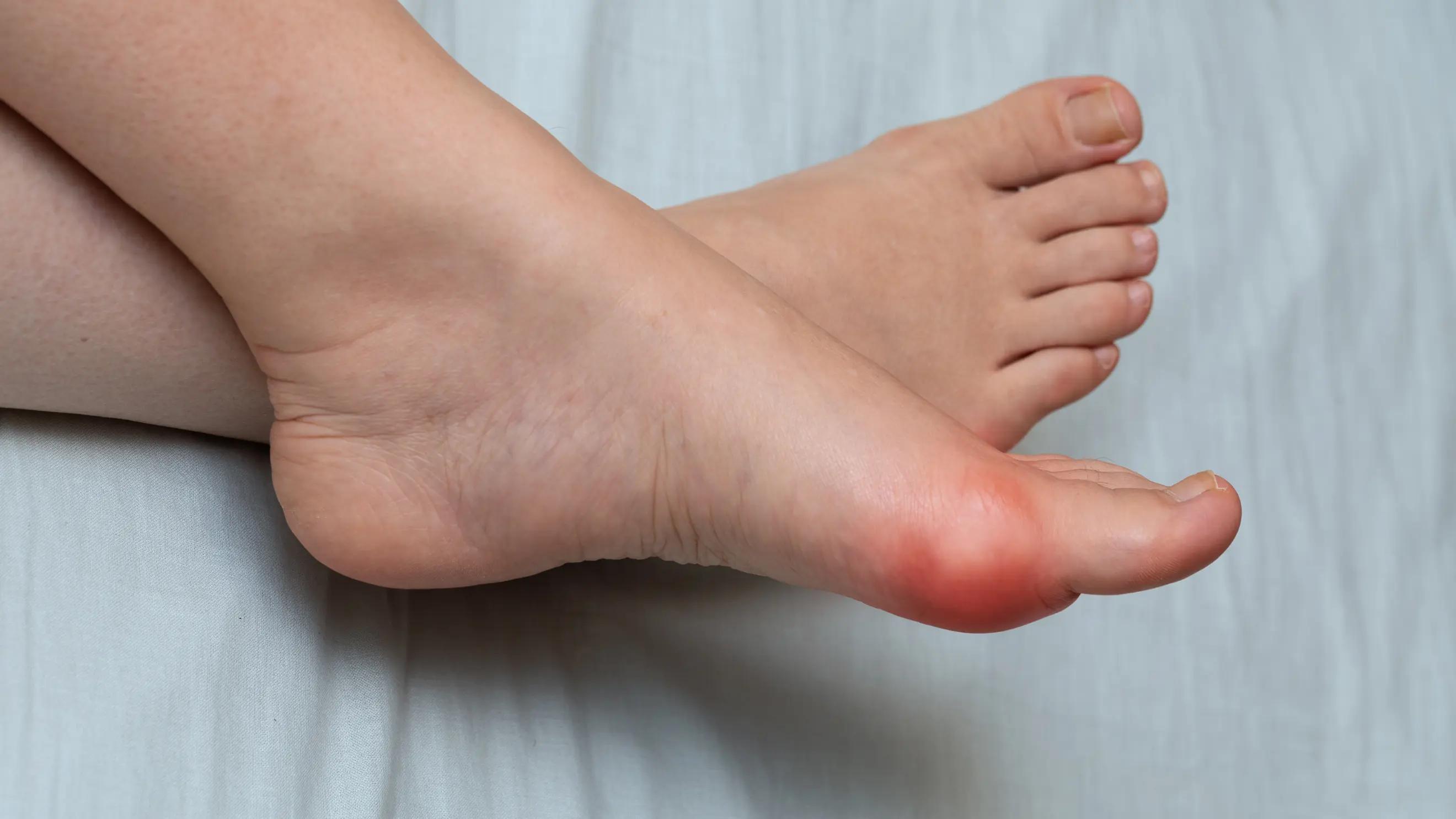
Stiff or painful big toe? Learn about hallux rigidus causes, symptoms, and treatments like shockwave & rehab at Unpain Clinic Edmonton.
Introduction
If you’re reading this, chances are your big toe joint is stubbornly stiff, sore especially when pushing off, or simply less mobile than it used to be. You might have been told you have hallux rigidus, and you’re wondering: “What now?”
Hallux rigidus refers to a painful stiffness in the joint at the base of the big toe (first metatarsophalangeal joint). That’s our primary keyword, and it’s what this article will focus on. You’ll learn what causes it, what the research supports, how we treat it at Unpain Clinic (including shockwave therapy), how to care at home, and whether surgery is inevitable.
I want you to leave this post with clarity: what’s happening, why it’s happening, and what steps you can take. (Results may vary; always consult a healthcare provider.)

What Is the Problem? (Definition, Mechanism, Why It Persists)
What is Hallux Rigidus?
- “Rigidus” means stiff — so hallux rigidus literally means a stiff big toe joint.
- It is a form of osteoarthritis of the first metatarsophalangeal (MTP) joint, involving both bone changes (osteophytes, cartilage loss) and soft-tissue adaptations (capsular tightening, synovitis).
- Many people over 40 show radiographic signs of degenerative change, but only a subset develop symptoms.
Root Causes & Contributing Factors
While the exact cause of hallux rigidus isn’t fully settled, contributing factors include:
- Prior trauma to the joint (sprains, microfractures)
- Anatomical predispositions (metatarsal length, dorsal impingement)
- Repetitive stress (biomechanical overload)
- Genetic predisposition and joint structure
- Soft-tissue adaptions: as motion decreases, ligaments, capsule, muscles adjust in a shortened or rigid posture, further reducing motion (vicious cycle)
Why Pain & Stiffness Persist
Once the joint mechanics are altered, several factors feed into chronic symptoms:
- Mechanical impingement: dorsal osteophytes (bone spurs) bump against the joint capsule in end–range dorsiflexion.
- Cartilage degeneration in weight-bearing zones.
- Secondary inflammation and synovitis when movement is forced.
- Soft tissue restriction (capsule, plantar fascia, local tendons) that further limit motion.
- Altered load distribution across the forefoot; compensatory gait changes amplify stress.
Without intervention, the “stiffness cycle” tends to worsen. That’s why early, thoughtful care is important.

What the Research Says (Evidence Base)
Non-Surgical First
Standard teaching—and what the literature supports—is that treatment should begin with nonsurgical interventions aimed at symptom control and functional improvement.
A narrative review of 19 articles found that conservative treatment is effective in about half of hallux rigidus cases. Common modalities include footwear changes, insoles (orthoses), activity modification, manual therapy, and sometimes injections.
However, higher-quality comparative trials are scarce, and many modalities remain under-studied.
Surgery: Cheilectomy, Arthrodesis, Others
When conservative care fails, surgical options are considered. Evidence is stronger for some procedures in certain stages than others.
- Cheilectomy (bone spur removal) is a joint-preserving surgery often used in mild to moderate hallux rigidus, especially when pain is mostly at end-range dorsiflexion. A 2024 systematic review/meta-analysis showed that post-cheilectomy, range of motion improved on average by ~51 % (from ~41° to ~62°), with pain (VAS) decreasing ~72 %.
- Minimally invasive cheilectomy has shown good patient satisfaction and low complications in mild to moderate cases. However, in more advanced disease, results are less reliable.
- Arthrodesis (fusion of the joint) is often considered the “gold standard” for advanced-stage hallux rigidus. It gives excellent pain relief and durability, though at the cost of losing motion.
- Arthroplasty / joint replacement / interposition options exist, but long-term success is less proven. Some comparative meta-analyses and narrative reviews suggest that fusion still outperforms implants in durability.
- Arthroscopy / minimally invasive debridement also has some support: a systematic review of 7 articles (138 patients) showed improved motion, reduced pain, and high satisfaction, but limitations in study quality warrant caution.
In sum: the best surgical choice depends heavily on symptom pattern, imaging stage, patient goals, and biomechanics.
Shockwave Therapy & Emerging Modalities
At Unpain Clinic, we frequently consider shockwave therapy (ESWT) / extracorporeal shockwave as a noninvasive adjunct. What does the evidence say?
- A meta-analysis covering multiple randomized trials (many in joints, not specifically big toe) suggests shockwave has superior pain and function outcomes compared to placebo, medications, ultrasound, or injections (though heterogeneity is high).
- In knee osteoarthritis, a low-dose ESWT protocol over 4 weeks was superior to placebo for pain and functional gains.
- In first-MTP (big toe) joint pain in runners, ESWT combined with physical therapy improved outcomes when prior conservative care failed.
- In hallux rigidus specifically, there is a descriptive (non-randomized) Cuban study of 26 patients treated with shockwave, showing reductions in pain and improved AOFAS scores.
- A recent review advocates using ESWT when mobility is severely limited, to treat both joint and adjacent soft tissue restrictions.
While promising, we must emphasize limitations: few high-level studies specifically on hallux rigidus exist, and many results are from lower-evidence designs.
Thus, in our model at Unpain Clinic, we use shockwave therapy as a complement to other evidence-based modalities (not as a standalone guarantee).
Treatment Options at Unpain Clinic
At Unpain Clinic, our approach to hallux rigidus treatment is multi-modal and personalized. We don’t chase symptoms — we chase causes. Here are the modalities we may integrate (often together):
1. Shockwave Therapy (Radial or Focused)
- We apply extracorporeal shockwave to the first MTP region (joint and surrounding soft tissues) to stimulate microvascular response, neuromodulation, and tissue adaptation.
- In many of our internal case discussions (referenced in our Unpain Clinic podcasts and YouTube), we describe combining shockwave with manual and movement therapies to potentiate effect.
Because shockwave is relatively low-risk and noninvasive, it’s often one of the first “advanced” tools we layer on after basic manual approaches. (Still, not every patient is eligible or needs it clinical judgment is key.)

2. Extracorporeal Magnetotransduction Therapy (EMTT)
- EMTT is a newer modality we use, delivering electromagnetic pulses to stimulate repair and modulate neuromuscular tone.
- It complements shockwave by targeting deeper tissues and neural networks.
- Although specific RCTs in hallux rigidus are limited, the biophysical rationale (improving microcirculation, neuromodulation) is plausible. We only use it in adjunctive capacity.

3. Neuromodulation / Pain Science Approaches
- Chronic joint stiffness often has a sensitization component. We integrate graded pain neuromodulation techniques (education, pacing, graded exposure) to reduce fear-avoidance and restore movement habits.
- In select cases, we may use transcutaneous electrical stimulation (TENS) or other modalities to prime tissue before movement.

4. Manual Therapy & Joint Mobilizations
- Once inflammation allows, we gently mobilize the first MTP joint (especially dorsal glide) to maintain or improve motion.
- We use soft-tissue work to address surrounding restrictions (plantar fascia, intrinsic foot muscles, calf/ankle).
- We also assess global kinetic chain (hip, knee, ankle) to relieve compensatory stress.

5. Therapeutic Exercises & Movement Retraining
- Progressive, graded movement is key to maintaining gains.
- Exercises might include toe lifts, resisted big toe dorsiflexion, foot core activation, and gait drills.
- We tailor progression to pain tolerance and functional goal (walking, stairs, sport).
6. Footwear & Orthotic Prescription
- We analyze your footwear (shoes you wear daily or for sport) and may recommend changes: stiff-soled or rockered soles to offload MTP motion, wide toe-boxes, carbon-fiber insoles or Morton’s extension orthoses to limit joint motion.
- Studies suggest that proper support and shoe modification can improve foot function and slow deformity changes.

7. Imaging & Biomechanical Investigation
- If needed, we guide imaging (e.g. weight-bearing X-rays) to stage disease and assess joint space, spur formation, alignment.
- We assess biomechanical contributors (alignment, gait, foot structure) to design preventive strategies.
Integration & Treatment Roadmap
We don’t necessarily start with all modalities we scale in complexity. A typical pathway in moderate hallux rigidus might look like:
- Assessment & education
- Manual + exercise + footwear change
- Add shockwave / EMTT
- Monitor progress, adjust plan
- If failure or worse progression → surgical referral discussion
We continue to monitor response and adjust load, frequency, and intensity over time.
Patient Experience / Case Example (Anonymized)
“Maria,” age 52, occasional runner
- Presentation: 6-month history of stiffness and pain in the right big toe, worsening with uphill walking and stairs. She had tried stiff-soled shoes and NSAIDs with limited relief.
- Assessment: Limited dorsiflexion at the first MTP (~20°), dorsal osteophyte pain on palpation, moderate soft-tissue tightness in plantar fascia and toe flexors.
- Plan: We began with manual mobilizations, stretching, orthotic adjustment (carbon-fiber insole under first ray), and foot-core activation. Over the first 3 sessions, she reported slight improvement.
- Then, we introduced shockwave therapy once per week × 4 sessions, alongside neuromodulation strategies and progression of toe-movement exercises.
- Outcome (at 8 weeks): She regained ~35° dorsiflexion, pain reduced by ~60 % on walking, and she resumed short jogs pain-free.
- Ongoing: She continued maintenance exercises, occasional “top-up” shockwave if flare triggered, and a joint review every 3–4 months.
This example illustrates how a multimodal, staged strategy can yield clinically meaningful change — though results vary case by case.
At-Home Guidance: Safe Exercises & Tips
Here are some caregiver-friendly strategies you can integrate between clinic visits. Always stop if your pain worsens acutely, and check with your provider.
Movement & Stretching
- Passive toe dorsiflexion stretch: Use your hand or a wooden dowel under the big toe to gently lift dorsally (within comfort) for 30 seconds, 3–5 reps.
- Resisted toe dorsiflexion: Use a light resistance band looped around the big toe to practice dorsiflexion against gentle band resistance (10–15 reps).
- Toe scrunches / towel pick-ups: Use toes to scrunch a towel or pick up marbles to stimulate intrinsic foot mechanics.
- Foot intrinsic activation ("short foot" exercise): Gently draw the arch upward (without curling toes), holding 5–10 seconds × 10 reps.
- Seated ankle dorsiflexion + plantarflexion: Keeping toes relaxed, flex/point ankle to maintain mobility.

Footwear & Behavior
- Choose shoes with a rigid sole or slight rocker to offload joint dorsiflexion demands.
- Avoid extremely flexible or narrow-toe-box shoes.
- Use a Morton’s extension or stiff orthotic insert under the first ray to limit excessive joint motion and reduce jamming.
- Modify high-stress activities (e.g., deep lunges, hill sprints) until you have regained consistent motion.
- Ice or contrast baths may help during flare-ups (short duration, gentle use).
Frequently Asked Questions (FAQs)
1. Is surgery inevitable for hallux rigidus?
No — many people respond well to conservative care, especially in early/mild stages. As literature suggests, nonoperative treatment helps about half of patients. Surgery is considered when symptoms significantly impair function or when conservative measures fail.
2. Will shockwave therapy “cure” it?
Shockwave therapy can help reduce pain, improve function, and may slow progression when used appropriately — but it is not a guaranteed cure. Evidence in hallux rigidus is limited and often preliminary. (Results may vary.)
3. How do I choose shoes for hallux rigidus?
Aim for rigid soles or rockered soles, wide toe-boxes, minimal forefoot bending, and consider carbon-fiber insoles or Morton’s extension inserts that reduce motion at the first MTP joint.
4. How long will recovery take?
It depends on disease stage, treatment consistency, and individual factors. Many patients begin to notice improvement within 6–12 weeks of consistent multimodal therapy, but full biomechanical adaptations may take several months.
5. What risks are associated with cheilectomy or fusion?
- Cheilectomy risks: under-resection, persistent symptoms, need for revision, nerve irritation, wound complications.
- Arthrodesis (fusion) risks: non-union, adjacent joint stress, hardware irritation, loss of motion (intended). However, in many series, fusion provides excellent pain control long term.
6. When should I see a specialist?
If pain is persistent, worsening, limiting your mobility despite consistent conservative care (≥ 3–4 months), or imaging shows advanced joint degeneration, it’s reasonable to consider consultation with orthopedic foot/ankle or integrated multispecialty team (like ours).
Conclusion
Hallux rigidus is far more than “arthritis in the toe” it’s a complex biomechanical condition involving bone, soft tissue, and neuromotor adaptations. The good news is that you don’t have to accept stiffness and pain as permanent. Research and clinical experience point to a graded, multimodal approach: start conservatively, layer in advanced therapies (like shockwave), and, if needed, consider surgical options.
At Unpain Clinic, we blend the art and science of movement, biophysics, and patient-centered care. We don’t just treat “where it hurts” we assess why it hurts, how your body is compensating, and what full-body changes may improve your outcome.
If your big toe is holding you back, you don’t have to wait. Let’s get to the root together.
📍 Book Your Initial Assessment Now
At Unpain Clinic, we don’t just ask “Where does it hurt?” we uncover “Why does it hurt?”
If you’ve been frustrated by the cycle of “try everything, feel nothing,” this assessment is for you. We take a whole-body approach so you leave with clarity, not more questions.
✅ What’s Included
- Comprehensive history & goal setting
- Orthopedic & muscle testing (head-to-toe)
- Motion analysis
- Imaging decisions (if needed)
- Pain pattern mapping
- Personalized treatment roadmap
- Benefit guidance
🕑 Important Details
- 60 minutes, assessment only
- No treatment in this visit
👩⚕️ Who You’ll See
- A licensed Registered Physiotherapist or Chiropractor
🔜 What Happens Next
- If you’re a fit, we schedule your first treatment and start executing your plan.
🌟 Why Choose Unpain Clinic
- Whole-body assessment, not symptom-chasing
- Root-cause focus, not temporary relief
- Non-invasive where possible
- No long-term upsells — just honest, effective care
🎯 Outcome
You’ll walk out knowing:
- What’s wrong
- Why it hurts
- The fastest path to fix it
👉 Book Your Initial Assessment Now
Author: Uran Berisha, BSc PT, RMT, Shockwave Expert
References
- “Hallux Rigidus: Current Concepts Review and Treatment Algorithm.” PMC. PMC
- “Reviewing Evidence and Patient Outcomes of Cheilectomy for Hallux Rigidus: A Systematic Review and Meta-Analysis.” J Clin Med, 2024. PubMed
- “Modern Treatment of Hallux Rigidus by Cheilectomy: A Systematic.” PMC. PMC
- “Non-Operative Management of Symptomatic Hallux Limitus (Novel Approach).” PMC / Sage Journals. SAGE Journals+1
- “Extracorporeal Shock Wave Therapy for the Treatment of …” PMC. PMC
- “Arthrodesis vs arthroplasty for moderate and severe Hallux rigidus.” ScienceDirect. ScienceDirect
- “Efficacy of arthroscopy in hallux rigidus: a systematic review.” Rev Esp Pod. revesppod.com
- “Conservative treatment of hallux rigidus: narrative review.” Journal Foot & Ankle. Journal of the Foot & Ankle+1
- “Hallux rigidus — StatPearls.” NCBI Bookshelf. NCBI
- “Arthrosis (Hallux Rigidus) — treatment (Medscape).” eMedicine. Medscape
- “Hallux Rigidus: A Comprehensive Review.” ResearchGate/Foot & Ankle Int. ResearchGate
- “Joint-Preserving Surgeries for Hallux Rigidus Based on Etiology.” MDPI Journal of Clinical Medicine. MDPI
- “Treatment of Chronic Hallux Sesamoid Injuries with Focused Extracorporeal Shockwave and Physical Therapy.” German Journal Sports Medicine. German Journal of Sports Medicine
- “Management of First Metatarsophalangeal Joint Pain in Runners …” German Journal Sports Medicine. German Journal of Sports Medicine
- “Reviewing Evidence and Patient Outcomes of Cheilectomy … (MDPI version).” MDPI
Related Topics