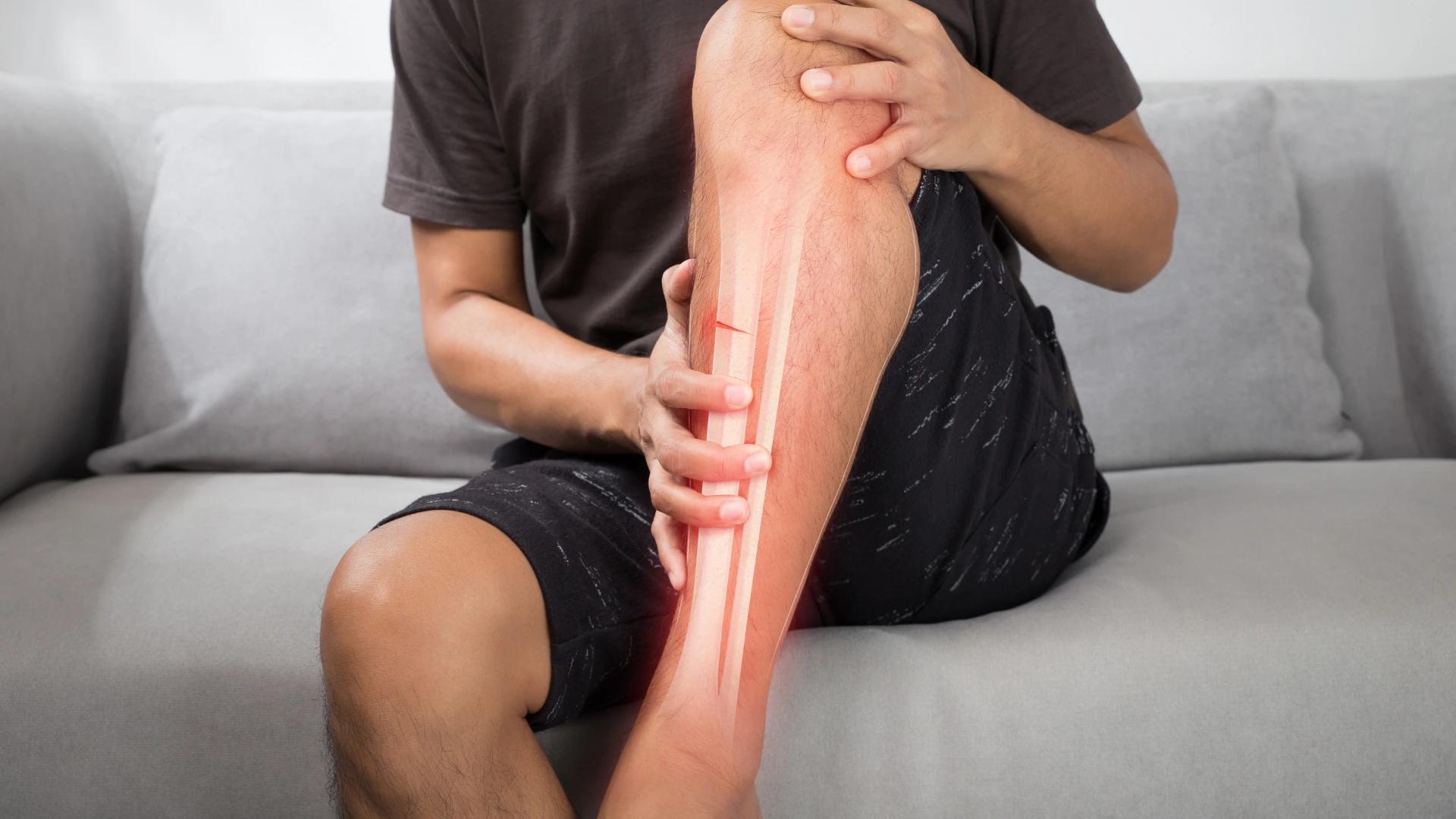
What are stress fractures and how long do they take to heal? Learn symptoms, causes, and treatments like shockwave therapy at Unpain Clinic to recover faster.
Key takeaways
- A stress fracture is a small crack in a bone caused by repeated stress, not a single injury, and it usually builds up gradually.
- Most stress fractures heal with the right care, but up to about a third do not fully heal with rest alone, which can let the injury drag on.
- Rest and protecting the bone are the foundation of treatment, and low-risk fractures usually recover in roughly six to eight weeks.
- For stalled or stubborn fractures, shockwave therapy has been used to stimulate bone healing, with a strong safety record in the studies so far.
- Healing lasts longer when you also fix the cause, such as training errors, worn shoes, or muscle imbalances.
In this article
- What exactly is a stress fracture?
- What does a stress fracture feel like?
- Why do stress fractures happen?
- What does the research say about healing?
- How does Unpain Clinic treat stress fractures?
- What can you do at home to heal a stress fracture?
- Frequently asked questions
If you have been diagnosed with a stress fracture, it is normal to feel frustrated and unsure about what it means for your active life. A stress fracture is a small crack in a bone from repeated overload, and despite its size it can cause real pain and put your activities on hold. The reassuring part is that most stress fractures heal well with the right care, and there are options to help the stubborn ones along. Because so many stress fractures happen in the foot and shin, our podcast on fixing chronic foot pain is a helpful listen.
What exactly is a stress fracture?
A stress fracture is a hairline crack that develops when a bone takes more repeated force than it can repair. It is not a complete break from a single accident. It builds up over time, the way a paperclip bent back and forth eventually weakens and snaps. When repetitive impact from running, jumping, or marching outpaces the bone's ability to rebuild, a small crack can form.
Most stress fractures happen in the weight-bearing bones of the lower body. Common sites include the shin bone, the long bones of the foot, the heel, and the hip. Runners often get them in the shin or foot, and dancers in the foot or ankle. Any bone that gets repeated strain without enough recovery is at risk.
Not all stress fractures are equal. Low-risk stress fractures, such as many in the shin or foot, usually heal with rest and protection, though even these do not always mend on their own. High-risk stress fractures sit in locations that heal poorly, such as the navicular bone in the foot or the femoral neck in the hip, and these carry a higher chance of complications if they are not managed carefully. This is why ignoring bone pain is risky, since a fracture that does not heal correctly can lead to chronic pain or a more serious break.

What does a stress fracture feel like?
A stress fracture usually feels like a pain that starts small and grows. It often begins as a mild ache during or after activity, then worsens the more you do. A telling sign is tenderness at one specific spot on the bone, rather than the diffuse soreness of a tired muscle.
You might also notice mild swelling or bruising over the area. In more advanced cases, the bone can hurt even at rest or at night. Pressing directly on the fracture site tends to produce a sharp, pinpoint pain, which helps separate it from general muscle soreness.
Getting the diagnosis right matters, and imaging often helps. If you have bone pain that worsens with activity and eases with rest, it is worth having it evaluated. Early on, an X-ray can look normal, so a more sensitive scan such as an MRI or bone scan is sometimes needed to confirm a stress fracture. Because early stress fracture pain can mimic shin splints, our guide to shin and tibialis anterior pain can help you tell them apart.
Why do stress fractures happen?
Stress fractures happen when the load on a bone outpaces its ability to recover, which usually comes down to too much, too soon. When you increase activity faster than your bones have adapted to, the bone fatigues and can crack. A runner rapidly adding mileage, or someone starting an intense new program, are classic examples.
Several factors add to that risk. Training errors like sudden jumps in distance or intensity, or too few rest days, are the most common. Surface changes, such as moving from a soft track to concrete, increase impact. Worn-out or unsupportive shoes absorb less shock. Biomechanical issues like flat feet, high arches, leg length differences, or tight calves can concentrate stress on one bone.
Bone health and fueling also play a big part. Bones need enough calcium, vitamin D, and overall nutrition to stay strong, so low bone density or nutritional gaps raise the risk. Athletes with low energy availability, sometimes alongside menstrual changes and reduced bone density, are especially vulnerable, and so are older adults with osteoporosis. A previous stress fracture or ongoing shin splints can also mark an area that may crack if the strain continues. In short, a stress fracture is often the body's way of signalling too much, too soon.
What does the research say about healing?
The research offers a clear and encouraging picture: rest is the foundation, but for stubborn fractures, treatments that stimulate bone healing can help. Here is what the evidence shows.
Rest is essential, but it does not always work. Relative rest, often with a walking boot or crutches to offload the bone, lets most low-risk stress fractures heal, commonly over about six to eight weeks. A 2015 review noted that up to one third of athletes' stress fractures do not respond to conservative care and can progress to higher-risk injuries [1]. That is the gap newer treatments aim to fill.
Shockwave therapy has been used to stimulate bone repair. It appears to work by prompting bone-forming cells, new blood vessel growth, and bone turnover [1]. For difficult, non-healing fractures, a 2010 review reported that shockwave achieved healing comparable to surgery, but with less morbidity, and described it as safe, well tolerated, and done on an outpatient basis [2].
Real-world results in athletes are promising. In a 2023 study of 40 runners with bone stress injuries, nearly all returned to pain-free running after focused shockwave, with acute cases back around three months and no complications reported, except one runner with a severe navicular injury who chose surgery [3]. A smaller study of soccer players with stubborn stress fractures found they healed and returned to sport in about eight weeks after a few sessions [4].
It is worth being honest about the evidence. Much of it comes from case series and reviews rather than large randomized trials, and no treatment works every time. Still, the pattern across studies is consistent, and the safety record is strong. The practical takeaway is to combine traditional care, meaning rest and activity changes, with treatments that can support healing when a fracture is slow to mend.
How does Unpain Clinic treat stress fractures?
We treat stress fractures with two goals at once: help the bone heal and fix what caused the fracture in the first place. It starts with a 60 minute, one-on-one assessment where we review any imaging you have, examine the area, and look at your movement, footwear, and training history. A common pattern we see is a runner with tight calves, weak foot muscles, and worn shoes, all of which concentrated load on one bone.

From there, a typical plan combines several of the following:
- Focused shockwave therapy. Our focused shockwave therapy delivers sound waves to the fracture site to help stimulate bone-forming activity and blood flow, especially useful when healing has stalled. It is non-invasive, needs no downtime, and sessions take only a few minutes, as our guide to shockwave therapy for stress fractures explains.
- EMTT. In some cases we add EMTT, which uses magnetic fields to support cellular repair and can complement shockwave for slow-healing bone.
- Protected loading. We guide you on offloading the bone, which may mean a walking boot or modified weight-bearing for a few weeks, so the fracture is protected while it mends.
- Rehab and biomechanics. Our physiotherapy and chiropractic care address the tight or weak muscles, gait patterns, and alignment issues that overloaded the bone, so the same thing is less likely to happen again.
- Nutrition and recovery support. Because healing a bone is a whole-body task, we talk through calcium, vitamin D, protein, and rest, and coordinate with your physician when bone health needs a closer look.
Throughout, we track your progress and adjust the plan, and we are upfront that healing takes time and that no treatment is guaranteed. If your fracture is high-risk or not settling, we coordinate with your physician about whether an orthopedic opinion is needed.

What can you do at home to heal a stress fracture?
Alongside professional care, a lot of your recovery happens at home. These steps support healing and lower the chance of a repeat, and they work best with your provider's guidance.

- Rest, but stay gently active. Avoid impact activities like running and jumping for as long as advised, and keep fit with low-impact options such as swimming or cycling if they are pain-free. Stop anything that hurts at the fracture site.
- Protect the area. Use any boot, brace, or crutches as directed, and resist ditching them early when you start feeling better. Supportive, stiff-soled shoes help even around the house.
- Fuel bone healing. Get enough calcium, vitamin D, and protein, and consider a supplement if your provider recommends one. Avoid smoking and keep alcohol moderate, since both can slow bone repair.
- Manage pain sensibly. Ice for 15 to 20 minutes can ease pain in the early weeks. Some evidence suggests heavy use of anti-inflammatory medication may slow bone healing, so use any medication as advised by your doctor.
- Return gradually. When you get the green light, build back step by step rather than jumping to full intensity. For running, a walk-run program that increases slowly, with rest days built in, is a safe way back.
- Fix the root cause. Use the downtime to address what led to the fracture, whether that is new shoes, orthotics, stronger calves and hips, or a tweak to your training. Our guide to injury prevention goes deeper.
Healing is a process, and your bone is doing a lot of quiet work to repair itself. Patience now, plus good habits afterward, is what keeps you healed.
Frequently asked questions
How do I know if I have a stress fracture and not a shin splint or bruise?
The biggest clue is a very localized pain on the bone that worsens with impact, rather than the diffuse ache of shin splints. Early on you may only feel it during activity, but as a stress fracture progresses it can hurt at rest or at night, sometimes with swelling over the spot. Imaging is the definitive way to tell, so if you are unsure, see a professional rather than pushing through severe bone pain.
How long does it take to heal a stress fracture?
An uncomplicated, low-risk stress fracture treated with rest often heals enough for normal activity in about six to eight weeks, though it varies. Smaller fractures may take four to six weeks, while high-risk or late-caught ones can take eight to twelve weeks or more. Add a couple of extra weeks to rebuild the strength lost during rest before returning to full speed.
Do I need a cast or surgery for a stress fracture?
Most stress fractures need neither. The mainstay is rest and protection, often with a removable walking boot rather than a full cast. Surgery is generally a last resort for fractures that will not heal on their own or that sit in high-risk areas. If your fracture is low-risk and you follow your plan, the odds of healing without an invasive procedure are very good.
What does shockwave therapy feel like, and is it safe?
Shockwave feels like rapid, rhythmic tapping on the skin, and while some spots can be tender, most people find it very tolerable, and we adjust the intensity to keep you comfortable. Each session takes only a few minutes and is non-invasive, with no injections or downtime. You may feel mild soreness afterward, and in the studies so far its safety record for bone injuries is strong.
How do I prevent stress fractures from coming back?
Build activity up gradually rather than in big jumps, and keep rest days in your week. Cross-train with lower-impact activities, fuel well with enough calcium, vitamin D, and protein, and replace worn-out shoes. Strengthening your hips, feet, and core, and paying attention to early pain rather than pushing through it, all lower your risk.
Is it safe to keep exercising if I have had a stress fracture before?
Yes, once the bone has healed and you ease back in. Start with low-impact activity, strengthen the areas that contributed to the injury, and avoid sudden spikes in training. A physiotherapist can help you build a safe return so you do not repeat the same overload.
Can shockwave therapy speed up healing?
It may help, especially for fractures that are slow to heal, and studies report good outcomes and strong safety. It is not a guarantee, and it works best combined with rest, protected loading, and fixing the cause. Whether it is right for your fracture depends on the location and severity, which an assessment sorts out.
“Dr Lacina Barsalou is a wonderful practitioner - she has different chiropractic treatments that have worked wonders for my injury. I have seen the benefits and would easily refer my patients to her for support with their pain and injuries. Thank you!”- Zahraa Bhimji
About the author
Written by Uran Berisha, Founder of Unpain Clinic and Medical Shockwave Institute. Uran has a Bachelor of Science in Physiotherapy and is an International Educator in Shockwave Therapy.
Medically reviewed by Uran Berisha.
Ready to heal your stress fracture?
If a stress fracture is keeping you on the sidelines, or you have been resting one that just will not settle, the next step is a one-on-one assessment where we find why it happened and build you a clear plan to heal it. Your first visit is 60 minutes, assessment only, and includes:
- A review of your imaging and a full history
- Head-to-toe orthopedic and movement testing
- A plain-language explanation of what is driving your injury
- A personalized recovery roadmap
No referral needed. No pressure, no contracts. If we do not think this approach is a good fit for you, we will tell you honestly. Book your initial assessment and let's get you back to what you love, stronger than before.
References
- Leal C, D'Agostino C, Gomez Garcia S, Fernandez A. Current concepts of shockwave therapy in stress fractures. International Journal of Surgery. 2015;24(Pt B):195-200. https://doi.org/10.1016/j.ijsu.2015.07.723
- Furia JP, Rompe JD, Cacchio A, Maffulli N. Shock wave therapy as a treatment of nonunions, avascular necrosis, and delayed healing of stress fractures. Foot and Ankle Clinics. 2010;15(4):651-662. https://doi.org/10.1016/j.fcl.2010.07.002
- Beling A, Saxena A, Hollander K, Tenforde AS. Outcomes using focused shockwave for treatment of bone stress injury in runners. Bioengineering (Basel). 2023;10(8):885. https://doi.org/10.3390/bioengineering10080885
- Moretti B, Notarnicola A, Garofalo R, Moretti L, Patella S, Marlinghaus E, Patella V. Shock waves in the treatment of stress fractures. Ultrasound in Medicine and Biology. 2009;35(6):1042-1049. https://doi.org/10.1016/j.ultrasmedbio.2008.12.002
Related Topics