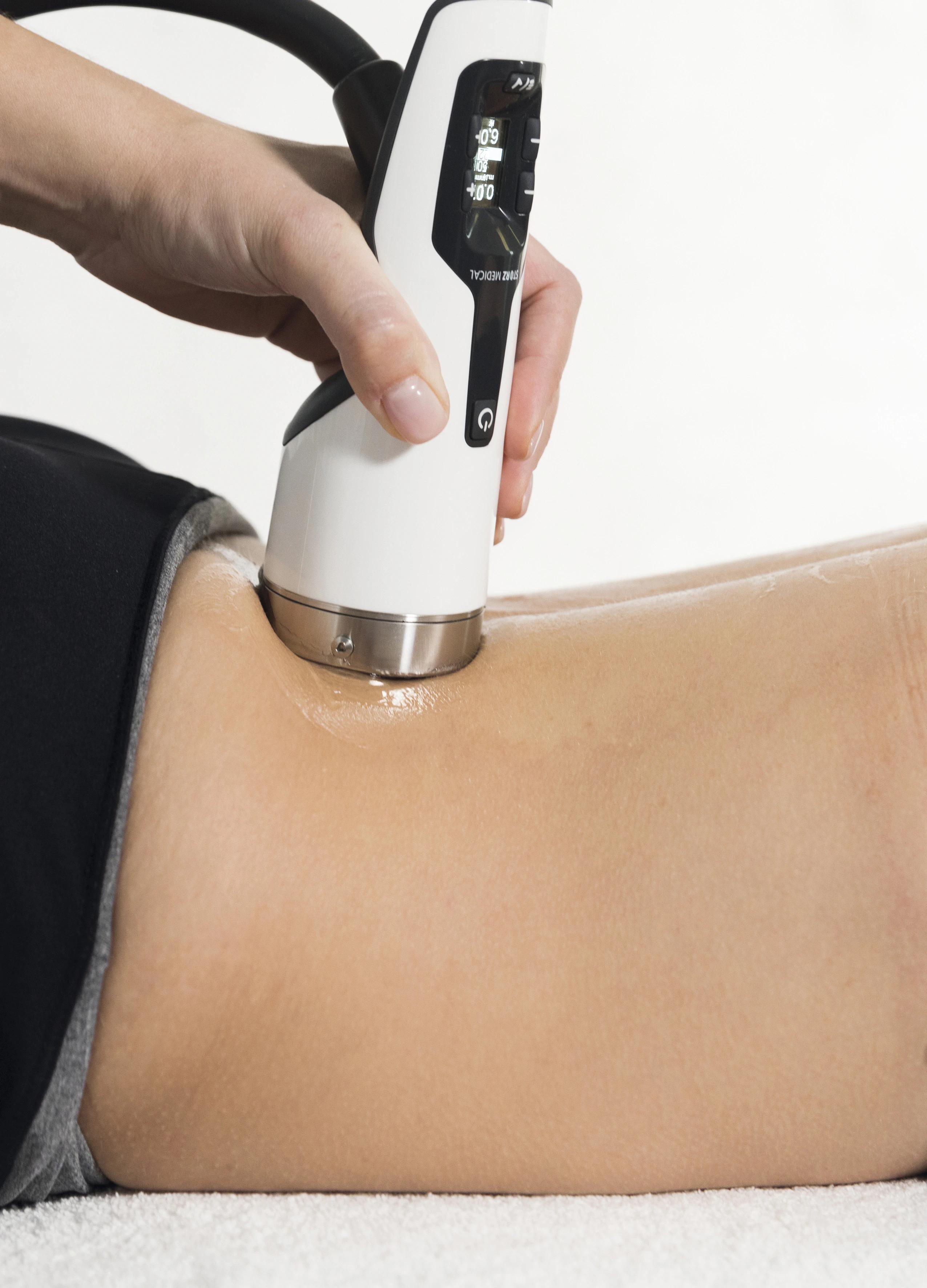
Explore non-invasive shockwave therapy for lower back pain—clinically proven to reduce pain and improve mobility.
KEY TAKEAWAYS
- Chronic lower back pain is often the result of tissue that never finished repairing. Rest and anti-inflammatories can quiet symptoms without changing what is happening in the tissue.
- A 2023 meta-analysis of 12 randomized controlled trials and 632 patients found that shockwave therapy produced significantly greater pain relief and functional improvement than the comparator treatments at four and twelve weeks in chronic lower back pain, with no serious adverse events reported.
- A separate 2021 meta-analysis of 10 randomized trials and 455 patients confirmed clinically meaningful short-term pain reduction and improved disability scores, and again reported a strong safety profile.
- A 2025 sham-controlled randomized trial in lumbar facet joint syndrome reported significant improvements in pain, function, and MRI-detected bone marrow edema at twelve months in the ESWT group. The findings are promising but the trial has been the subject of published methodological critiques and should be interpreted as encouraging early evidence rather than settled science.
- Focused shockwave therapy penetrates deeper than radial devices, which matters for reaching lumbar structures. A typical course is 6 to 8 sessions with re-assessment. Most of the improvement builds in the 4 to 8 weeks after the last session as tissue remodels.
IN THIS ARTICLE
- Why does lower back pain become chronic?
- What does the research actually say about shockwave for chronic lower back pain?
- How does shockwave compare with other lower back pain treatments?
- What is the evidence for specific conditions? (facet joint syndrome, herniated disc, sciatica)
- How does shockwave therapy actually work?
- How many sessions, how soon, and what to expect
- How does treatment for lower back pain work at Unpain Clinic?
- What can I safely do at home between visits?
- Frequently asked questions
INTRODUCTION
If your lower back has hurt for months, you have probably already been through the usual rotation. Rest. Anti-inflammatories. A brace or a support belt. A round of physiotherapy or massage. Maybe a cortisone injection. Maybe an MRI that came back with a mix of findings your family doctor called degenerative. And here you are, still not fixed.
Extracorporeal shock wave therapy (ESWT), often just called shockwave, is a non-invasive treatment that uses acoustic waves to deliver energy to specific depths within the body. It was first developed to break up kidney stones, and over the past two decades it has been adapted for a wide range of musculoskeletal conditions. For chronic lower back pain, the evidence base has grown substantially in the last five years, and there are now high-quality systematic reviews that let us talk about what the therapy does and does not do with reasonable confidence.
This article walks through what the current research says, how shockwave fits alongside other treatment options, and how we use it at Unpain Clinic in Edmonton for chronic lower back pain, lumbar facet joint syndrome, and related conditions. It is a long read because the topic warrants it. If you want the short version, the Key Takeaways above cover the main points.

WHY DOES LOWER BACK PAIN BECOME CHRONIC?
Most acute lower back pain settles within weeks. When it does not, the reason is rarely a single dramatic injury. More often, it is the accumulation of several smaller factors that add up.
Chronic changes in the soft tissue layer are one common driver. Muscles that have been guarding an irritated area for months develop increased resting tone and reduced blood flow. Fascia and tendon insertions around the lumbar spine and pelvis (particularly at the iliac crest, the greater trochanter, and the sacroiliac ligaments) can develop chronic tissue changes that behave much like the tendinopathies seen at the elbow or heel. The body has laid down repair tissue that is disorganized, poorly vascularized, and mechanically weaker than the original. This tissue does not respond well to stretching alone.
Facet joint irritation is a second common contributor. The small joints on the back of each vertebral segment carry load with movement and can become inflamed or degenerative with time. When they are the pain generator, the pain typically worsens with backward bending and rotation, and often refers into the buttock and upper thigh without going below the knee.
The disc, when involved, is usually part of a broader picture rather than a solo culprit. Disc bulges and degenerative changes are extremely common in people with no back pain at all, so a finding on MRI does not automatically identify the source of the pain.
Sensitization of the nervous system compounds the mechanical issues over time. When pain has been present for months, the nervous system becomes more efficient at generating pain signals from smaller inputs. This is a normal biological response that unfortunately makes chronic pain feel bigger than the tissue changes alone would predict.
None of this responds well to rest alone. Anti-inflammatories can quiet symptoms without changing the underlying tissue. Cortisone can suppress pain and inflammation but does not rebuild what has weakened. Standard physiotherapy programs help many people, but a significant subset stall because the tissue changes are not budging with exercise alone.
This is where shockwave therapy earns a place in the conversation. It is designed to target the tissue-level drivers that other treatments do not reach.

WHAT DOES THE RESEARCH ACTUALLY SAY ABOUT SHOCKWAVE FOR CHRONIC LOWER BACK PAIN?
The honest version, first. The evidence base on shockwave for lower back pain has grown considerably in the last five years, and the direction of the evidence is positive, but there is meaningful heterogeneity across trials in terms of protocols, patient selection, and outcome measurement. This is normal for a growing evidence base, and it is worth naming so the numbers below can be understood in context.
The strongest single source is a systematic review and meta-analysis published in the Journal of Orthopaedic Surgery and Research in 2023, which pooled 12 randomized controlled trials involving 632 patients with chronic lower back pain. The results were consistent and clinically meaningful.
At four weeks after the start of treatment, patients who received shockwave therapy reported significantly greater pain relief than control groups, with a weighted mean difference of approximately minus 1.04 points on standard pain scales. At twelve weeks, the pain benefit held (weighted mean difference around minus 0.85 points). Functional improvement, measured by the Oswestry Disability Index, showed weighted mean differences of about minus 4.22 points at four weeks and minus 4.51 points at twelve weeks in favour of the shockwave group. Importantly, across all 12 studies, no serious adverse events were reported.
A separate systematic review and meta-analysis published in BioMed Research International in 2021 examined 10 randomized controlled trials involving 455 patients with chronic lower back pain and reached similar conclusions. The shockwave group showed lower pain intensity at one-month follow-up (standardized mean difference around minus 0.81) and improved disability scores at both one-month and three-month follow-ups. Again, no serious shockwave-related adverse events were reported.
Two takeaways matter more than the specific numbers. First, the improvements meet what researchers call the minimum clinically important change, meaning they are large enough to be meaningful in daily life, not just statistically significant. Second, the safety profile across hundreds of trial participants is genuinely excellent.
The therapy is not a miracle. Not every patient responds. Effect sizes are modest to moderate rather than dramatic. And the strongest evidence is in chronic lower back pain (pain present for more than three months) rather than in fresh acute episodes, where the body is already mounting its own inflammatory repair response.
"Shockwave therapy is not doing something magical to the tissue. It is restarting a repair process that the body has been trying to run without enough momentum to finish. Our job as clinicians is to pair that with the right assessment and the right exercise plan so the repair actually holds." Uran Berisha, PT, RMT, Founder of Unpain Clinic

HOW DOES SHOCKWAVE COMPARE WITH OTHER LOWER BACK PAIN TREATMENTS?
A useful way to think about lower back pain options is to compare what each one is actually doing. Some treatments quiet pain quickly and fade. Some try to rebuild the tissue slowly. They are not the same job, and they age differently over weeks and months.
REST, ICE, AND ANTI-INFLAMMATORIES What it is doing: Lowers symptoms and calms early inflammation. How fast: Days. How long it tends to hold: The pain tends to return with activity, because the underlying tissue has not been rebuilt. Current guidelines from the American College of Physicians recommend non-drug treatments as first-line for acute, subacute, and chronic lower back pain.
NSAIDs AND OPIOIDS What it is doing: Reduce pain and inflammation pharmacologically. How fast: Hours to days. How long it tends to hold: Symptom control while the medication is active. Chronic NSAID use carries gastrointestinal, cardiovascular, and renal risks. Opioids are no longer recommended as first-line for chronic lower back pain in most guidelines because of dependence and effectiveness concerns.
CORTISONE INJECTION (FACET OR EPIDURAL) What it is doing: Suppresses local inflammation and pain in a specific structure. How fast: Days to weeks. How long it tends to hold: Strong early relief that often does not hold beyond three to six months in many patients. Effective for some, and appropriate as part of a diagnostic and therapeutic workup, but does not remodel tissue.
STANDARD PHYSIOTHERAPY What it is doing: Restores movement, builds strength, addresses movement patterns. How fast: Weeks to months. How long it tends to hold: Strong when it works, but a significant subset of chronic cases stall because the tissue-level changes have not budged.
RADIOFREQUENCY ABLATION (FOR FACET JOINT PAIN) What it is doing: Interrupts pain signal transmission from a specific joint. How fast: Weeks. How long it tends to hold: Months to a year or more in responders. Reasonable option for well-selected facet joint pain, and often used after diagnostic medial branch blocks.
FOCUSED SHOCKWAVE THERAPY What it is doing: Stimulates tissue remodeling, new blood vessel growth, and pain modulation in a targeted area. How fast: Builds over weeks. How long it tends to hold: Tends to hold because the tissue is remodeling. Pain and functional improvements have been documented in the meta-analyses cited earlier at both short-term and 12-week follow-ups.
SURGERY What it is doing: Structural correction (decompression, fusion) for specific pathology. How fast: Weeks to months, with rehabilitation. How long it tends to hold: Appropriate for specific indications (major disc herniation with progressive neurological signs, unstable fracture, significant spinal stenosis with functional impairment). Not first-line for most chronic non-specific lower back pain.
The two comparisons that come up most often in clinic are cortisone injections and standard physiotherapy. Cortisone tends to feel like the winner at four weeks and the loser at six months, because the steroid is masking pain without changing the tissue. Shockwave tends to feel slower in the first few weeks and stronger by three months. Standard physiotherapy is the foundation of chronic back pain care and should not be replaced by any passive modality; shockwave is an adjunct that sits on top of it.
Side effect-wise, shockwave is in a good position. Across the published literature summarized above, the most common side effects are short-lived local soreness, mild redness, or small bruising in the treatment area. No serious adverse events were reported across the two meta-analyses of over 1,000 patients combined.
WHAT IS THE EVIDENCE FOR SPECIFIC CONDITIONS?
Chronic lower back pain is not one thing. Different structures drive pain in different patients, and the evidence for shockwave varies by the specific target.
Lumbar facet joint syndrome. The facet joints are the small paired joints on the back of each spinal segment. When they are the pain generator, the pain typically worsens with extension and rotation. A prospective, randomized, sham-controlled trial published in the International Journal of Surgery in 2025 enrolled 128 patients with chronic lumbar facet syndrome confirmed by diagnostic medial branch block. Patients received either five weekly sessions of high-energy focused shockwave (at 0.35 mJ/mm² with 1,200 shocks per session) or sham therapy. At 12 months, the shockwave group had a mean 64.4 percent reduction in VAS pain scores, a 42.3 percent improvement in Oswestry Disability Index scores (versus 12.5 percent in the sham group), and MRI-detected resolution of bone marrow edema in 58.8 percent of treated patients. No adverse effects were reported.
The Nedelka 2025 findings are notable but should be interpreted as encouraging early evidence rather than settled science. Two published letters to the editor in the same journal have raised methodological questions about the trial, including the use of single versus dual comparative medial branch blocks for patient selection, the reporting of randomization and blinding procedures, and the size of the reported treatment effects relative to what has been demonstrated for other established facet pain interventions. Replication in independent centres with pre-registered protocols would substantially strengthen the case.
Herniated disc and discogenic pain. The evidence base is more limited than for chronic non-specific lower back pain. Several small trials have shown positive short-term effects, but the number and quality of studies is not yet at the level of the general chronic lower back pain meta-analyses. Shockwave is not a substitute for surgical evaluation in patients with major disc herniation causing progressive neurological deficit; those patients need a spine specialist opinion first.
Sciatica and lumbar radicular pain. Preclinical and early clinical research suggests biological effects on nerve tissue, including improved local blood flow, Schwann cell stimulation, and effects on nerve conduction. However, the human clinical evidence for shockwave as a stand-alone treatment for true sciatica (radicular pain caused by nerve root irritation) is not yet strong enough to make specific recommendations. When we treat patients with lower back pain that includes some radiating symptoms, shockwave is aimed at the mechanical soft tissue and joint drivers, not at the nerve directly.
Sacroiliac joint pain. Small early trials suggest benefit for well-selected sacroiliac joint pain, but the evidence base is more limited than for chronic lumbar pain and facet joint syndrome. Careful diagnostic reasoning is important.
The honest summary. Chronic non-specific lower back pain and lumbar facet joint syndrome have the most consistent evidence base. Herniated disc, sciatica, and sacroiliac joint pain have promising but less mature evidence, and shockwave for these conditions is best used as part of a broader clinical picture rather than as a stand-alone intervention.
HOW DOES SHOCKWAVE THERAPY ACTUALLY WORK?
The mechanism has been studied extensively and is best understood in phases. A widely cited mechanism review in the Journal of Clinical Orthopaedics and Trauma summarised the biological effects across four broad phases: a physical phase where the acoustic waves interact with tissue, a physicochemical phase where those interactions trigger cellular signalling, a chemical phase involving ion channels and calcium mobilization, and a biological phase involving angiogenesis, tissue remodeling, and pain modulation.
Practically, the effects that matter clinically fall into three groups.
Local biological effects. Improved local blood flow through the reopening of previously constricted capillaries and the formation of new small vessels (angiogenesis). Increased production of collagen and other structural proteins by fibroblasts. Modulation of the local inflammatory environment in a way that supports tissue remodeling rather than suppressing it. A mechanistic review published in the British Medical Bulletin covered the underlying tissue and cellular biology in more depth.
Pain modulation. Shockwave has been shown to influence local nerve endings in ways that reduce pain signalling, including decreased levels of substance P and other pain-transmitting chemicals. There is also evidence for effects on the broader pain gating system that reduce transmission of pain signals to the central nervous system.
Effects on chronic tissue changes. This is what matters most in chronic lower back pain. Tissue that has been in a low-grade inflammatory or degenerative state for months can be re-engaged in a repair process by the mechanical stimulus of the acoustic wave. This is why shockwave tends to work better for chronic conditions than for fresh acute ones; an acutely injured tissue is already mounting its own repair response and does not need the same push.
To be clear about what shockwave does not do. It does not activate or transplant stem cells in the way some marketing language has claimed. It does not correct anatomical misalignment. It does not replace exercise, manual therapy, or good clinical reasoning. It is a targeted mechanical stimulus that supports the local biology of tissue repair.
HOW MANY SESSIONS, HOW SOON, AND WHAT TO EXPECT
Based on the protocols used in the published trials, a typical course of shockwave therapy for chronic lower back pain involves six to eight sessions, delivered once or twice weekly, with re-assessment along the way. The specific parameters (energy flux density in the 0.03 to 0.18 mJ/mm² range for most low back protocols, 4 to 15 Hz pulse frequency, 1,000 to 4,000 pulses per session) are adjusted based on the target tissue, the patient's tolerance, and the response over the course of treatment.
Each session takes only a few minutes of actual shockwave application time. The sensation is a strong tapping or pulsing pressure over the target area. Intensity is dialled up gradually within a session and can be adjusted mid-treatment. Mild soreness for a day or two after treatment is common and typically feels like post-workout tenderness.
Most people notice early shifts after the first two or three sessions, often as decreased pain intensity, better sleep, or slightly easier movement. Bigger changes usually build over the four to eight weeks after the last session as tissue continues to remodel. This delayed improvement is one of the more distinctive features of shockwave and is often the reason for the durable effect at 12-week and later follow-ups.
Response varies, and a few factors explain most of it.
- How long the symptoms have been present. Long-standing cases sometimes need longer courses.
- Whether the assessment has correctly identified the primary pain generator.
- Whether the patient is doing progressive loading and exercise alongside the shockwave.
- Sleep, stress, workload, and overall conditioning.
HOW DOES TREATMENT FOR LOWER BACK PAIN WORK AT UNPAIN CLINIC?
At Unpain Clinic in Edmonton, the goal is not to chase the painful spot in the lower back. It is to answer the question of why the pain is still there. Most chronic lower back cases sit inside a longer chain of issues (a tight thoracic spine, weak hip stabilizers, a movement pattern from work or sport that keeps reloading the same tissue). The assessment is built to find that chain, not just the sore spot.
Your first visit is an assessment, not treatment. It usually follows this order.
- A full history of how the pain started, what aggravates it, what calms it, what treatments you have tried, and what you actually want to get back to.
- Orthopedic and neurological testing of the lumbar spine, hips, sacroiliac joints, and lower limbs, including range of motion, strength testing, tenderness mapping, and screening for red flags.
- Motion and load analysis of how you actually move through your day, at work, and in whatever activities matter to you.
- A check for any red flags (inflammatory back pain patterns, progressive neurologic symptoms, cancer history, fracture concern, infection markers) that mean a physician's opinion or imaging is the right next step before physiotherapy proceeds.
- A clear, personalized plan that decides whether focused shockwave therapy belongs in your plan and what supportive tools belong with it.
From there, treatment sessions are built around a small set of high-leverage tools.
- Focused shockwave therapy as the main driver when the picture warrants it. Focused shockwave penetrates deeper than radial devices, which matters for reaching the deeper lumbar structures.
- EMTT as an adjunct in some cases, paired with shockwave for regional coverage across muscle, joint, and ligament tissue.
- Physiotherapy with progressive loading. Hip strengthening, thoracic mobility work, deep core control, and addressing the movement patterns that keep reloading the lumbar tissue.
- Manual therapy for joint mobility, particularly in the hips and thoracic spine.
- NESA neuromodulation in select cases where central sensitization is a significant part of the picture.
Cortisone is generally not added during a shockwave course, because the steroid effect can blunt the biological healing response we are trying to encourage. If a cortisone injection is under consideration, we usually recommend completing the shockwave course first and reassessing.

WHAT CAN I SAFELY DO AT HOME BETWEEN VISITS?
This is general education, not individual medical advice, and results vary. A few principles tend to help most people with chronic lower back pain stay better between visits.
- Keep moving in ways that feel tolerable. Bed rest is no longer recommended for typical lower back pain per current clinical guidelines. Short walks, gentle range of motion, and getting up and shifting position regularly all help the tissue stay supplied with circulation and reduce secondary stiffness.
- Do the exercises. Whatever your assessment identified as your specific weaknesses (hip strength, thoracic mobility, deep core control) is where consistent home work pays off. Fifteen minutes most days beats one long session per week.
- Sleep setup matters. A medium-firm mattress is the most consistently evidence-supported choice for chronic lower back pain; overly soft or overly firm surfaces tend to be worse. A pillow between the knees for side sleepers reduces hip and lumbar strain.
- Manage the daily load. Long uninterrupted hours of sitting, heavy repetitive lifting, and sudden increases in activity are all common flare triggers. Small changes in daily routine reduce cumulative load on the lumbar tissue.
- Do not chase pain with painkillers. Occasional short use for severe pain is fine and should be discussed with your physician. Chronic daily use has trade-offs and does not address what is driving the pain.
Some symptoms are not "wait and see" symptoms. Get medical attention if you develop sudden severe back pain after significant trauma, progressive weakness or numbness in the legs, bladder or bowel changes, saddle-area numbness, unexplained fever, or unexplained weight loss with back pain. Those can indicate serious conditions that need urgent workup.
FREQUENTLY ASKED QUESTIONS
Is shockwave therapy safe for lower back pain?
Shockwave therapy is generally safe for chronic lower back pain when delivered by a qualified clinician after appropriate screening. Across the meta-analyses summarized above, involving over 1,000 patients combined, no serious adverse events were reported. The most common side effects are short-lived local soreness, mild redness, and occasional small bruising in the treatment area. It is non-invasive, with no injection, anesthesia, or medication involved. Clear contraindications include pregnancy in the treatment area, active blood clots or significant bleeding disorders, active infection in the treatment area, active malignancy in the area being treated, and treatment directly over the lungs, heart, or brain areas.
How many shockwave therapy sessions will I need for lower back pain?
A common plan is six to eight weekly sessions, with re-assessment after the first three or four to see whether you are responding. Some patients settle in fewer sessions; some long-standing cases benefit from more. Most of the change tends to build over the four to eight weeks after the last session as tissue continues to remodel.
Does shockwave therapy hurt?
Most patients describe it as a strong tapping or pulsing pressure over the treatment area. Discomfort is adjustable, since your clinician can change intensity, target area, and pacing during the session. The sensation stops as soon as the device is off. Mild soreness for a day or two afterward is common and tends to feel like post-workout tenderness.
Can shockwave therapy help if I have had lower back pain for years?
Long-standing chronic cases are where shockwave has shown some of its most consistent benefit in the published literature. By the time back pain has lasted more than six months, the tissue is often in a chronic state that has stopped responding to standard care, and the shockwave stimulus is designed to restart the repair process. Response varies, and a proper assessment is what determines whether shockwave is the right call for your specific case.
How does shockwave compare with a cortisone injection?
A cortisone injection tends to win on speed of relief in the first four weeks. Shockwave tends to win on durability by three months and beyond. The mechanism explains it. A steroid masks pain and dampens inflammation temporarily. Shockwave aims to remodel the tissue itself, which takes longer but tends to hold better.
Who should not have shockwave therapy?
Shockwave is generally not used during pregnancy near the treatment area, over an active blood clot or in someone with a significant bleeding disorder, over an area with active infection, over an active malignancy in the treatment area, or over the lungs, heart, or brain. We are also cautious in patients on strong anticoagulants and screen for pacemakers or other implanted devices in the treatment field.
Is shockwave therapy covered by insurance?
Coverage depends on your insurer and plan. Many extended health plans in Alberta reimburse shockwave under physiotherapy or chiropractic categories when it is provided by a licensed clinician. Public provincial health insurance (Alberta Health Care) does not typically cover it. Confirm with your plan, and a Health Spending Account through your employer can usually be used as well.
When should I stop self-treating and book an assessment?
If your lower back pain has lasted more than a few weeks despite smart movement and load changes, keeps coming back, or is accompanied by leg symptoms, night pain that does not settle, or any of the red flag symptoms listed in the previous section, it is worth getting properly assessed. The right plan depends on a real diagnosis, not on guessing.
PATIENT TESTIMONIAL
“I took my son to Dr.Lacina. We had been seeing several other health professionals throughout the summer and Dr. Lacina performed the most thorough assessment of any of them! She treated him for his back pain via shockwave therapy and chiropractic. She also identified that he may benefit from shockwave to his knee and ankle by listening intently to him during the assessment and treated him as part of the same appointment. Although he ended up having a more major injury than initially suspected, she was amazing to deal with and has followed up with me personally several times and continued to offer additional advice. She is highly educated and knowledgeable in her field. I recommend Dr. Lacina at the Unpain Clinic for any sort of ailment you may have currently or if you are suffering from past injuries.”- Rhelda Baschuk
About the Author
Written by Uran Berisha, PT, RMT, Founder of Unpain Clinic and the Medical Shockwave Institute in Edmonton. Uran is an International Educator in Shockwave Therapy. Medically reviewed by Uran Berisha, PT, RMT.
BOOK YOUR INITIAL ASSESSMENT
If your lower back pain has not budged with the usual care and you want a clear answer on whether shockwave therapy fits your case, the next step is a 60-minute one-on-one assessment at Unpain Clinic Edmonton. We will find the actual driver of your pain, screen for red flags that need medical workup first, and tell you honestly whether you are a good candidate for this approach. No referral needed. No long contracts. Book your initial assessment with Unpain Clinic.
REFERENCES
- Liu K, Zhang Q, Chen L, Zhang H, Xu X, Yuan Z, Dong J. Efficacy and safety of extracorporeal shockwave therapy in chronic low back pain: a systematic review and meta-analysis of 632 patients. Journal of Orthopaedic Surgery and Research. 2023;18(1):455. doi:10.1186/s13018-023-03943-x. PMID: 37355623. https://pubmed.ncbi.nlm.nih.gov/37355623/
- Yue L, Sun MS, Chen H, Mu GZ, Sun HL. Extracorporeal shockwave therapy for treating chronic low back pain: a systematic review and meta-analysis of randomized controlled trials. BioMed Research International. 2021;2021:5937250. doi:10.1155/2021/5937250. https://pmc.ncbi.nlm.nih.gov/articles/PMC8617566/
- Nedelka T, Katolicky J, Nedelka J, Hobrough P, Knobloch K. Efficacy of high-energy, focused ESWT in treatment of lumbar facet joint pain: a randomized sham-controlled trial. International Journal of Surgery. 2025;111(7):4177-4186. doi:10.1097/JS9.0000000000002538. PMID: 40391994. https://pubmed.ncbi.nlm.nih.gov/40391994/
- Simplicio CL, Purita J, Murrell W, Santos GS, Dos Santos RG, Lana JFSD. Extracorporeal shock wave therapy mechanisms in musculoskeletal regenerative medicine. Journal of Clinical Orthopaedics and Trauma. 2020;11(Suppl 3):S309-S318. doi:10.1016/j.jcot.2020.02.004. PMID: 32523286. https://pubmed.ncbi.nlm.nih.gov/32523286/
- Schmitz C, Császár NB, Milz S, Schieker M, Maffulli N, Rompe JD, Furia JP. Efficacy and safety of extracorporeal shock wave therapy for orthopedic conditions: a systematic review on studies listed in the PEDro database. British Medical Bulletin. 2015;116(1):115-138. doi:10.1093/bmb/ldv047. PMID: 26585999. https://pubmed.ncbi.nlm.nih.gov/26585999/
- Qaseem A, Wilt TJ, McLean RM, Forciea MA; Clinical Guidelines Committee of the American College of Physicians. Noninvasive treatments for acute, subacute, and chronic low back pain: a clinical practice guideline from the American College of Physicians. Annals of Internal Medicine. 2017;166(7):514-530. doi:10.7326/M16-2367. PMID: 28192789. https://pubmed.ncbi.nlm.nih.gov/28192789/
Related Topics