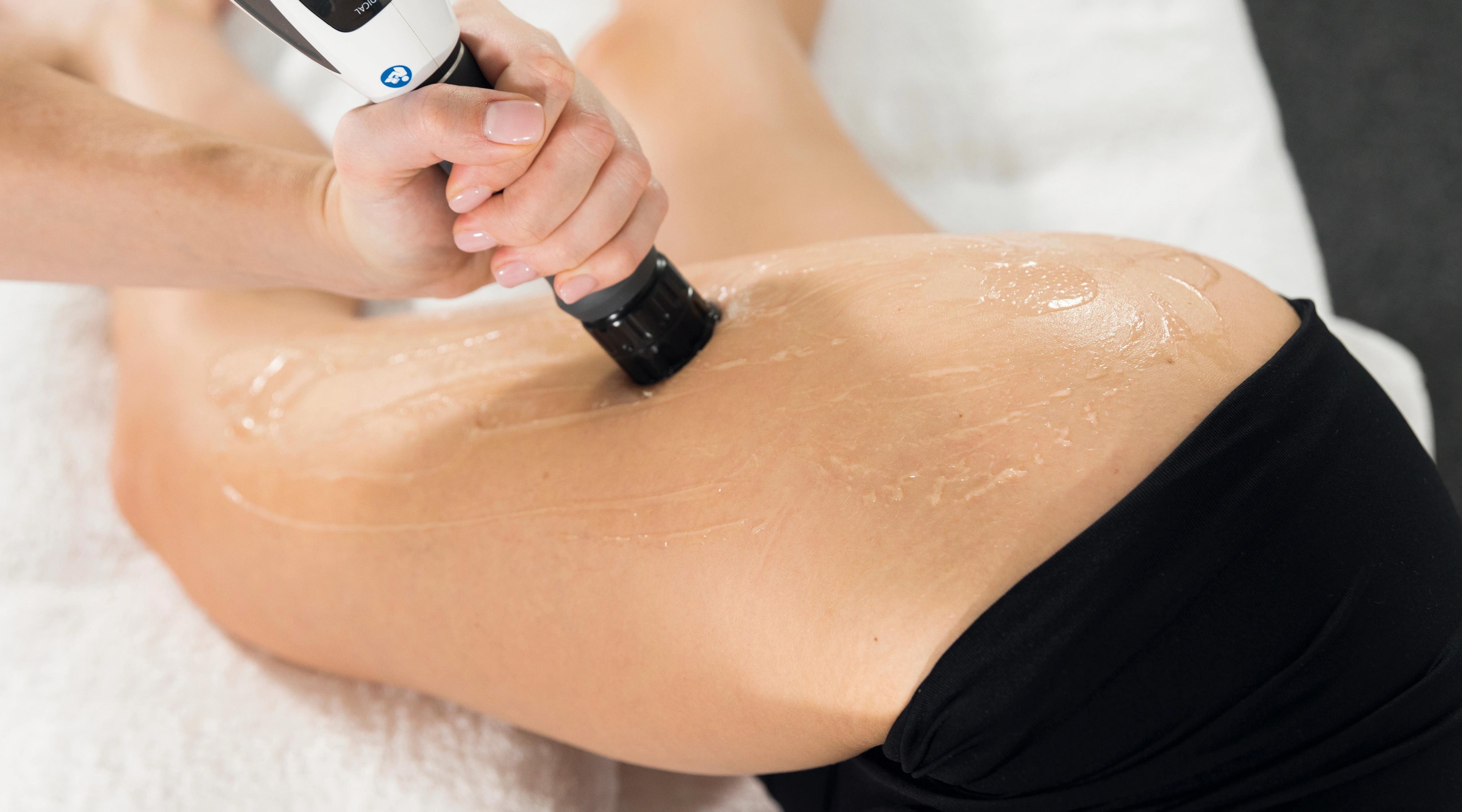
Persistent hip pain? Discover how shockwave therapy offers non-surgical relief by stimulating healing and reducing pain where other methods fail.
Key takeaways
- Persistent hip pain, meaning pain that lasts longer than three months despite treatment, is usually a sign of an underlying problem, not just wear and age.
- The most common sources are hip osteoarthritis and gluteal tendon pain on the outer hip, often called greater trochanteric pain syndrome.
- Shockwave therapy is non-surgical and works by prompting real healing: it improves blood flow, calms inflammation, and helps repair tired tissue rather than masking pain.
- The evidence is encouraging for outer-hip tendon pain and early hip arthritis, and it tends to help most when other treatments have not held.
- At Unpain Clinic in Edmonton, shockwave is one part of a whole-body plan that finds why the hip is overloaded and fixes the cause, not just the sore spot.
In this article
- What persistent hip pain is
- Why it lingers
- Why standard treatments fall short
- What the research says about shockwave
- How we use it at Unpain Clinic
- What you can do at home
- Common questions
If everyday things like walking, stairs, or even sleeping on your side have become a problem, persistent hip pain can wear you down fast. Shockwave therapy is becoming a go-to non-surgical option because it targets the tissue problems behind chronic hip pain instead of just dulling the ache. This article explains why the pain lingers, what the research shows, and how we approach it. For the bigger picture, our guide to why does my hip hurt is a good companion.
This is general information, not a substitute for a professional assessment or medical advice. Results vary from person to person.
What is persistent hip pain, and where does it come from?
Persistent hip pain is pain that lasts longer than about three months despite treatment, and it usually points to an underlying problem in how the hip or the tissue around it is working. It is rarely one dramatic injury. More often it builds up over years from movement patterns and muscle imbalances that quietly overload the joint.
The common sources are worth naming. Hip osteoarthritis is wear-and-tear change in the joint cartilage. Pain on the outer side of the hip is often gluteal tendinopathy or hip bursitis, together known as greater trochanteric pain syndrome, where the tendons and the fluid sac at the side of the hip become irritated or degenerated. Other sources include a labral-related hip problem, a strained hip flexor, or pain referred from the lower back and sciatica.
The pain is usually a symptom of a bigger issue. As Unpain Clinic founder Uran Berisha puts it, most people assume hip pain is an unavoidable part of aging, when the reality is that hip dysfunction usually builds up over years from things like weak glutes, tight hip flexors, or old injuries that changed how you move. Name the cause, and the pain has somewhere to go.

Why does hip pain persist for months or years?
Hip pain persists when the underlying cause is never corrected, so the irritation keeps coming back as soon as you return to normal activity. If the real problem is that your hip stabilizer muscles are not firing properly, rest and anti-inflammatories may calm things for a while, but the pain returns the moment you load the hip again.
Chronic hip pain often gets stuck in a cycle of inflammation and incomplete healing. Scar tissue can form in the muscles or tendons around the hip, limiting blood flow and preventing full recovery. Many people also try to push through the pain in the early stages, which can lead to more tissue change over time.
Lifestyle plays a part too. A lot of sitting weakens the gluteal muscles and tightens the hip flexors, and that imbalance puts abnormal stress on the joint every time you stand or walk. At the other end, runners and athletes can develop long-term hip pain from overload or training errors. In short, hip pain lingers when the driver, whether it is mechanical, inflammatory, or degenerative, has not been addressed.
Why do standard treatments often fall short?
Standard treatments often fall short for persistent hip pain because they tend to target the symptom rather than the cause. Rest, ice and heat, anti-inflammatory medication, cortisone injections, and general physiotherapy can all help in acute flare-ups, but with chronic hip pain many people find the relief is only temporary.
A cortisone shot or a course of anti-inflammatories can quiet the pain for a few weeks, yet if the painful structure keeps getting irritated, the ache returns. Even surgery is not always a complete answer. A hip replacement can address severe joint damage, but as Uran Berisha notes, it does not fix the mechanical dysfunction that caused the problem in the first place, so the other hip, the knees, or the back can start to complain if the root cause is left alone.
Exercise matters enormously, but only when it targets the right thing. Many people stretch the iliotibial band on the outside of the thigh thinking it will fix outer-hip pain, when the tightness there is a symptom and the real issue is weak or inactive glutes. If a program does not find these hidden drivers, it can reinforce the same faulty movement. This is the gap shockwave therapy helps fill, by physically improving tissue quality and healing rather than masking pain.

What does the research say about shockwave therapy for hip pain?
The research is encouraging: shockwave therapy has shown real benefit for the two most common causes of chronic hip pain, outer-hip tendon problems and early hip arthritis, and it tends to help most when standard care has not held. The evidence base is still growing compared with more studied areas like the elbow and heel, but the direction is positive.
For hip osteoarthritis, a 2023 randomized trial split 148 people with hip arthritis into three groups, one receiving focused shockwave, one radial shockwave, and one a sham treatment. Both shockwave groups had significantly less pain and better joint function than the sham group over the following weeks, and the focused form, which penetrates deeper, outperformed radial for pain and stiffness [1]. This was short-term, but notable, since it was the first trial of its kind in human hip osteoarthritis.
For outer-hip pain, a 2023 randomized trial compared shockwave with a program of therapeutic exercise in people with greater trochanteric pain syndrome. Both helped, and the shockwave group showed a more pronounced functional recovery, while people who had not responded to exercise alone improved after they crossed over to shockwave [2]. Longer-term work supports this too. A study that tracked low-energy shockwave for gluteal tendinopathy, with MRI to document the tissue, found lasting improvement over time [3]. In some comparisons against cortisone injections for stubborn outer-hip pain, steroid shots gave quicker early relief, but the shockwave-treated group tended to do better at longer follow-up.
Shockwave does not mask pain, it prompts repair. In plain terms, the therapy creates tiny, safe disturbances in tissue that wake up the body's healing response. It can break up adhesions and calcium deposits, stimulate new blood vessels so more oxygen and nutrients reach undernourished tissue, and trigger the release of growth factors that support collagen repair. It also has a direct calming effect on pain-carrying nerve fibres. As Uran Berisha explains, shockwave stimulates real healing by breaking down scar tissue, increasing blood flow, and triggering collagen production in the damaged area. Our explainer on how shockwave therapy works goes deeper.
How does Unpain Clinic use shockwave therapy for hip pain?
At Unpain Clinic in Edmonton, shockwave therapy is a primary tool for stubborn hip pain, used inside a whole-body plan that asks not just where it hurts, but why. When you come in, the assessment looks at your lower back, pelvis, gait, strength, flexibility, and old scars, because the hip is a weight-bearing joint that is easily affected by problems above and below it. An old ankle sprain that changed how you move, or a C-section scar that altered core activation, can quietly overload one hip.

Once the root causes are clear, a plan is built for you. If you are a candidate for focused shockwave therapy, we apply it to the affected tissues, for example tight bands in the gluteal muscles, calcium deposits, or scar tissue around the hip. The intensity starts at a comfortable level and rises as you get used to the sensation, which most people describe as rapid tapping that is uncomfortable but tolerable. A typical session runs around 15 minutes of shockwave time, often followed by light guided movement.
The other tools support the shockwave. Our physiotherapy, chiropractic care, and massage therapy release tight tissue and improve how the joint moves. Where pain has been present for many months and the nervous system has become sensitized, EMTT and NESA neuromodulation can calm the area so you can do your rehab with less pain. Once shockwave has eased the pain and freed up the tissue, targeted strengthening for the gluteus medius and core keeps the joint stable so the pain does not return.
Sessions are usually once a week or once every two weeks, since spacing them gives the body time to react and begin healing. Many people with persistent hip pain need roughly four to six sessions for meaningful relief, though this varies. Shockwave is also useful around hip surgery, both as prehab to go in stronger and as post-surgical care, with clearance from your surgeon, to break down scar tissue and restore muscle function faster [4]. Whether the goal is avoiding surgery or recovering from it, the aim is the same: heal the tissue and fix the mechanics so relief lasts. You can read more in our guide to hip osteoarthritis relief.
How do the common treatments for hip pain compare?
The common approaches for persistent hip pain differ mainly in whether they calm the symptom or address the cause, and in how long the relief tends to hold. Rest, ice, and anti-inflammatory medication can settle a flare, but the relief is usually short-lived if the tissue keeps getting irritated. A cortisone injection can reduce pain and inflammation quickly, and it often works well in the first few weeks, though it does not strengthen a weak muscle or repair a degenerated tendon, so the effect tends to fade. A well-targeted exercise and physiotherapy program builds the strength and control that offload the joint, which is essential for lasting change, though on its own it can be slow for stubborn, degenerated tissue. Shockwave therapy sits between quick symptom relief and slow rebuilding: it prompts the tissue itself to heal, and its effects tend to be more durable because it improves tissue quality rather than numbing pain, with occasional booster sessions if pain creeps back. Surgery, such as a hip replacement, can address severe joint damage, but it is invasive, carries real recovery time, and does not by itself correct the movement problems that overloaded the joint. The most durable results usually come from combining the tools that rebuild, exercise and shockwave, while fixing the whole-body mechanics driving the pain.
What can you do at home to manage hip pain?
What you do between visits matters as much as your in-clinic care. These steps are general and meant to complement professional treatment, not replace it. Keep everything within a comfortable range, use pain as your guide, and check with your clinician if you are unsure.

- Stay active, but modify what aggravates it. Total rest tends to stiffen the joint and weaken muscles, which can make hip pain worse over time. Swap high-impact activities for low-impact options like cycling or swimming, keep up pain-free walking within your tolerance, and avoid the specific movements that clearly flare your hip.
- Stretch and mobilize within comfort. Gently stretch the hip flexors, quads, hamstrings, and glutes, holding each about 30 seconds without pushing into sharp pain. A kneeling hip flexor stretch and a figure-four glute stretch are good starting points, and a foam roller on the thigh and glutes can release tight spots.
- Strengthen your support muscles. Weak glutes and core are common with chronic hip pain. Clamshells, side-lying leg lifts, bridges, and gentle planks help re-engage the right muscles. Start light and focus on form, since the goal is activation, not heavy load.
- Use heat for stiffness and ice for flares. A warm pack for 15 to 20 minutes loosens a stiff, achy hip and is useful before stretching. If activity leaves the hip inflamed or sharply sore, ice for 10 to 15 minutes to settle it. Use whichever makes your hip feel better.
- Mind your posture and daily movement. Avoid sitting with your legs crossed for long periods, distribute your weight evenly when standing, and use your legs rather than twisting your hips when lifting. Small changes reduce the steady load that keeps the hip irritated.
- Be patient and consistent. Chronic hip pain heals gradually, so resist overdoing it on good days. Celebrate small wins, like walking a little longer before the pain sets in, and build from there.
Seek prompt medical attention for red flags such as a sudden inability to bear weight, intense pain radiating down the leg, or signs of infection like redness, warmth, and fever. If hip or leg symptoms ever come with chest pain or shortness of breath, treat it as an emergency.
Frequently asked questions about shockwave therapy and hip pain
Is shockwave therapy safe for hip pain?
Yes, shockwave therapy is generally safe for most people with hip pain. It is non-invasive, with no incisions or drugs, and the most common side effects are mild and short-lived, such as temporary soreness, redness, or minor bruising. It should be delivered by a qualified provider who screens for the few situations where it is not appropriate, but for most people with chronic hip pain it is a safe option with no downtime.
How many shockwave sessions will I need for hip pain?
Most people need a course of about three to six sessions, usually spaced a week or two apart. Many notice some change after the first two sessions, with more meaningful relief by three to five. Longstanding or severe cases can need a few more, and occasional booster sessions later are common for degenerative conditions like arthritis. Your provider will tailor the number to how you respond.
Does shockwave therapy hurt?
You will feel it, but most people describe it as discomfort rather than severe pain. It feels like rapid tapping or pulsing, and the intensity is adjustable, so it starts gentle and increases to a therapeutic level you can tolerate. Afterward the area may feel a little sore, similar to after a deep massage, usually settling within a day or two.
Can shockwave therapy help if I have had hip pain for years?
Yes, shockwave is designed for chronic problems, and it can restart a stalled healing process even in long-standing pain. By stimulating blood flow and tissue repair, it has helped people with years-old outer-hip pain and stiff, arthritic hips. It will not rebuild severely worn cartilage, but it can reduce pain, improve mobility, and help you delay or avoid more invasive steps.
Who should not have shockwave therapy?
Shockwave is usually avoided during pregnancy over the hip and lower trunk, in people with a bleeding disorder, an active blood clot in the area, or on high-dose blood thinners, and over an active infection, open wound, or tumour in the treatment area. It is also used with caution over growth plates in children. A hip replacement is not a barrier, since the area around it can be treated safely with your surgeon's clearance. Your provider will screen you first.
Is shockwave therapy covered by insurance?
It depends on your plan. Public health plans in Canada generally do not cover shockwave, but because it is delivered by licensed physiotherapists or chiropractors, many extended health plans cover the visit itself under physiotherapy or chiropractic. Check whether the clinic charges an added fee for shockwave and whether your plan covers the appointment, and ask the clinic about package pricing if needed.
What are the side effects of shockwave therapy?
Side effects are usually mild, most commonly short-term soreness, redness, minor bruising, or a little swelling in the treated area, which are signs of the healing response and typically fade within a day or two. Some people feel briefly tired after a session. Serious side effects are very rare when the therapy is applied properly by a trained provider.
“Uran is unreal!! I was suffering from hip pain for 15 years. I turned to shock wave therapy and the pain is almost gone. When I play hockey everyone asks why I’m faster. I can’t thank Uran enough for the treatment he has provided him.
You can’t put a price on health!!”- Tim Prusko
About the author
Written by Uran Berisha, Founder of Unpain Clinic and Medical Shockwave Institute. Uran has a Bachelor of Science in Physiotherapy and is an International Educator in Shockwave Therapy. Medically reviewed by Uran Berisha.
Book your initial assessment
Persistent hip pain can feel like it is running your life, but it does not have to. The most durable results come from finding why the hip became overloaded and treating the cause, with shockwave therapy prompting real healing while strengthening and hands-on care support the process. If you are tired of the cycle of rest, return, and re-injury, our assessment is designed for you. We ask not just where it hurts, but why. Your first visit is 60 minutes, assessment only, and includes a full history and goal setting, head-to-toe orthopedic and muscle testing, motion analysis, imaging decisions if needed, pain-pattern mapping, and a personalized treatment roadmap.
You will see a licensed physiotherapist or chiropractor, and if we are a good fit, we schedule your first treatment and start your plan. No referral needed, no pressure, and no long-term upsells, just honest, effective care. We will tell you honestly if this approach is not right for you. Book your initial assessment at Unpain Clinic.
References
- Şah, V. (2023). The Short-Term Efficacy of Large-Focused and Controlled-Unfocused (Radial) Extracorporeal Shock Wave Therapies in the Treatment of Hip Osteoarthritis. Journal of Personalized Medicine, 13(1), 48. https://pubmed.ncbi.nlm.nih.gov/36675709/
- Notarnicola, A., Ladisa, I., Lanzilotta, P., et al. (2023). Shock Waves and Therapeutic Exercise in Greater Trochanteric Pain Syndrome: A Prospective Randomized Clinical Trial with Cross-Over. Journal of Personalized Medicine, 13(6), 976. https://pmc.ncbi.nlm.nih.gov/articles/PMC10301141/
- Seo, K.H., Lee, J.Y., Yoon, K., et al. (2018). Long-term outcome of low-energy extracorporeal shockwave therapy on gluteal tendinopathy documented by magnetic resonance imaging. PLOS ONE, 13(7), e0197460. https://pubmed.ncbi.nlm.nih.gov/30016333/
- Berisha, U. (Host). (2021). The Hidden Connection Between Your Hips and the Rest of Your Body. Unpain Clinic Podcast. https://www.unpainclinic.com/en/podcast/the-hidden-connection-between-your-hips-and-the-rest-of-your-body
- Unpain Clinic. Shockwave Therapy for Persistent Hip Pain. https://www.unpainclinic.com/en/articles/shockwave-therapy-for-persistent-hip-pain
- Unpain Clinic. How Shockwave Therapy Works. https://www.unpainclinic.com/en/articles/shockwave-therapy-explained
- Unpain Clinic. Why Does My Hip Hurt. https://www.unpainclinic.com/en/articles/why-does-my-hip-hurt
Related Topics