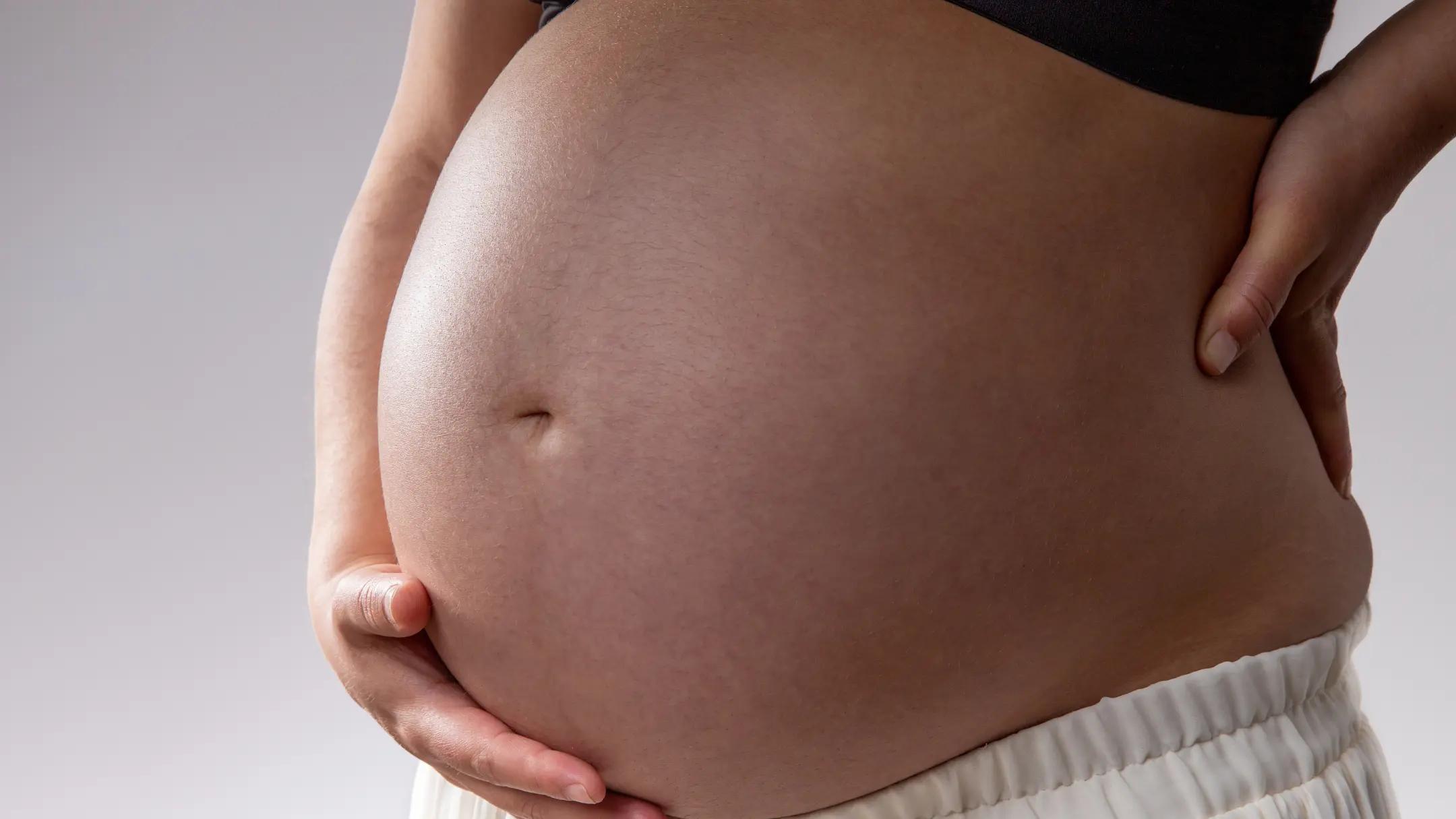
Lower back hurts while pregnant? You're not alone. Discover expert tips, gentle treatments, and home care strategies to ease pregnancy back pain.
You are seven months pregnant. You stand up from the couch and there is a sharp catch in your lower back that was not there last week. Rolling over in bed at 3 a.m. now requires a plan. Putting on socks is a small negotiation. Someone tells you again that back pain is "just part of being pregnant." You are grateful for the sympathy, and you are also exhausted, and you know something is not right.
If any of that sounds familiar, you are not alone, and you are not imagining it. Pregnancy is a demanding physical event, and lower back pain is one of the most common ways your body tells you it needs some care. It is also one of the most treatable, once the right people look at what is actually going on.
This article walks through what pregnancy-related lower back pain actually is, why it happens, what the research honestly shows about relief and treatment, and how we approach it at Unpain Clinic in Edmonton, both during pregnancy and in the months after delivery. It also covers what you can safely do at home while you figure out your next step.
KEY TAKEAWAYS
- Lower back pain during pregnancy is very common. The large systematic review and meta-analysis in BMC Pregnancy and Childbirth estimated a global prevalence of about 40 percent overall, rising to nearly 48 percent in the third trimester. Common does not mean acceptable.
- Pregnancy back pain has two main patterns: lumbar low back pain (in the mid-lower spine) and pelvic girdle pain (in the sacroiliac joints, the pubic bone, or both). Many pregnant people have a mix of both. Sorting out which is dominant matters, because it changes the treatment plan.
- The 2015 Cochrane review of interventions for preventing and treating low-back and pelvic pain during pregnancy concluded that exercise programs, education, and appropriate support belts are the interventions with the strongest evidence. Manual therapy fits as a useful adjunct.
- During pregnancy, treatment should stay within the safe, evidence-based scope: exercise therapy, manual therapy, education, ergonomic support, and (in specific cases) a maternity support belt. Shockwave therapy, electromagnetic transduction therapy, and most electrical modalities are contraindicated during pregnancy and are not used until after delivery, when appropriate medical clearance has been given.
- Some causes of lingering postpartum back pain (including scar-related dysfunction after a Cesarean section) can be worth investigating in the months after delivery. Certain therapies that were not used during pregnancy become options at that point.
- A proper physiotherapy assessment tailored to pregnancy is the fastest way to get a plan that fits your specific presentation. In Alberta, no referral is required to see a physiotherapist.
IN THIS ARTICLE
- Why does my lower back hurt during pregnancy?
- Is it lumbar low back pain or pelvic girdle pain, and does it matter?
- How common is it, and who is most at risk?
- When should I be worried about pregnancy back pain?
- What does the research say about relief and treatment?
- How does treatment for pregnancy back pain work at Unpain Clinic Edmonton?
- What can you safely do at home?
- Frequently asked questions

WHY DOES MY LOWER BACK HURT DURING PREGNANCY?
Pregnancy is one of the most demanding mechanical events a body goes through. The changes are fast, layered, and cumulative, and the lower back sits at the crossroads of most of them.
Weight and centre-of-gravity shift. Over about nine months, you carry an additional 10 to 15 kilograms of weight in the front of your body, most of it concentrated between your pubic bone and your ribs. Your centre of gravity moves forward and slightly upward. To keep you balanced and upright, your body adjusts your posture, usually by increasing the curve in your lower back. That increased lordosis puts more load on the lumbar facet joints, the discs, and the muscles that stabilise the spine.
Hormonal effects on ligaments. From early in the first trimester, your body produces relaxin and other hormones that soften and loosen the ligaments throughout your pelvis, spine, and lower body. This is essential for delivery. It also means the joints that normally hold your pelvis stable, including the two sacroiliac joints at the back and the pubic symphysis at the front, become more mobile than they were before. More mobility means the surrounding muscles have to do more work to keep everything aligned, and that extra muscular work is often felt as back or hip pain.
Muscle length and activation changes. As the abdomen expands, the deep and superficial abdominal muscles stretch. Stretched muscles do not contract as efficiently, which reduces the abdominal wall's ability to support the spine. At the same time, the low back muscles and glutes often become tight or short in response to the postural changes. The result is a common pattern: overworked low back, underactive deep core, and glutes that struggle to fire the way they should.
Cumulative daily loading. Long standing, long sitting, repeated bending to care for other children, lifting groceries, uneven mattresses, and sleep positions that were fine before pregnancy but now compress the low back all add small doses of stress that compound over weeks.
None of these factors is a single cause. Pregnancy back pain is almost always a combination of them, and the specific combination is different for every person.
IS IT LUMBAR LOW BACK PAIN OR PELVIC GIRDLE PAIN, AND DOES IT MATTER?
Two main pain patterns show up during pregnancy. Sorting out which one is dominant is the first thing a good assessment does, because the plan is different.
Lumbar low back pain sits in the mid-lower back, around the waist, usually spanning both sides of the spine or centring in one region of it. It often feels like a dull ache that worsens with prolonged standing, sitting, or lifting, and improves when you change position. This pattern is what most people picture when they hear "back pain."
Pelvic girdle pain sits lower and further out to the sides. The two most common locations are the sacroiliac joints (the two dimples at the top of the buttocks, on either side of the spine) and the pubic symphysis (the bony joint at the front of the pelvis). Pelvic girdle pain often has a sharp, catching quality with specific movements: getting out of a car, rolling over in bed, climbing stairs, standing on one leg to put on pants, or walking after sitting for a while. It can radiate into the buttock, groin, or the front of the thigh.
Many pregnant people have both. In clinical practice, pelvic girdle pain is at least as common as pure lumbar pain during pregnancy, and it responds best to a specific set of strategies (targeted stabilising exercises, sacroiliac joint mobilisation, pelvic support belt in some cases) that differ from a generic low back protocol.
The clinical review of pregnancy low back pain and pelvic girdle pain in the Journal of the American Academy of Orthopaedic Surgeons is a useful summary of how the two are differentiated in orthopaedic practice.
The reason this distinction matters: a plan that treats a pelvic girdle presentation as if it were lumbar (by focusing on general low back stretching, for instance) tends to underdeliver. A plan that identifies the pelvis as the driver, and stabilises it, tends to work.
HOW COMMON IS IT, AND WHO IS MOST AT RISK?
Very common. The systematic review and meta-analysis in BMC Pregnancy and Childbirth pooled 28 studies covering nearly 13,000 pregnant people and reported a global prevalence of low back pain during pregnancy of about 40 percent, with the rate climbing across trimesters: roughly 28 percent in the first trimester, 37 percent in the second, and 48 percent in the third. Some individual studies report even higher rates when both low back and pelvic pain are counted together.
Two things follow from this. First, if you are dealing with pregnancy back pain, you are in the majority, not a minority. Second, common does not mean acceptable. High prevalence is not a reason to normalise the pain or to accept limitation of your daily life during a demanding physical time.
Certain factors raise the risk of significant pregnancy back pain.
A prior history of low back pain, before or in a previous pregnancy, is one of the strongest predictors. If your back was already sensitive, pregnancy tends to amplify what was there.
Prior pelvic girdle pain, particularly in a previous pregnancy, is a strong predictor of pelvic girdle pain in the current pregnancy.
Increased maternal age and having had multiple prior pregnancies both correlate with a higher rate of pregnancy back pain in most cohort studies.
Higher body mass index and rapid weight gain during pregnancy add mechanical load and are associated with more pain.
Occupational demands matter. Long hours on your feet, repetitive bending, or heavy lifting during pregnancy increase the odds of significant pain.
A pre-existing spinal condition (a substantial scoliosis, a history of disc problems, prior spine surgery) can change how pregnancy loads the back and often warrants earlier physiotherapy involvement.
WHEN SHOULD I BE WORRIED ABOUT PREGNANCY BACK PAIN?
Most pregnancy back pain is mechanical and, while genuinely uncomfortable, does not signal an emergency. There are a small number of scenarios that need urgent medical attention rather than physiotherapy. These are worth knowing.
Contact your maternity provider or seek urgent medical care if you experience any of the following:
- Back pain accompanied by fever, chills, or burning during urination. This combination can indicate a kidney infection, which is more common during pregnancy and needs prompt treatment.
- Rhythmic back pain that comes in waves, especially before your due date. This can be a sign of preterm labour.
- Back pain with vaginal bleeding, unusual discharge, or a gush of fluid.
- Sudden severe back pain after a fall or specific event, especially if you cannot move normally.
- Weakness, numbness, or tingling in one or both legs that is new, worsening, or affecting your ability to walk. Rarely, this can indicate nerve compression that needs urgent assessment.
- Loss of bladder or bowel control.
If you have any of these, this article is not the right first step. Your obstetrician, midwife, or emergency department is.
For everything else (mechanical low back pain, sacroiliac pain, pubic pain, muscle tightness, difficulty sleeping because of pain), a proper physiotherapy assessment tailored to pregnancy is a reasonable and safe next step.
WHAT DOES THE RESEARCH SAY ABOUT RELIEF AND TREATMENT?
The evidence base for pregnancy-related back and pelvic pain is one of the more mature bodies of research in musculoskeletal care. Several international reviews converge on the same core set of recommendations.
Exercise therapy is the treatment with the strongest and most consistent evidence.
The Cochrane review of interventions for preventing and treating low-back and pelvic pain during pregnancy by Liddle and Pennick synthesised the available randomised trials. The conclusions are what current international clinical guidelines are built on: exercise programs designed for pregnancy reduce pain and improve function compared with usual care, and both land-based and water-based exercise have supportive evidence. The effect sizes are described as small to moderate in the statistical sense, which in patient terms means many pregnant people notice meaningful improvement in what they can comfortably do day to day.
More recent evidence has continued to support this. The systematic review and meta-analysis of stabilising exercises in the British Journal of Sports Medicine reinforces the value of exercise programs that specifically target the muscles that support the pelvis and lumbar spine (the deep abdominals, the pelvic floor, the multifidus, and the glutes), both during pregnancy and in the postpartum period.
The types of exercise that have been studied include deep core activation, pelvic floor engagement, glute and hip strengthening, general low-impact aerobic activity (walking, stationary cycling, aquatic exercise), and prenatal yoga or Pilates modified for pregnancy. No single protocol has emerged as superior. What matters is that the program is individualised, progresses appropriately, and is done consistently.
Education and reassurance matter more than they get credit for.
The Cochrane review and multiple clinical guidelines highlight that structured education (understanding the anatomy, the safe movements, the reasons for symptoms, and the expected trajectory) reduces pain and functional impact even outside of formal exercise. Fear of movement makes pain worse. Confidence in movement makes pain better. Both effects are large.
Maternity support belts have moderate evidence for specific presentations.
A well-fitted maternity support belt can meaningfully reduce pain for some pregnant people, particularly those with pelvic girdle pain or symphysis pubis dysfunction. The evidence is not uniform: some trials show clear benefit, others show only modest effects, and support belts are not a stand-alone solution. In practice, they earn their place as an adjunct: worn during activities that flare pain, discontinued when they do not help, and fitted correctly (a physiotherapist can check this).
Manual therapy is a supportive adjunct with mixed direct evidence.
Hands-on physiotherapy techniques, including gentle sacroiliac joint mobilisation, soft-tissue work on tight muscles around the pelvis and low back, and myofascial techniques, have mixed direct evidence as stand-alone treatments in the pregnancy literature. In clinical practice, they earn their place by improving joint mobility and reducing muscle guarding enough to make the core exercise plan easier to progress. That is the reasonable use of manual therapy in pregnancy: not a stand-alone fix, but a way to unlock progress in the plan that has stronger evidence.
Acupuncture has some supportive evidence and should be delivered by a practitioner experienced in pregnancy.
Some trials have found acupuncture reduces pregnancy-related pelvic girdle and low back pain. Practitioner experience with pregnant clients is important because there are specific points and techniques that are avoided during pregnancy for safety reasons.
Water-based exercise (aquafit) has particular value in later pregnancy.
The buoyancy of water offloads the lumbar spine and pelvis, which allows for movement that would otherwise be painful on land. Aquatic exercise is safe throughout uncomplicated pregnancy and is often the modality that pregnant people with significant pain can still tolerate in the third trimester.
What the evidence does not support during pregnancy.
Extracorporeal shockwave therapy, electromagnetic transduction therapy, and most electrical modalities have not been studied for use during pregnancy and are contraindicated by their manufacturers and by standard clinical guidelines. These treatments have legitimate roles in postpartum musculoskeletal care but are not used while you are pregnant. Any clinic that offers them to a pregnant patient is stepping outside standard practice.
The scientific consensus is straightforward. During pregnancy, the treatments that work are the ones you can safely do: exercise, education, manual therapy as an adjunct, appropriate support garments, and (where needed) modalities like acupuncture from a pregnancy-experienced practitioner. That is where the evidence points, and that is where a good plan should focus.
"The most important message I can give a pregnant patient with back pain is that this is not just something to tough out. There is a genuine, well-studied plan that helps: the right exercises for your specific pattern, the right hands-on work to make those exercises easier to do, education so you know what is safe and what to avoid, and, where it fits, a support belt worn correctly. The tools we use during pregnancy are deliberately conservative. The tools we can bring in after delivery, once you are cleared, are broader. Both stages of care are worth doing well, because both stages shape how you feel a year from now." Uran Berisha, Founder of Unpain Clinic and Medical Shockwave Institute

HOW DOES TREATMENT FOR PREGNANCY BACK PAIN WORK AT UNPAIN CLINIC EDMONTON?
Your first appointment is a 60-minute physiotherapy assessment. On that first visit we are not starting treatment. We are figuring out what is actually driving your pain, sorting lumbar from pelvic girdle contributions, checking that nothing needs a physician referral first, and building a plan that fits your specific pregnancy.
The assessment includes a full history (how the pain started, how it has changed, what you have already tried, what your obstetrician or midwife has advised, any prior back or pelvic pain), a targeted physical exam adapted to pregnancy (comfortable positioning, no lying flat on the back after the first trimester), specific tests to identify sacroiliac and pubic joint contributions, an assessment of core and pelvic floor engagement, and screening for anything that would need urgent medical review.
At the end of the assessment, you get a clear explanation of what is driving your pain, a personalised plan, and a straight answer on realistic timelines. Meaningful improvement is typically felt within two to four weeks of consistent care in most pregnancy presentations, with continued gains as the plan progresses. Some patients feel meaningfully better after the first session.
Treatment during pregnancy is built around a small, deliberately conservative set of tools.
Progressive, pregnancy-safe exercise is the foundation. Deep core activation done in positions that are safe throughout pregnancy. Pelvic floor engagement (with referral to a pelvic health physiotherapist where that is what fits best). Glute and hip strengthening. Postural work for the upper back and shoulders as the front load increases. Gentle mobility and stretching for the parts that get tight.
Manual therapy is used to make the exercise plan possible. Sacroiliac joint mobilisation for a joint that is not moving well. Soft-tissue work for tight glutes, hip flexors, low back musculature, and around the pubic symphysis where appropriate. Positioning during hands-on work is adapted to pregnancy: side-lying, seated, or in a specific supported position rather than flat on the back or belly.
Support belt fitting and load management. Where a maternity support belt is likely to help, we fit it in person, show you when to wear it and when to take it off, and adjust it as your pregnancy progresses.
Education and safe movement coaching. How to get in and out of bed, in and out of the car, and up from the floor without flaring your back. How to lift the toddler or the grocery bags without stacking load on your spine. Which sleep positions and pillow arrangements protect your pain pattern.
Coordination with your maternity team. If we identify something that needs your obstetrician's or midwife's attention, we tell you directly. We do not work in isolation from your maternity care; we work alongside it.
What we do not use during pregnancy.
Shockwave therapy, electromagnetic transduction therapy, and electrical stimulation modalities are contraindicated during pregnancy. We do not use them on any part of your body while you are pregnant. This is not a limitation of our care; it is standard practice, and it protects you.
The postpartum window is when the broader toolkit opens up.
After delivery, once you have had appropriate medical clearance (typically at your six-week postpartum check or later, depending on your delivery and recovery), a wider set of treatment options becomes available. This is often when we bring in focused shockwave therapy or radial shockwave therapy for specific presentations. Persistent postpartum low back or pelvic pain, residual sacroiliac dysfunction, and tightness in the muscles that were loaded through pregnancy are all things that can respond to shockwave when the timing is right.
There is one specific postpartum consideration worth mentioning. Cesarean section leaves an abdominal scar, and scar tissue in the abdominal wall can alter how the deep core muscles function in the months and years after delivery. Some clinicians observe that focused shockwave therapy applied to a well-healed Cesarean scar can influence tissue mobility and improve core activation in patients who have persistent postpartum back pain. This is clinical observation more than randomised evidence, and it is something we discuss honestly with patients: it is worth considering in the right presentation, it is not a first-line treatment, and any decision to treat over an abdominal scar is made after appropriate medical clearance and only well after delivery.
Most pregnancy treatment plans run in short blocks of care through the trimester, with review as your pregnancy progresses and your body changes. Postpartum care is a separate conversation and we schedule it when you and your maternity team feel the timing is right.
The dedicated pregnancy back pain service page has more detail on how care is structured across pregnancy and the postpartum period.

WHAT CAN YOU SAFELY DO AT HOME?
This is general education, not individual medical advice, and results vary. If your pain is worsening, waking you at night consistently, or accompanied by any of the red flags listed earlier, please speak to your maternity provider before adopting any home program.
Mind your posture during long standing and sitting.
Try not to lock your knees when standing for a long time. If you are standing (in a checkout line, at a counter, waiting somewhere), gently shift weight between feet or rest one foot on a low step or box for a couple of minutes at a time to reduce the arch in your low back. When sitting, use a small rolled towel or lumbar cushion behind your low back so the chair supports the curve rather than letting you slump.
Adjust how you sleep.
Side-lying is the recommended position from mid-pregnancy onward. A pillow between your knees keeps your top hip from dropping and reduces rotational strain on the pelvis and lower back. A small pillow or rolled towel under your belly can support the front. A pillow or wedge behind your back can stop you from rolling flat. A medium-firm mattress usually offers a good balance of support and comfort. If your current mattress is very soft and you are waking sore, a firm topper can help without the cost of a new mattress.
Use heat before activity and, if it helps, ice after a flare.
A warm (not hot) heating pad on your lower back for 15 to 20 minutes can help muscles loosen up before a walk or before you get out of bed in the morning. Avoid prolonged heat that would raise your core body temperature. A wrapped ice pack for 10 to 15 minutes can help settle a flare-up. Neither of these changes the underlying pattern, but both are useful tools.
Keep moving in ways your body tolerates.
Complete rest is not the answer. It usually makes pregnancy back pain worse. Gentle daily walking, aquatic exercise if you have access to a pool, and pregnancy-safe mobility work (cat-cow on hands and knees, gentle standing pelvic tilts, child's pose modified for your belly) keep the tissues in good condition and reduce pain over time. If a specific activity flares your pain sharply, that is information to bring to your physiotherapy assessment, not necessarily a reason to stop moving altogether.
Try a maternity support belt if it fits your pattern.
A well-fitted maternity belt can meaningfully reduce pain for people with pelvic girdle pain or general low back pain during long standing or walking. Wear it during the activities that flare your pain, take it off when you are seated or resting, and ask your physiotherapist or maternity provider to check the fit if you are unsure. If a belt does not help you within a few days of trying it, it is not the right tool for your pattern.
Move well when you lift and change position.
When you get up from lying down, roll to your side first and push up from your side rather than sitting straight up. When you lift something (a grocery bag, a toddler), bend at the hips and knees rather than at the back, keep the object close to your body, and exhale as you lift. When you get in and out of the car, sit sideways on the seat first, then swing both legs together in or out to avoid twisting through the pelvis.
Stay hydrated and eat regularly.
Dehydration and low blood sugar both increase muscle irritability and can add to a pain pattern that already has plenty of reasons to be there. Neither is a treatment for back pain on its own, but both remove background noise that makes pain worse.
Do not use pain medication without asking your maternity provider.
Non-steroidal anti-inflammatory drugs (ibuprofen, naproxen, and similar) are generally avoided during pregnancy, particularly after 20 weeks, unless specifically directed by your physician. Acetaminophen is often used but should be discussed with your maternity provider. Any medication decision belongs to your physician, not to this article.

FREQUENTLY ASKED QUESTIONS
Is lower back pain a normal part of pregnancy?
Lower back pain is very common in pregnancy, with roughly 40 percent of pregnant people affected overall and closer to half in the third trimester. Common is not the same as acceptable. If your pain is interfering with sleep, work, exercise, or daily life, that is worth addressing. A proper physiotherapy assessment tailored to pregnancy can identify what is driving the pain and give you a plan that fits your specific presentation.
What is the difference between pregnancy low back pain and pelvic girdle pain?
Low back pain sits in the mid-lower spine, around the waist, and tends to be a dull ache that worsens with prolonged standing or sitting. Pelvic girdle pain sits lower and further out, most often at the sacroiliac joints at the back of the pelvis or at the pubic bone at the front, and tends to have a sharp, catching quality with specific movements like getting out of a car, rolling in bed, or climbing stairs. Many pregnant people have both. The distinction matters because pelvic girdle pain responds best to a specific set of stabilising strategies that a general low back protocol does not include.
Is shockwave therapy safe during pregnancy?
No. Extracorporeal shockwave therapy is contraindicated during pregnancy and is not used on any part of the body while you are pregnant. This is standard practice, and it protects you and your baby. Shockwave therapy has legitimate roles in postpartum musculoskeletal care and can be considered once you have had appropriate medical clearance after delivery.
Can I still exercise if I have back pain during pregnancy?
Yes, in most cases, with the right modifications. The evidence is clear that exercise therapy reduces pregnancy-related low back and pelvic girdle pain. Complete rest usually makes the pain worse. What matters is that the exercises fit your specific pattern, that they are safe for your stage of pregnancy, and that they progress appropriately as your body changes. A physiotherapist experienced with pregnancy can build the right program for you.
When is the best time in pregnancy to see a physiotherapist for back pain?
Any point at which pain is affecting your daily life is a good time. In practice, most pregnant people wait until the pain has become significant, often in the second or third trimester. Earlier assessment tends to produce better outcomes, particularly if you have a history of back or pelvic pain from a previous pregnancy. In Alberta, no referral is required to see a physiotherapist, and there is no reason to wait until things are severe.
Will my back pain go away after I give birth?
For many people, yes, particularly if it was primarily mechanical and pregnancy-related. For some, low back or pelvic pain persists after delivery, especially if the underlying muscular and joint contributions have not been fully addressed. Ongoing postpartum pain is treatable, and it is worth addressing rather than accepting. Postpartum is often when a broader set of treatment options becomes available, since the restrictions of pregnancy no longer apply.
I had a Cesarean section and my back pain never fully resolved. Could my scar be involved?
It is a reasonable question to consider. Some clinicians observe that scar tissue after a Cesarean section can affect how the abdominal wall and deep core muscles function, and that this altered core mechanic can contribute to persistent postpartum low back pain in some patients. The direct randomised evidence for treating C-section scars to resolve back pain is limited, but this is a specific presentation that is worth assessing in patients whose postpartum back pain has not responded to standard care. Any decision to treat over an abdominal scar is made after appropriate medical clearance and well after delivery.
When should I stop self-managing and book a physiotherapy assessment?
If your pain is affecting your sleep or your ability to do what you need to do, if home strategies are not helping after a couple of weeks, if the pain is worsening rather than settling, or if you have a history of back or pelvic pain from a previous pregnancy that has returned, that is the point where a proper assessment is likely to save you time and unnecessary discomfort. If any of the red-flag symptoms listed earlier appear, contact your maternity provider directly rather than starting with physiotherapy.
PATIENT TESTIMONIAL
“Fantastic results!! I was skeptical with Uran at first but he was right on the money. Very knowledgeable and honest. My lower back has been pain free for 2 years thanks to the Unpain Clinic! Numerous friends have now also been helped, what a blessing! Uran rocks!!!!”- Sheldon Frissell
ABOUT THE AUTHOR
Written by Uran Berisha, Founder of Unpain Clinic and Medical Shockwave Institute. Uran has a Bachelor of Science in Physiotherapy and is an International Educator in Shockwave Therapy. Medically reviewed by Uran Berisha. Learn more about the clinic at Unpain Clinic.
BOOK YOUR INITIAL ASSESSMENT
If pregnancy back pain has been affecting your sleep, your work, or your day, the next step is a 60-minute physiotherapy assessment at Unpain Clinic Edmonton. The assessment identifies what is driving your pain right now, sorts out the lumbar and pelvic contributions, screens for anything that would need a physician referral first, and lets you leave with a clear, specific, pregnancy-safe plan. No referral is required to see a physiotherapist in Alberta. Book your initial assessment with Unpain Clinic.
WHAT WE DO NOT OFFER
We do not use shockwave therapy, electromagnetic transduction therapy, or electrical modalities on pregnant patients under any circumstance. We do not perform corticosteroid injections, prescribe medications, or provide obstetric care. We do not deliver structured weight-management programs. If your presentation suggests preterm labour, a kidney or bladder infection, nerve compression, or anything requiring urgent medical evaluation, we will tell you plainly and direct you to your maternity provider or emergency department. Postpartum care, including a wider set of treatment options, is a separate conversation and is scheduled once you have appropriate medical clearance from your maternity team.
REFERENCES
- Casagrande D, Gugala Z, Clark SM, Lindsey RW. Low back pain and pelvic girdle pain in pregnancy. Journal of the American Academy of Orthopaedic Surgeons. 2015;23(9):539-549. doi:10.5435/JAAOS-D-14-00248. PMID: 26314485. https://pubmed.ncbi.nlm.nih.gov/26314485/
- Liddle SD, Pennick V. Interventions for preventing and treating low-back and pelvic pain during pregnancy. Cochrane Database of Systematic Reviews. 2015;(9):CD001139. doi:10.1002/14651858.CD001139.pub4. PMID: 26422811. PMCID: PMC7053516. https://pubmed.ncbi.nlm.nih.gov/26422811/
- Ruchat SM, Beamish N, Pellerin S, Usman M, Dufour S, Meyer S, Sivak A, Davenport MH. Effect of exercise on pregnancy- and postpartum-related low back and pelvic girdle pain: a systematic review and meta-analysis. British Journal of Sports Medicine. 2025;59(8):594-604. doi:10.1136/bjsports-2024-108488. PMID: 39922568. https://pubmed.ncbi.nlm.nih.gov/39922568/
- Salari N, Mohammadi A, Hemmati M, Hasheminezhad R, Kani S, Shohaimi S, Mohammadi M. The global prevalence of low back pain in pregnancy: a comprehensive systematic review and meta-analysis. BMC Pregnancy and Childbirth. 2023;23(1):830. doi:10.1186/s12884-023-06151-x. PMID: 38042815. PMCID: PMC10693090. https://pubmed.ncbi.nlm.nih.gov/38042815/
Related Topics