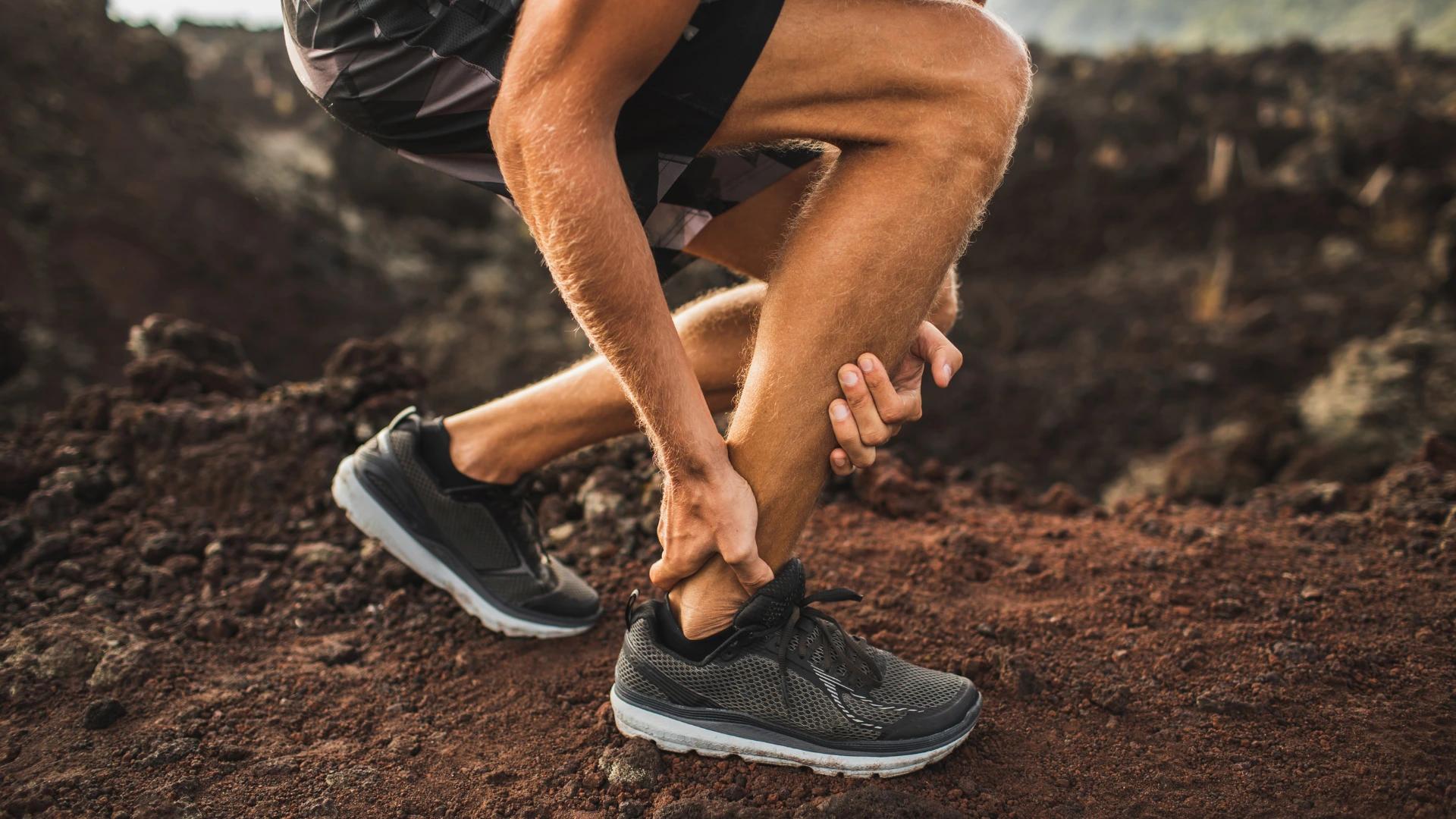
Learn how Unpain Clinic treats Achilles tendinopathy (Achilles tendinitis) using evidence-based care like shockwave therapy, exercise, and manual treatment.
There is a specific sequence of sensations that will tell you exactly what you are dealing with before any imaging can. Get out of bed. Take the first few steps toward the bathroom. Feel that tight, catchy, resistant pull at the back of your ankle. Wait for it to loosen up after five or ten minutes of walking around. Then feel it come back, deeper and duller, later in the day after you have been on your feet.
That is the calling card of Achilles tendinopathy. And if you have been experiencing some version of it for weeks, or months, or longer, you are in one of the most crowded rooms in musculoskeletal medicine. Achilles tendon problems are among the most common lower-limb overuse injuries in adults, and they are also one of the most misunderstood, because the story most people are told at the start (rest it, ice it, wait for it to settle) does not match how tendons actually recover.
This article walks through what Achilles tendinopathy actually is, why it hurts, what the research says works, and how we treat it at Unpain Clinic in Edmonton. It also covers what you can safely start doing at home while you figure out your next step.
KEY TAKEAWAYS
- Achilles tendinopathy is an overuse condition of the Achilles tendon. In its chronic phase, the tissue is more degenerative than inflamed, which is why anti-inflammatory strategies alone tend to underwhelm.
- There are two main types. Midportion Achilles tendinopathy sits about 2 to 6 cm above the heel and is the most common form. Insertional Achilles tendinopathy sits right where the tendon attaches to the heel bone, and it needs a slightly different loading approach.
- The strongest evidence for recovery is a progressive tendon-loading exercise program. The living systematic review with network meta-analysis of 29 randomised controlled trials for Achilles tendinopathy published in the British Journal of Sports Medicine supports exercise therapy as the most effective first-line intervention.
- The current JOSPT Clinical Practice Guideline for midportion Achilles tendinopathy recommends tendon loading exercise with loads as high as tolerated as the first-line treatment.
- Shockwave therapy is an evidence-supported adjunct that works best when combined with progressive loading, particularly in cases that have plateaued. The randomised controlled trial by Rompe and colleagues in the American Journal of Sports Medicine found that eccentric loading combined with shockwave therapy outperformed eccentric loading alone for midportion Achilles tendinopathy.
IN THIS ARTICLE
- What is Achilles tendinopathy, and why does it hurt?
- What are the two main types of Achilles tendinopathy?
- What actually causes Achilles tendinopathy?
- What does the research say about treatment for Achilles tendinopathy?
- How does treatment for Achilles tendinopathy work at Unpain Clinic Edmonton?
- What can you safely do at home?
- Frequently asked questions

WHAT IS ACHILLES TENDINOPATHY, AND WHY DOES IT HURT?
The Achilles is the biggest and strongest tendon in the human body. It connects the calf muscles (gastrocnemius and soleus) to the heel bone, and every time you take a step, run, jump, or push off the ground, the Achilles is doing the heavy lifting. It routinely handles loads several times your body weight without complaint.
Right up until the moment it cannot. And here is the part that surprises most people.
Achilles tendinopathy used to be called Achilles tendinitis, and for a long time it was assumed to be an inflammatory condition. Modern research has changed that picture substantially. In the chronic phase (which is what most people mean when they say "my Achilles has been bothering me for months"), the tissue does not look inflamed under a microscope. It looks degenerative. Collagen fibres that used to run in neat parallel bundles look frayed and disorganised. Small blood vessels have grown into areas of the tendon where they do not normally sit. The tendon is often thickened. Nerves have grown along with those new blood vessels, which contributes to the pain sensitivity. This is why the condition is now called tendinopathy rather than tendinitis. The pathology is not really about active inflammation. It is about a tendon that has been loaded past its capacity to repair, over and over, until the tissue quality has changed.
The practical implication is important. If the problem were pure inflammation, resting it and taking anti-inflammatories would fix it. That is not what usually happens. What usually happens is that rest reduces the pain in the short term, and then the pain comes back as soon as normal activity resumes, because the tissue underneath has not been rebuilt. Rebuilding the tissue takes graded, progressive, tolerable loading over time. This is the single most important concept in Achilles tendinopathy management and it is what the current clinical practice guidelines are built around.
The classic symptom pattern reflects the biology. Morning stiffness that eases with movement (the tendon takes a few minutes of gentle loading to warm up). Sharper pain with pushing off the ground, going up stairs, running, jumping. Tenderness when you squeeze the tendon between your fingers. Sometimes a visible thickening at the sore spot compared to the other side.
WHAT ARE THE TWO MAIN TYPES OF ACHILLES TENDINOPATHY?
There are two clinical patterns that matter, because the treatment plan differs slightly for each.
Midportion Achilles tendinopathy is the more common of the two. The pain sits about 2 to 6 cm above the heel, in the main body of the tendon. When you feel it with your fingers, you can usually pick out a tender spot in the middle third of the tendon, and sometimes a visible or palpable thickening. This is the pattern most commonly seen in runners, active adults, and people whose activity levels have ramped up faster than the tendon could adapt.
Insertional Achilles tendinopathy sits right where the tendon attaches to the heel bone. The pain is at the back of the heel rather than higher up the tendon, and it often shows up with a small bony bump at the heel (sometimes called a Haglund's deformity) or a bone spur at the tendon's attachment. Insertional cases are less common than midportion but they respond differently to treatment. Specifically, the standard eccentric heel-drop exercise (where you drop your heel down below the level of a step) can flare insertional pain because it compresses the tendon against the back of the heel bone at the bottom of the range. For insertional cases, the loading exercises are modified so the heel does not drop below level ground.
A physiotherapy assessment can usually distinguish the two by history and hands-on examination, without needing imaging as a first step. Imaging is reserved for cases where the picture is unclear or where a more serious issue (a partial tendon tear, for example) needs to be ruled out.

WHAT ACTUALLY CAUSES ACHILLES TENDINOPATHY?
The short answer is load in excess of capacity. Something changed in what the tendon was being asked to do, and the tissue was not ready for it. In practice, there is usually a mix of contributors rather than one single cause, and identifying which mix applies to you is a big part of what a good assessment is doing.
The most common triggers are changes in activity. A jump in weekly running mileage. A block of hill running when you had been mostly on the flats. A new job or hobby that has you on your feet more than you used to be. A new training program that increased volume or intensity too quickly. A return to sport after a break, without a gradual build-back phase.
Then there are contributors that make the tendon more vulnerable to a given load. Tight calves and limited ankle dorsiflexion are common ones, because they change how the foot rolls through each step and how much the tendon has to stretch and store energy. Weak hips or glutes shift more of the workload down to the lower leg. Worn-out or unsupportive footwear can change the load pattern. Body-weight changes can raise the daily load on the tendon in a way that shows up over weeks.
There are also systemic and age-related factors. Tendons become slightly less resilient with age, so people in their forties, fifties, and beyond can find that a training load that used to be tolerable is now too much. Metabolic conditions such as diabetes and elevated cholesterol are associated with a higher risk of tendinopathy. Certain medications, most notably fluoroquinolone antibiotics, are associated with Achilles tendon problems and should be discussed with a physician if this is a factor.
None of these things individually is the cause. They are the ingredients that combine to push the tendon over its adaptive threshold. Once that happens, the tissue starts to change, and the pain shows up as a signal that the tendon is asking you to change something about the load. Which is why the first goal of treatment is not to make the pain go away in a hurry. It is to give the tendon a rebuild plan.
WHAT DOES THE RESEARCH SAY ABOUT TREATMENT FOR ACHILLES TENDINOPATHY?
The evidence base for Achilles tendinopathy is now substantial, and it is one of the areas of musculoskeletal medicine where the research clearly points in a specific direction. The direction is progressive loading first, adjuncts second, and passive-only treatments last.
Progressive tendon loading is the number-one first-line treatment.
The classic loading protocol for midportion Achilles tendinopathy is the heavy eccentric heel-drop program described by Alfredson and colleagues in the American Journal of Sports Medicine. Patients did slow, heavy heel drops from a step, with the affected leg, twice a day for twelve weeks. The results in that original trial were striking, and versions of the Alfredson protocol have been the reference standard ever since.
Newer research has expanded the options. The heavy slow resistance protocol tested by Beyer and colleagues in the American Journal of Sports Medicine uses fewer sessions per week with heavier resistance and slower tempo, and it produced similar clinical outcomes to eccentric loading with better patient satisfaction and adherence. Whether you choose eccentrics, heavy slow resistance, or a combination, the principle is the same: progressive tendon loading, done consistently over months, remodels the tendon and restores its capacity.
The overall picture is captured by the living systematic review with network meta-analysis of 29 randomised controlled trials for Achilles tendinopathy in the British Journal of Sports Medicine, which pooled treatments across the evidence base and concluded that exercise therapy and combinations that include exercise therapy provide the strongest outcomes. The current JOSPT Clinical Practice Guideline for midportion Achilles tendinopathy is aligned with this and recommends that clinicians use tendon loading exercise, with loads as high as tolerated, as first-line treatment.
Shockwave therapy is a well-supported adjunct.
Extracorporeal shockwave therapy (ESWT) uses acoustic waves delivered through a handpiece to stimulate the local biology of tissue repair. It has been studied in Achilles tendinopathy since the mid-2000s, and the evidence has held up.
The randomised controlled trial by Rompe and colleagues in the American Journal of Sports Medicine compared eccentric loading, low-energy shockwave therapy, and a wait-and-see approach in patients with chronic midportion Achilles tendinopathy. Both eccentric loading and shockwave therapy substantially outperformed wait-and-see. Neither one clearly beat the other at four months. That is a useful finding on its own, because it shows shockwave was at least as effective as the reference-standard exercise protocol.
The follow-up Rompe randomised controlled trial compared eccentric loading alone with eccentric loading plus shockwave therapy for the same condition. The combination outperformed eccentric loading alone. This is the finding that most guides how we use shockwave clinically. It is not a stand-alone treatment. It is a way to accelerate and support the loading program, particularly in cases that have stalled or that are dealing with long-standing symptoms.
For insertional Achilles tendinopathy, the picture is slightly different. Insertional cases do not respond as well to the classic eccentric heel-drop program (because the drop below the step compresses the tendon against the heel bone). A separate Rompe randomised controlled trial in the Journal of Bone and Joint Surgery compared eccentric loading with shockwave therapy specifically for insertional Achilles tendinopathy, and in that trial, shockwave outperformed eccentric loading. This is one of the reasons insertional cases often benefit from shockwave earlier in the treatment plan than midportion cases.
Manual therapy, EMTT, and other supporting treatments.
Manual therapy for the calf (soft-tissue release, joint mobilisation of the ankle when it is stiff) is not a stand-alone treatment for Achilles tendinopathy, but it can make the loading program more comfortable to progress and can address ankle stiffness that is contributing to the tendon overload. In our experience, this is where these adjuncts belong: as tools that support the primary treatment, not as the primary treatment.
EMTT (Extracorporeal Magnetotransduction Therapy) is a pulsed electromagnetic field modality that we sometimes use alongside shockwave in chronic cases. The evidence base is smaller than for shockwave, but the treatment is non-invasive and painless, and it complements shockwave in cases where broader tissue coverage is useful.
Injections (corticosteroid, PRP) sit in a more contested space. Corticosteroid injections into the Achilles tendon carry a real risk of tendon rupture and are generally avoided in this region. PRP has been studied and the results are mixed. These are decisions for a physician if they come up.
"The single most useful thing I can tell a new patient with Achilles tendinopathy is that the tendon does not need to be rested. It needs to be loaded. Not overloaded, not aggravated, but loaded in a way that is tolerable, progressive, and consistent. That is what remodels the tissue, and that is what holds. Shockwave, manual therapy, EMTT: all of that is there to support the loading program, not to replace it." Uran Berisha, PT, RMT, Founder of Unpain Clinic, International Educator in Shockwave Therapy

HOW DOES TREATMENT FOR ACHILLES TENDINOPATHY WORK AT UNPAIN CLINIC EDMONTON?
Your first appointment is a 60-minute physiotherapy assessment. The goal on that first visit is not to start treatment. It is to figure out what is actually going on and why it is not resolving on its own.
That means a full history: how it started, what makes it worse, what makes it better, what you have already tried, what you actually want to get back to. It also means a physical assessment that looks at more than just the sore spot. Ankle range of motion. Calf flexibility. Foot mechanics. Hip and glute strength. Movement analysis of your gait or running form when relevant. Screening for anything that would need a physician referral first, such as a suspected partial tendon tear, systemic inflammatory disease, or medication-related tendinopathy.
At the end of the assessment, you get a clear explanation of what is driving your pain, a personalised treatment plan, and a straight answer about how long the work is likely to take. Achilles tendinopathy is a slow-adapting tissue. A realistic timeline for full recovery is often three to six months. Some patients feel meaningfully better in the first few weeks. Others need the full timeline. Knowing this in advance is part of the plan.
Treatment is built around a small set of tools working together.
The core is a progressive loading program tailored to your presentation. If you have midportion tendinopathy, that will look like the Alfredson-style heel-drop protocol or a heavy slow resistance version of it, depending on your preferences, response, and available equipment. If you have insertional tendinopathy, the loading is modified so the heel does not drop below level ground, and the intensity is adjusted based on how the tendon is responding.
Where shockwave therapy is indicated, it is added to the loading program (not instead of it). Focused shockwave therapy is applied directly to the tendon at the midportion or the insertion, depending on where the problem is. Radial shockwave therapy is added when the calf muscles are loaded up and contributing to the picture. A typical shockwave course is six to eight sessions, once or twice weekly, with re-assessment along the way.
Around this, we use manual therapy for calf tightness and ankle stiffness where it is present, load management education for the weeks and months that follow, and EMTT in some chronic cases for broader tissue coverage. Footwear and running-form coaching are added when they are relevant to what is driving the tendon overload.
Most treatment plans run six to eight weeks with re-assessment every few sessions to check progress and adjust. The goal is not just to reduce pain in the short term. It is to build a tendon that can hold up to your actual life without needing continual maintenance.

WHAT CAN YOU SAFELY DO AT HOME?
This is general education, not individual medical advice, and results vary. If your Achilles pain has been ongoing for weeks and is not settling with these steps, an assessment is the right next move.
ISOMETRIC CALF HOLDS These are gentle, pain-modulating holds that can be done even when the tendon is fairly sore. Rise up onto the balls of both feet, shift most of your weight to the sore side, and hold the raised position for about 30 to 45 seconds. Repeat four or five times. Isometric holds have been shown in several trials to reduce pain sensitivity in tendinopathy, and they are a good place to start if regular loading is too painful yet.
PROGRESSIVE HEEL-DROP LOADING (MIDPORTION) This is the Alfredson-style loading protocol adapted for home use. Stand on the balls of both feet on the edge of a step, with your heels hanging off the edge. Rise up using both legs. Shift your weight onto the affected leg. Slowly lower the heel of the affected leg down below the level of the step, over about 3 to 5 seconds. Bring both feet back up and repeat. Three sets of 15 repetitions, once or twice a day. Do this with the knee straight for the gastrocnemius portion of the calf, and with the knee slightly bent for the soleus portion. Progress by adding weight in a backpack once you can complete the sets without a pain flare the next morning.
MODIFIED LOADING FOR INSERTIONAL PAIN If your pain is at the insertion (right at the heel bone), do the loading on level ground rather than a step. Rise up onto the balls of your feet, shift weight to the affected side, and slowly lower down until your heel touches the floor. Do not drop the heel below the level of your forefoot. Same set-and-rep structure as above.
GENTLE CALF STRETCHING Stretch the calf with the knee straight (gastrocnemius) and with the knee slightly bent (soleus). Hold each stretch 30 seconds, two or three times daily. Aim for mild, tolerable tension, not sharp pain. Avoid aggressive stretching if you have insertional pain, since it can compress the tendon.
MANAGE THE LOAD Follow a slow build. Increases in running mileage, weekly steps, or standing hours of more than about 10 percent per week are a common trigger. Replace high-impact activity with cycling, swimming, or rowing during flares to preserve your fitness while the tendon settles.
FOOTWEAR CHECK Cushioned shoes with a moderate heel-to-toe drop (a small heel lift) tend to be more comfortable for both midportion and insertional presentations during a flare. Very flat shoes and firm-soled dress shoes tend to be less friendly. A temporary heel lift inside a shoe can reduce load on the tendon during the healing phase.
TRACK YOUR PROGRESS The most useful metric is the "24-hour rule." If a bout of exercise leaves you sorer the next morning than it did before, the load was too much. If the next-morning pain is the same as before, or better, the load was tolerable. Also track your morning stiffness (does it last five minutes, or twenty?) and your tolerance for pushing off the ground.
Some symptoms are not "wait and see" symptoms. Sudden, severe pain in the tendon (particularly if you felt or heard a pop) can indicate a partial or complete tendon rupture and needs urgent medical attention. Rapid swelling in the calf can indicate a blood clot and also needs urgent assessment. If you have been on a fluoroquinolone antibiotic recently, discuss the tendon pain with your physician.
FREQUENTLY ASKED QUESTIONS
What is the difference between Achilles tendinopathy and Achilles tendinitis?
The two words are often used interchangeably, but they describe slightly different pictures. Achilles tendinitis technically implies an active inflammatory process, and it can apply to a very fresh, acute injury where inflammation is genuinely part of the picture. Achilles tendinopathy is the broader and more accurate term for the chronic condition most people have, where the tendon has become degenerative, thickened, and pain-sensitive without a lot of active inflammation. The distinction matters because it changes the treatment. Anti-inflammatory strategies are helpful in a true acute inflammation. In chronic tendinopathy, progressive loading is what actually rebuilds the tissue.
How long does Achilles tendinopathy take to recover?
For most patients, meaningful improvement is felt within four to eight weeks of consistent care, and full recovery to a return to prior activity levels is typically three to six months. Cases that have been ongoing for longer than a year, or that have not responded to previous treatment attempts, can take longer. The single biggest predictor of a good outcome is consistency with a progressive loading program. Tendons adapt slowly. There is no way to shortcut that timeline, but there are ways to make sure you are moving in the right direction the entire time.
Can I keep running while I have Achilles tendinopathy?
In many cases, yes, with modifications. The rule of thumb is that pain up to about 3 or 4 out of 10 during activity, that settles within 24 hours and does not worsen morning stiffness, is generally tolerable and consistent with continuing to load the tendon. Pain that spikes higher during activity, or that leaves you sorer the next morning than before, is a signal to reduce the load. Cross-training with cycling or swimming preserves fitness while the tendon settles.
What is the best exercise for Achilles tendinopathy?
The best exercise is progressive tendon loading, adapted to your specific presentation and stage of recovery. Isometric calf holds are a good starting point when acute pain is still limiting things. Eccentric heel drops (or a heavy slow resistance version) are the reference-standard loading protocols. For insertional cases, the loading is modified so the heel does not drop below level ground. The "best" exercise is the one you can do consistently at the right dose for your tendon.
Does everyone with Achilles tendinopathy need shockwave therapy?
No. Shockwave therapy is an evidence-supported adjunct, not a first-line requirement. Many patients recover well with progressive loading, load management, and time. Shockwave becomes relevant when the tendon has not responded to a well-delivered loading program, when the case has been chronic for months or years, or (particularly for insertional cases) when the loading response is limited. The decision is made during the assessment.
Do I need an MRI or ultrasound to diagnose Achilles tendinopathy?
Usually not. Achilles tendinopathy is a clinical diagnosis based on your history and examination, and imaging is not required to start treatment. Imaging is useful when the picture is unclear, when a partial tendon tear needs to be ruled out, or when the response to treatment is not tracking as expected and the plan needs to be re-thought. Ordering imaging first, before doing the basics of the loading program, does not usually change what happens next.
Is surgery ever needed for Achilles tendinopathy?
Rarely. Surgery is reserved for the small minority of cases that have not responded to six to twelve months of well-delivered conservative care, or for specific structural problems such as a large partial tear or a significant Haglund's deformity that is not settling. For the vast majority of patients, the answer is a progressive loading program, adjunct treatments as needed, and enough time for the tendon to adapt.
Can Achilles tendinopathy come back after I recover?
It can, particularly if the underlying triggers are not addressed. This is why the treatment plan does not end when the pain does. Ongoing calf and Achilles strength work, sensible progression when returning to running or high-load activity, and periodic self-checks (the morning-stiffness test) are the maintenance tools that hold gains. In our experience, a recovered tendon that continues to be loaded sensibly stays quiet.
PATIENT TESTIMONIAL
“Location is easy to find; there is always parking spots available. Office is disability accessible. Reception is friendly, knowledgeable and quick to process any of your reception needs. Convenient coffee shop downstairs.
I have been following Dr. Lacina Barsolou through numerous clinics in the Edmonton area for 10 years and it is worth the drive, wherever she works out of. After 10 years, we would even consider her a friend.
Dr. Barsalou is always my first stop when there is any acute or chronic injuries. Appointments are always available in the near future. She is knowledgeable in every aspect and shows passion for the work in the way she is always training on new techniques. She offers her knowledge in both physical therapy and instructional info in a way that provides guidance without ever being judgemental. Lacina is one-of-a-kind in both her character and physical therapy treatments.”- Amber Morris
ABOUT THE AUTHOR
Written by Uran Berisha, PT, RMT, Founder of Unpain Clinic and Medical Shockwave Institute in Edmonton. Uran is a physiotherapist and an International Educator in Shockwave Therapy, with a clinical focus on chronic musculoskeletal pain that has not responded to first-line care. Medically reviewed by Uran Berisha, PT, RMT.
BOOK YOUR INITIAL ASSESSMENT
If Achilles tendon pain has been slowing you down and the "rest, ice, wait" approach has not sorted it out, the next step is a 60-minute physiotherapy assessment at Unpain Clinic Edmonton. The assessment identifies what is driving your pain, screens for anything that would need a physician referral first, and lets you leave with a clear plan. No referral is required to see a physiotherapist in Alberta. Book your initial assessment with Unpain Clinic.
WHAT WE DO NOT OFFER
We do not perform cortisone injections, prescribe medications, or perform surgery. We do not perform PRP injections. We do not sell or endorse specific orthotic or shoe brands. If your presentation suggests a partial or complete tendon tear, a systemic inflammatory condition, medication-related tendinopathy, or anything requiring urgent medical evaluation, we will tell you plainly and help you find the right next step.
REFERENCES
- Alfredson H, Pietilä T, Jonsson P, Lorentzon R. Heavy-load eccentric calf muscle training for the treatment of chronic Achilles tendinosis. American Journal of Sports Medicine. 1998;26(3):360-366. doi:10.1177/03635465980260030301. PMID: 9617396. https://pubmed.ncbi.nlm.nih.gov/9617396/
- Beyer R, Kongsgaard M, Hougs Kjær B, Øhlenschlæger T, Kjær M, Magnusson SP. Heavy Slow Resistance Versus Eccentric Training as Treatment for Achilles Tendinopathy: A Randomized Controlled Trial. American Journal of Sports Medicine. 2015;43(7):1704-1711. doi:10.1177/0363546515584760. PMID: 26018970. https://pubmed.ncbi.nlm.nih.gov/26018970/
- Chimenti RL, Neville C, Houck J, Cuddeford T, Carreira D, Martin RL. Achilles Pain, Stiffness, and Muscle Power Deficits: Midportion Achilles Tendinopathy Revision - 2024: Clinical Practice Guidelines Linked to the International Classification of Functioning, Disability, and Health from the Academy of Orthopaedic Physical Therapy of the American Physical Therapy Association. Journal of Orthopaedic & Sports Physical Therapy. 2024;54(12):CPG1-CPG32. doi:10.2519/jospt.2024.0302. PMID: 39611662. https://pubmed.ncbi.nlm.nih.gov/39611662/
- Rompe JD, Furia J, Maffulli N. Eccentric loading compared with shock wave treatment for chronic insertional achilles tendinopathy. A randomized, controlled trial. Journal of Bone and Joint Surgery. American Volume. 2008;90(1):52-61. doi:10.2106/JBJS.F.01494. PMID: 18171957. https://pubmed.ncbi.nlm.nih.gov/18171957/
- Rompe JD, Furia J, Maffulli N. Eccentric loading versus eccentric loading plus shock-wave treatment for midportion achilles tendinopathy: a randomized controlled trial. American Journal of Sports Medicine. 2009;37(3):463-470. doi:10.1177/0363546508326983. PMID: 19088057. https://pubmed.ncbi.nlm.nih.gov/19088057/
- Rompe JD, Nafe B, Furia JP, Maffulli N. Eccentric loading, shock-wave treatment, or a wait-and-see policy for tendinopathy of the main body of tendo Achillis: a randomized controlled trial. American Journal of Sports Medicine. 2007;35(3):374-383. doi:10.1177/0363546506295940. PMID: 17244902. https://pubmed.ncbi.nlm.nih.gov/17244902/
- Van der Vlist AC, Winters M, Weir A, Ardern CL, Welton NJ, Caldwell DM, Verhaar JAN, De Vos RJ. Which treatment is most effective for patients with Achilles tendinopathy? A living systematic review with network meta-analysis of 29 randomised controlled trials. British Journal of Sports Medicine. 2021;55(5):249-256. doi:10.1136/bjsports-2019-101872. PMID: 32522732. https://pubmed.ncbi.nlm.nih.gov/32522732/
Related Topics