Introduction
Here is something your orthopedic surgeon will probably never tell you.
There is a surgeon in Germany. Board-certified in plastic and aesthetic surgery. Board-certified in hand surgery. Board-certified in general surgery, emergency medicine, and sports medicine. He had an operating room of his own.
He used it six to eight times a year.
Why so few?
Because patients kept walking through his door, leaving without an incision, and getting better.
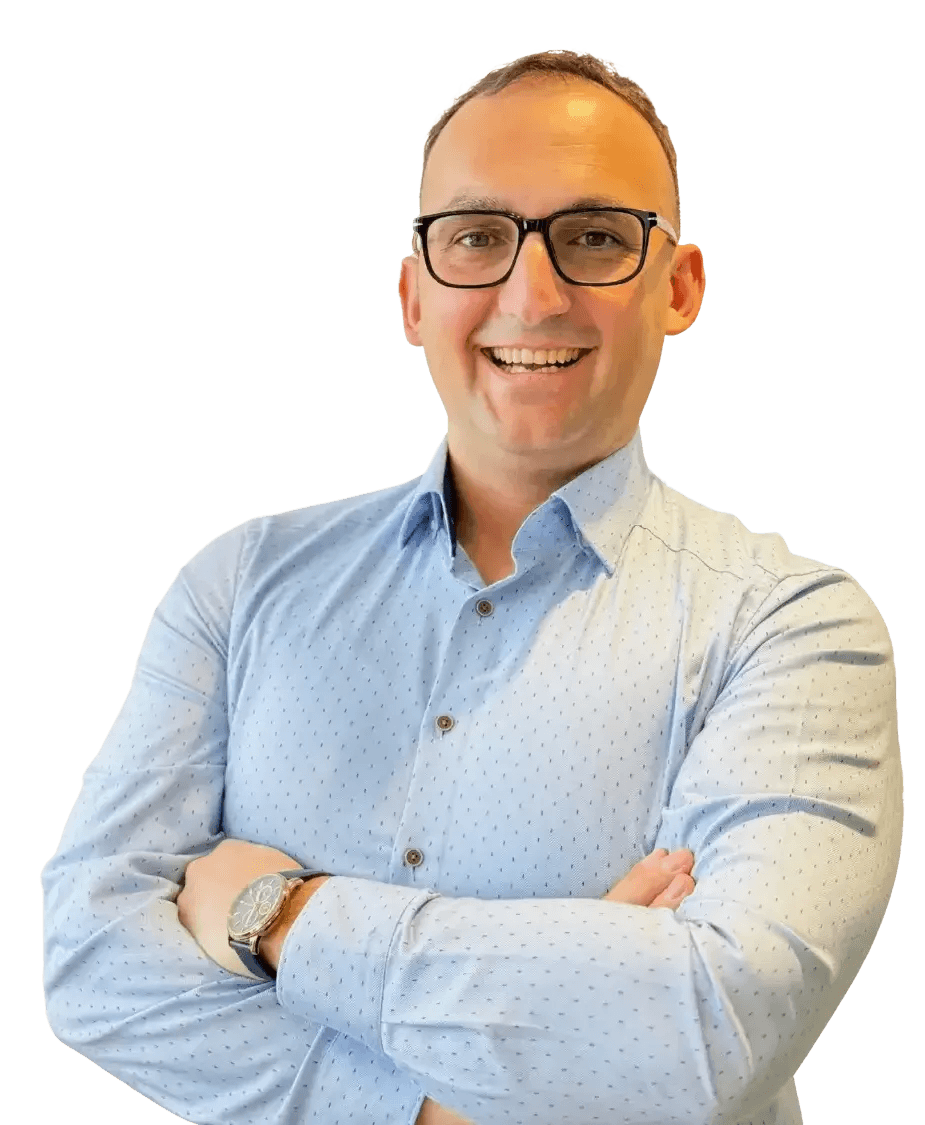
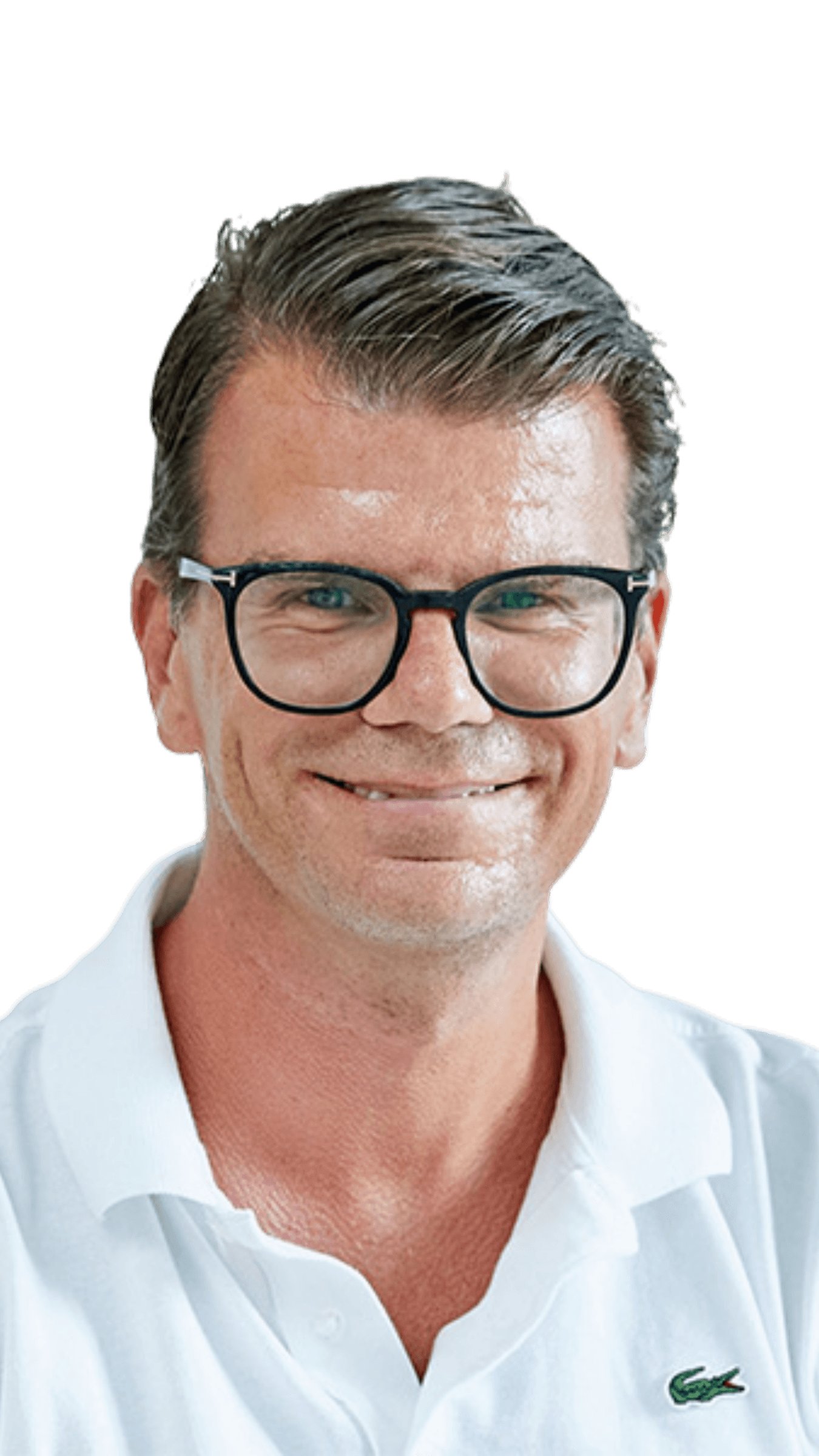
His name is Prof. Dr. Karsten Knobloch. In this episode of Make It Concise Connective, he sat down with Uran Berisha to explain a quiet revolution happening in clinics across Europe. A revolution most patients in North America have never heard about.
The short version of his story, in his own words: "Shockwave reconstructed my entire professional and personal life. Thank you, Shockwave."
You should hear the long version.
The Pain Point: You Are Stuck Inside a System That Was Not Built for Your Recovery
Let's call it what it is.
If you have chronic pain, an old injury, a torn tendon, a stiff joint, a surgical scar that never quite healed, or a body that does not bounce back the way it used to, you have already been through the system. And the system has a script.
First, you wait. You wait for the MRI. You wait for the specialist. You wait for the follow-up. Months turn into a year. In parts of Canada and the US, joint replacement waits stretch one to two years while you suffer.
Then come the pills. Then the injections. Then the conversation about surgery.
Here is the part nobody warns you about. Even after the surgery, the soft tissue, the fascia, the muscles, and the scar around the incision do not get fixed by the scalpel. Your body cannot tell the difference between an injury and an intentional cut. It responds the same way: with adhesions, restrictions, and a dulled signal between your brain and your muscle.
Dr. Knobloch sees this from the inside. He says it directly. Most surgeons are trained to operate. They are financially rewarded to operate. And once you are discharged, you are handed off and largely forgotten. "Physicians, especially surgeons, are not always open-minded. They see regenerative tools as a potential opponent."
You are not imagining it. The system was not built around your full recovery.
The Common Approach: Cut First, Wait, Repeat
Here is what passes for "treatment" in most clinics today.
Cut it out. Inject it. Replace it. Or tell you to live with it.
Dr. Knobloch trained inside this approach for two decades. He earned every certification a surgeon can earn. Then he watched something his colleagues are still ignoring. Patients booked him for his surgical reputation. He treated many of them with shockwave instead. They got better without the knife.
So why has your doctor never offered you this?
Three reasons, straight from a surgeon who lives in this world.
Tradition. Most senior physicians stick with what worked when they were trained. If shockwave was not part of their education, it is not part of their practice. Knobloch puts it bluntly: "They are very traditional because they don't want to risk anything."
Hierarchy. In hospitals, professional sports teams, and pain clinics, the head physician decides. When a physiotherapist suggests something new, it often gets rejected. Not because the tool is wrong. Because of who proposed it. "If the physiotherapist is proposing something, the physician will say no, because not because of the machine, because he's a physiotherapist."
Money and billing. Surgeons are paid to perform surgery. Hospitals are built around procedures. Non-invasive regenerative therapy does not fit cleanly into the billing codes. So it does not get adopted at scale.
This is not a conspiracy. It is inertia. And inertia is the reason your recovery is taking longer than it should.
The Solution: A Stack of Non-Invasive Tools, Layered With Precision
Here is what Dr. Knobloch actually uses on his patients in 2026, after 20 years of trial and error and more than 800 peer-reviewed shockwave studies published last year alone.
He calls it the regenerative clockwork. Several non-invasive tools, layered in the right sequence, at the right dose. Not one device. A system.
Shockwave Therapy
Acoustic waves that pass through skin and trigger the body's own repair signals. Knobloch uses focused shockwave before surgery to precondition tissue, which has been associated with lower complication rates in his practice. He uses it after surgery to support healing, reduce swelling, and lower pain medication use.
He uses it on tendons, fascia, post-surgical scars, and bone non-unions. In a published trial out of Austria, scars treated with shockwave the day before tummy tuck surgery showed visibly better healing at six and twelve weeks compared to placebo. In a 2025 podiatric foot surgery trial, patients combining shockwave with EMTT returned to activity six weeks faster than controls.
EMTT (Extracorporeal Magnetotransduction Therapy)
Fast-oscillating magnetic fields working on a different pathway than acoustic waves. Knobloch combines shockwave and EMTT for bone edema, non-union fractures, and inflammatory cases. "The one is working on acoustic waves. The magnetic field is inducing voltage changes in the tissue. They are congenial simultaneously."
This is the same combination Unpain Clinic uses on every acute and post-surgical case at our Edmonton locations.
Smart Sequencing With Biologics
When a patient is scheduled for PRP, stem cells, or hyaluronic acid, Knobloch shockwaves the tissue at least a week beforehand. The reason: shockwave has been shown to upregulate the receptors those biologics rely on. One veterinary study showed roughly a 300% increase in growth factors when shockwave was applied to a PRP syringe before injection. The body becomes more receptive to its own repair signals when you prepare the tissue first.
Frontier Applications
Since 2020, Knobloch has been treating Alzheimer's and Parkinson's patients with transcranial pulse stimulation, a navigated form of focused shockwave. The first European approval came on the back of a Vienna trial showing improved functional scores in mild to moderate Alzheimer's. A second trial in Parkinson's is now running at Harvard.
He has also published on shockwave for sport concussion. Athletic teams in Europe use it to shorten recovery time. Researchers are studying it for bone density loss, including, eventually, in astronauts on long space flights.
The point is this. Shockwave is not a fringe device. It is one of the most studied non-invasive medical technologies in the world. The reason you have not heard about it has very little to do with whether it works.
Conclusion
A Different Kind of Clinic for a Different Kind of Patient
If you have read this far, you are probably not the average patient.
You have already tried the standard approach. You have already been told to wait, take the pills, or sign up for the next surgery. You are looking for something the system has not offered you.
Dr. Knobloch's story is the story of medicine slowly catching up to what some clinicians have known for two decades. That the human body has a remarkable capacity to repair itself when given the right inputs in the right order. That surgery is sometimes necessary, but it is rarely the first answer. That a properly trained clinician, using a thoughtful combination of non-invasive tools, can help patients recover from problems their surgeons described as out of reach.
Unpain Clinic was built around this model. Shockwave is our foundation. EMTT, neuromodulation, physiotherapy, chiropractic, and movement work layer on top. We do not make promises nobody can keep. We tell you honestly when something is not a fit. And when it is, we have seen, over thousands of cases, the same pattern Dr. Knobloch has seen for 20 years.
People walking out without an incision. And getting better anyway.
Listen to the full episode of Why Surgeons Love Shockwave with Prof. Dr. Karsten Knobloch on the Unpain Clinic podcast page, Spotify, Apple Podcasts, or YouTube.
- 00:00Introduction to Dr. Karsten Knobloch
- 02:48Transitioning from Surgery to Regenerative Medicine
- 05:25Discovering Shockwave Therapy
- 08:11First Experiences with Shockwave Therapy
- 10:50The Impact of Shockwave on Surgical Outcomes
- 13:37Combining Shockwave with Other Therapies
- 16:23Understanding Shockwave Therapy
- 19:06Regulatory Landscape and Community Acceptance
- 31:00The Evolution of Shockwave Therapy
- 35:57Innovations in Neurological Applications
- 41:11Preventive and Aesthetic Uses of Shockwave Therapy
- 47:55Combining Shockwave Therapy with Other Treatments
- 01:01:08The Importance of Scientific Evidence in Medical Practices
- 01:02:52Innovative Approaches in Soft Tissue Engineering
- 01:05:27Combining Techniques for Enhanced Healing
- 01:07:06Challenges in Professional Sports Medicine
- 01:13:31Optimizing Athletic Performance with Regenerative Therapies
- 01:15:11Getting Started with Shockwave Therapy
- 01:19:01The Future of Shockwave Devices
- 01:22:28Personal Reflections on Shockwave Therapy
- Dr. Karsten Knobloch's journey from board-certified surgeon to regenerative medicine began when patients started healing without the operating room.
- Shockwave therapy has been studied for over two decades, with more than 800 peer-reviewed papers published last year alone.
- The body responds to a surgical cut the same way it responds to an injury, which is why post-surgical scars and adhesions often outlast the original problem.
- Shockwave used before and after surgery has been associated with faster scar healing and quicker return to activity in published trials.
- Combining shockwave with EMTT works on two different biological pathways at once, often producing results neither tool delivers alone.
- Shockwave applied a week before PRP, stem cells, or hyaluronic acid can amplify the response by upregulating receptors in the tissue.
- Transcranial shockwave (TPS) is now being used for Alzheimer's, Parkinson's, and sport concussion, with active trials running at Harvard.
- The barriers to wider shockwave adoption are not clinical, they are tradition, hierarchy, and how medical billing is structured.
- Patients in Europe routinely access these tools as a first option, while patients in North America are usually steered toward injections or surgery first.
- Unpain Clinic was built on this same regenerative model, with shockwave as the foundation and EMTT, neuromodulation, and manual therapy layered on top.